Top Quiet Apartment Puppy Breeds & Urban Training 2026
Discover the best quiet puppy breeds for apartments in 2026 and learn essential first-year urban training, potty, and socialization tips.
Why Choose a Quiet Breed for Apartment Living in 2026?
Raising a puppy in an apartment or high-rise condo presents a unique set of challenges, especially when it comes to noise management. As of 2026, many urban housing authorities and HOAs have implemented strict acoustic monitoring and zero-tolerance noise complaint policies. Choosing a naturally quiet dog breed is no longer just a preference; it is often a necessity for maintaining a peaceful living environment and avoiding lease violations. Furthermore, quiet breeds tend to be more adaptable to the close-quarters nature of apartment living, making the first year of puppyhood significantly less stressful for both you and your neighbors.
However, even the quietest breeds require structured early socialization, specialized urban potty training, and proactive separation anxiety management. In this comprehensive guide, we will explore the best low-vocalization breeds for apartments and provide a month-by-month roadmap for raising a well-adjusted urban puppy in 2026.
Top 5 Quiet Puppy Breeds for High-Rise Living
According to the American Kennel Club, the best apartment dogs are those that combine a low barking tendency with a moderate-to-low indoor energy level. Here are the top five breeds that excel in urban environments:
| Breed | Adult Weight | Energy Level | Vocalization Tendency | Grooming Needs |
|---|---|---|---|---|
| Cavalier King Charles Spaniel | 12-18 lbs | Low-Medium | Very Low | Medium |
| Greyhound | 60-70 lbs | Low (Indoor) | Low | Low |
| English Bulldog | 40-50 lbs | Low | Low | Medium |
| Bichon Frise | 12-18 lbs | Medium | Low-Medium | High |
| Basenji | 22-24 lbs | Medium-High | Low (Yodels rarely) | Low |
1. Cavalier King Charles Spaniel
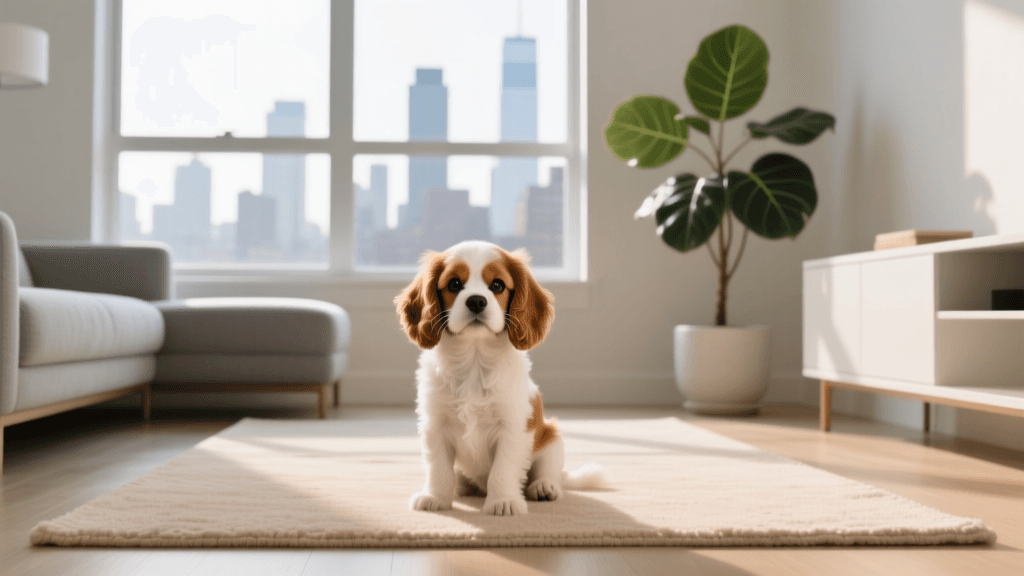
The Cavalier is the quintessential lap dog. They are incredibly affectionate, rarely bark without a significant reason, and adapt beautifully to small spaces. Their primary first-year challenge is potty training, as they can be sensitive to cold or wet urban weather.
2. Greyhound
Despite their racing background, Greyhounds are famously known as '45-mph couch potatoes.' They sleep up to 18 hours a day indoors and rarely bark. For apartment dwellers, adopting a retired racing Greyhound puppy or young adult is a brilliant choice, provided you commit to daily leash walks.
3. English Bulldog
Bulldogs are low-energy, deeply loyal, and generally quiet. However, their brachycephalic (flat-faced) anatomy means you must be hyper-vigilant about temperature control in your apartment during the summer months of 2026, as they are highly susceptible to overheating.
4. Bichon Frise
Bichons are cheerful and playful but lack the sharp, piercing bark of other small terrier breeds. They are highly trainable, making the 'quiet' command easy to instill during their early developmental months.
5. Basenji
Known as the 'barkless dog,' the Basenji physically cannot bark due to the shape of its larynx. Instead, they make a unique yodeling sound, which they use very sparingly. They are fastidious self-groomers, making them exceptionally clean apartment companions.
First-Year Urban Potty Training Strategies
Potty training an apartment puppy in 2026 requires overcoming logistical hurdles like elevator waits, busy lobbies, and unpredictable street traffic. Relying solely on outdoor trips can lead to accidents and frustration.
Implementing a Balcony Potty System
For high-rise residents, a balcony potty station is a game-changer. Subscription services like the Bark Potty, which deliver real, ethically sourced grass patches, remain highly popular. In 2026, these subscriptions average $35 to $45 per delivery. By placing the grass pad on a designated balcony corner, you teach your puppy a clear 'indoor/outdoor' boundary without the stress of rushing to the elevator when nature calls.
Elevator Etiquette and Desensitization
Many puppies develop a fear of elevators due to the confined space, mechanical noises, and sudden drops in air pressure. During months 2 and 3, practice 'elevator desensitization.' Carry your puppy into an empty elevator, feed them high-value treats (like freeze-dried liver), and immediately exit. Gradually increase the duration of the rides. Never force a frightened puppy into a crowded elevator; use the stairs for potty breaks until they are confident.
Socializing an Apartment Puppy: The First 6 Months
Urban environments are loud, chaotic, and densely populated. A puppy that is not properly socialized to city life may develop fear-based reactivity or defensive barking. The ASPCA notes that inadequate socialization is a leading trigger for excessive vocalization and anxiety in dogs.
The Urban 'Rule of 7'
Adapt the traditional socialization 'Rule of 7' for city living. By the time your puppy is 16 weeks old, ensure they have positively experienced:
- 7 Different Urban Surfaces: Grates, wet asphalt, elevator thresholds, lobby tile, and subway platform concrete.
- 7 Types of City Noises: Sirens, garbage truck hydraulics, crosswalk beeps, elevator dings, and hallway footsteps.
- 7 Types of Strangers: Delivery drivers, people in uniforms, individuals carrying umbrellas, and people wearing sunglasses.
Use a noise-conditioning app or playlist at home. Play sounds of traffic and sirens at a very low volume while your puppy eats or plays, gradually increasing the volume over several weeks to build emotional resilience.
Managing Teething, Whining, and Separation Anxiety
Even quiet breeds will whine, cry, or vocalize when experiencing teething pain or separation anxiety. Apartment walls are thin, and a whining puppy can quickly become a neighborhood nuisance.
Teething Relief (Months 4-6)
When puppy teeth fall out, the discomfort can lead to incessant whining and destructive chewing. Provide a variety of textures. In 2026, smart freezing toys made from non-toxic, durable natural rubber are highly recommended. Soak a braided cotton rope in low-sodium chicken broth and freeze it solid. The cold numbs their gums, and the chewing action satisfies their instinctual needs without triggering noise.
Preventing Separation Anxiety Barking
Leaving a puppy alone in an apartment can trigger panic-induced barking. To mitigate this, utilize modern pet technology. Smart cameras with two-way audio and treat-tossing capabilities allow you to monitor your puppy from your office. If you see them settling down quietly, use the app to reward them with a treat. This reinforces that silence and calmness yield positive results. Always practice 'micro-departures'—leaving the apartment for just 30 seconds and returning before the puppy has time to become distressed.
Feeding Schedules for Low-Energy Apartment Puppies
One of the hidden dangers of raising a low-energy breed like a Bulldog or Greyhound in a small apartment is obesity. Without a large backyard to roam, caloric intake must be strictly managed from day one.
Precision Feeding
Ditch the measuring cup. In 2026, veterinary nutritionists strongly recommend using a digital kitchen scale to weigh your puppy's food. A standard measuring cup can vary by up to 20% in actual kibble weight, which easily leads to overfeeding. Weigh out the exact gram amount recommended by your vet based on your puppy's projected adult weight and current activity level.
Enrichment Over Volume
Instead of feeding your puppy from a bowl in 60 seconds, use their daily caloric allotment for mental enrichment. Snuffle mats, lick mats, and puzzle feeders engage their brains and tire them out mentally. A mentally exhausted puppy is a quiet puppy. Spending 15 minutes working for their breakfast will result in a longer, quieter mid-day nap, keeping your apartment peaceful while you work from home.
Conclusion
Raising a quiet puppy in an apartment in 2026 is entirely achievable with the right breed selection and proactive training. By leveraging modern urban potty solutions, prioritizing noise desensitization, and managing their physical and mental enrichment, you can cultivate a deeply bonded, well-mannered companion who thrives in high-rise living.
hannah-wickes
All our authors care for dogs every day — read more of their work on the authors page.