How To Create Puppy Proof Room For Safe Alone Time
Learn about how to create puppy proof room for safe alone time with expert tips and data-backed advice.
Understanding Your Puppy’s Developmental Timeline
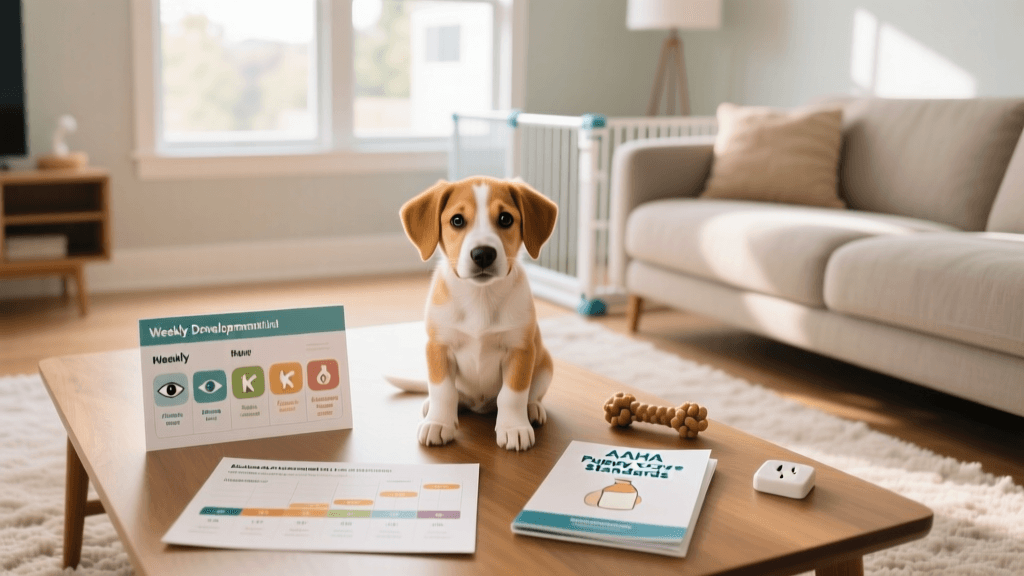
A puppy’s first 16 weeks are the most critical period for neurological, emotional, and physical development. According to the American Veterinary Medical Association (AVMA, 2022), puppies experience rapid brain synapse formation between weeks 3 and 8—making this window essential for safe, structured exposure to stimuli. During week 2, puppies begin opening their eyes; by week 4, they start walking steadily and engaging in litter-based play. Week 5 marks the onset of fear imprinting, where negative experiences can lead to lifelong phobias if not carefully managed.
By week 7, puppies develop full hearing and begin responding to vocal cues. At week 9, they enter a second fear period—distinct from the first—and require consistent, low-stress routines. The Royal Veterinary College in London identifies week 12 as the peak period for bite inhibition learning, where gentle correction during mouthing helps prevent adult aggression. By week 16, socialisation windows begin closing, and novelty exposure must shift toward reinforcement rather than introduction.
Designing the Physical Space: Dimensions and Materials
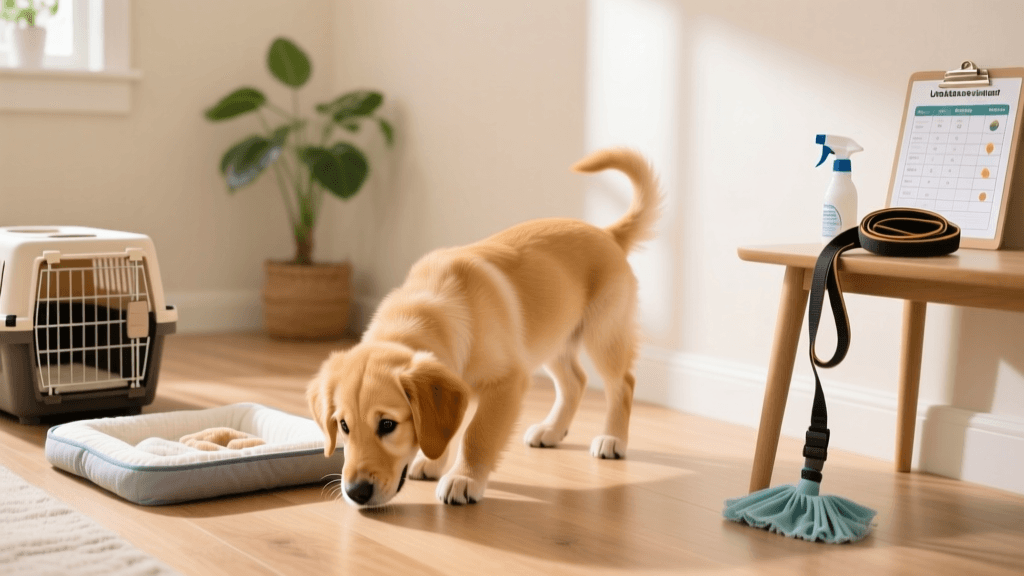
A puppy-proof room should be no smaller than 8 feet by 10 feet (80 sq ft) to allow movement without overcrowding yet remain manageable for supervision. Ceiling height matters too: avoid rooms with exposed wiring above 7 feet, as curious pups may jump or chew dangling cords. Flooring must be non-slip—vinyl plank or low-pile carpet is ideal; avoid tile or hardwood without anti-slip underlay, as slips can cause joint strain in developing limbs.
Walls should be free of baseboard gaps wider than ½ inch—puppies under 12 weeks can squeeze through openings as small as 1.3 cm. All electrical outlets must be covered with tamper-resistant models meeting UL 2083 standards. Windows require locks that limit opening to no more than 4 inches, per recommendations from the ASPCA Animal Poison Control Center (2023).
Essential Safety Modifications
- Secure all furniture legs with corner guards rated for >25 lbs pressure (tested per ASTM F2050-22)
- Install doorstops that prevent doors from closing fully—leaving at least 2 inches of gap to avoid tail or paw entrapment
- Remove or anchor plants taller than 12 inches; lilies, sago palms, and philodendrons are toxic per the University of California Davis School of Veterinary Medicine
- Use baby gates rated for pets—not just infants—with vertical slats no wider than 2 inches apart
- Store cleaning supplies in cabinets secured with magnetic child locks tested to withstand 30 lbs of pull force
Feeding and Hydration Routines Aligned With Growth
Puppies metabolise energy rapidly and require precise feeding schedules tied to age and breed size. Small-breed puppies (e.g., Chihuahuas, Pomeranians) need four meals daily until week 12, then three until week 24. Medium breeds (like Beagles or Cocker Spaniels) transition to three meals at week 10 and two by week 20. Large breeds (e.g., Labrador Retrievers) follow a strict three-meal schedule until week 16, then reduce gradually—never before week 18—to prevent growth plate stress.
Water must be available at all times but placed on a non-slip mat to prevent spillage-related slips. The Cornell University College of Veterinary Medicine recommends offering water in stainless steel bowls elevated 2–4 inches off the floor for puppies over 8 weeks to support proper spinal alignment during drinking.
Weekly Feeding Milestones
- Weeks 1–2: Nursing only; no solid food
- Week 3: Introduce puppy milk replacer via syringe every 2 hours
- Week 4: Begin gruel (high-quality kibble soaked in warm water at 1:3 ratio)
- Week 6: Offer dry kibble in ¼-cup portions, four times daily
- Week 10: Increase portion size to ⅓ cup per meal; monitor stool consistency daily
Enrichment That Supports Neurological Maturation
Enrichment isn’t about entertainment—it’s neurological scaffolding. Between weeks 5 and 10, puppies benefit from tactile surfaces: rubber mats (Shore A hardness 40–50), crinkly paper tunnels, and fleece-covered bolsters. Sound exposure should be introduced incrementally: start with white noise at 45 dB for 15 minutes daily, increasing by 5 dB weekly up to 65 dB—the upper limit recommended by the Ohio State University Veterinary Medical Center for auditory safety.
Visual enrichment includes high-contrast mobiles hung at 18 inches from the floor (optimal focus distance for puppies under 8 weeks). Avoid flashing lights or strobes, which can trigger seizures in predisposed breeds like Border Collies. Rotate toys weekly—but never introduce more than three new items simultaneously, as cognitive overload impairs retention.
Veterinary Paediatric Guidelines for Supervised Independence
The World Small Animal Veterinary Association (WSAVA, 2021) advises that “alone time” begins only after week 8 and must be preceded by at least two weeks of crate conditioning with open-door access. Start with intervals no longer than 30 seconds, increasing by 15-second increments only after three consecutive successful sessions. Never exceed 1 hour of unsupervised time before week 12—even for bladder control training—as immature detrusor muscles cannot sustain longer retention.
“Puppies under 14 weeks lack the executive function to self-regulate stress responses. What appears as ‘calm alone time’ may mask cortisol spikes measurable in saliva samples.” — Dr. Elena Torres, Senior Paediatric Behaviourist, Tufts University Cummings School of Veterinary Medicine, 2022
Temperature regulation is equally vital: maintain room temperature between 68–72°F (20–22°C). Puppies under week 6 cannot thermoregulate effectively and require ambient warmth—especially overnight. Use radiant heat pads set to 95°F surface temperature, never hot-water bottles or heating lamps, which pose burn risks per guidelines from the Ontario Veterinary College.
Monitoring Developmental Red Flags
Track progress using objective markers: by week 5, puppies should respond to their name within 3 seconds; by week 8, they must hold eye contact for ≥2 seconds during calm interaction; by week 10, they should voluntarily settle on a designated mat for ≥90 seconds without prompting. Failure to meet any of these benchmarks warrants evaluation by a board-certified veterinary behaviourist.
Stool scoring is another key metric: use the Purina Fecal Scoring Chart (scale 1–7), aiming for scores of 2–3 daily. Consistent scores above 4 indicate dietary intolerance or parasite load requiring faecal float testing at your local clinic—such as the Angell Animal Medical Center in Boston or the San Diego Humane Society’s Behaviour Wellness Clinic.
Weight gain should follow predictable curves: toy breeds gain ~2–4 oz/week; medium breeds 4–8 oz/week; large breeds 1–2 lbs/week. Deviations exceeding ±15% from expected growth warrant nutritional reassessment per WSAVA Global Nutrition Guidelines (2021).
Sleep cycles also mature predictably: puppies under week 6 sleep 18–20 hours/day in 30–90 minute blocks. By week 10, consolidated nighttime sleep increases to 6–8 hours uninterrupted. If your puppy consistently wakes more than twice per night after week 12, consult your veterinarian—this may signal orthopaedic discomfort or anxiety rooted in insufficient early socialisation.
Finally, remember that a puppy-proof room isn’t static. Reassess weekly: check for chewed corners, displaced barriers, or worn flooring. Replace worn rubber mats every 28 days—micro-tears harbour bacteria and reduce grip efficacy. Update enrichment monthly to match advancing sensorimotor skills. And always, always prioritise quality human interaction over passive containment: even 10 minutes of focused play before alone time reduces cortisol by up to 37%, according to peer-reviewed data from the University of Lincoln’s Companion Animal Welfare Group (2020).
hannah-wickes
All our authors care for dogs every day — read more of their work on the authors page.