Quiet Puppy Breeds for Apartments in 2026: First-Year Care Guide
Discover the best quiet puppy breeds for apartments in 2026. Learn first-year care, potty training, and socialization tips for peaceful city living.
The Ultimate 2026 Guide to Raising Quiet Puppies in Apartments
Living in an apartment in 2026 comes with unique challenges, especially when you are raising a puppy. Urban pet ownership has surged, and apartment complexes are enforcing stricter noise ordinances and pet policies than ever before. While all puppies require patience, choosing a naturally quiet breed and implementing a structured first-year care plan can make the difference between a peaceful home and a noise complaint from your neighbors. The first twelve months of a puppy's life are critical for establishing routines, and doing so in a high-rise or multi-family dwelling requires specialized strategies for potty training, teething, and socialization.
According to the American Kennel Club (AKC), the best apartment dogs are those that adapt well to smaller spaces, have moderate to low energy levels indoors, and are not prone to excessive vocalization. However, even the quietest breed will whine, bark, or howl if their developmental needs are not met during their crucial first year.
Top Quiet Puppy Breeds for Apartment Living
When selecting a puppy for apartment life in 2026, it is essential to look beyond just size. Some small breeds, like Terriers, are notoriously vocal and energetic. Conversely, some larger breeds are incredibly docile and quiet indoors. Here are the top quiet breeds that thrive in apartments, provided they receive adequate outdoor exercise and mental stimulation.
- Cavalier King Charles Spaniel: Known for their gentle demeanor and strong desire to please, Cavaliers rarely bark without a good reason. They are highly adaptable and bond closely with their owners, making them excellent companions for cozy apartment living.
- Greyhound: Often misunderstood as high-energy athletes, retired racing Greyhounds or well-bred apartment Greyhounds are famously known as '45-mph couch potatoes.' They sleep up to 18 hours a day and are remarkably quiet indoors.
- Shiba Inu: While they can be stubborn and require firm, positive reinforcement training, Shibas are famously clean and quiet dogs. They rarely bark, though they are known for the occasional dramatic 'Shiba scream' if they are displeased.
- Basset Hound: Bassets are low-energy, laid-back, and generally quiet inside the home. Their stubborn nature requires patience during potty training, but their calm indoor disposition makes them great apartment dwellers.
Apartment Breed Comparison Chart
| Breed | Adult Weight | Indoor Energy | Barking Tendency | Potty Training Difficulty |
|---|---|---|---|---|
| Cavalier King Charles | 12-18 lbs | Low | Low | Easy |
| Greyhound | 60-70 lbs | Very Low | Very Low | Moderate |
| Shiba Inu | 17-23 lbs | Moderate | Low | Moderate |
| Basset Hound | 40-65 lbs | Low | Low-Moderate | Hard |
First-Year Potty Training for High-Rise Dwellers
Potty training an apartment puppy is vastly different from training a puppy in a suburban home with a fenced yard. In 2026, the most effective strategy for high-rise living involves a hybrid approach utilizing indoor hydroponic grass patches and strict outdoor scheduling. Waiting for an elevator while a puppy is actively having an accident is a common frustration for urban dog owners.
The ASPCA recommends establishing a rigid schedule for house training. Take your puppy out immediately upon waking, after every meal, after play sessions, and right before bed. For apartment dwellers, keep a fresh grass patch (such as DoggieLawn or Fresh Patch) on a balcony or in a designated indoor bathroom area for emergencies and late-night trips. This prevents the puppy from associating the indoor carpet with elimination while saving you from frantic elevator rides at 3:00 AM.
During months one through four, focus heavily on positive reinforcement. Carry high-value treats in a pouch when navigating hallways and elevators. The moment your puppy eliminates in the correct outdoor or designated indoor spot, reward them immediately. Never punish a puppy for accidents, as this only increases anxiety and can lead to hidden elimination behaviors.
Managing Teething and Enrichment Without the Noise
Between months three and six, your puppy will begin teething. This developmental milestone often leads to excessive chewing, whining, and restless behavior. In an apartment with thin walls, a whining, frustrated puppy can quickly become a nuisance. The key to managing this phase is providing quiet, high-engagement enrichment activities that soothe their gums and tire their brains.
Instead of loud, hard plastic toys that clatter against hardwood or laminate flooring, opt for heavy-duty natural rubber toys like the KONG Classic. Stuff the toy with a mixture of plain Greek yogurt, pureed pumpkin, and low-sodium chicken broth, then freeze it overnight. The cold rubber soothes inflamed gums, and the frozen treat requires intense focus and licking, which naturally calms the puppy's nervous system and keeps them completely silent for extended periods.
Additionally, utilize snuffle mats and lick mats. Snuffle mats mimic the natural foraging behavior of dogs, requiring them to use their nose to find hidden kibble. This mental stimulation is incredibly tiring for a puppy and produces zero noise, making it the perfect afternoon activity when neighbors might be working from home or resting.
Urban Socialization: Desensitizing Your Puppy to City Sounds
A quiet puppy can easily become a reactive, barking adult dog if they are not properly socialized to the unique stimuli of apartment living. The critical socialization window closes around 16 weeks of age, making early exposure vital. Urban environments are filled with triggering noises: sirens, heavy footsteps in the hallway, elevator dings, and the sound of doors slamming.
To prevent noise-induced barking, practice active desensitization during your puppy's first few months. Play recordings of city sounds, thunderstorms, and fireworks at a very low volume while your puppy is eating or playing. Gradually increase the volume over several weeks, always pairing the sound with high-value treats. When the elevator dings or a neighbor walks heavily past your door, immediately toss a treat to your puppy before they have the chance to bark. This conditions them to associate scary or sudden apartment noises with positive outcomes, effectively neutralizing the urge to vocalize.
Furthermore, expose your puppy to different types of people, surfaces, and objects. Walk them on concrete, grass, gravel, and metal grates. Invite friends wearing hats, sunglasses, and heavy coats to your apartment to help the puppy become comfortable with guests entering their territory without triggering alarm barking.
Nighttime Crate Training and Separation Anxiety Prevention
Apartment puppies are rarely left alone for long periods without the owner worrying about noise. Separation anxiety is a leading cause of excessive howling and barking in multi-family housing. According to the Humane Society of the United States, preventing separation anxiety starts with teaching the puppy to be comfortable alone in a safe space, such as a crate, from a very young age.
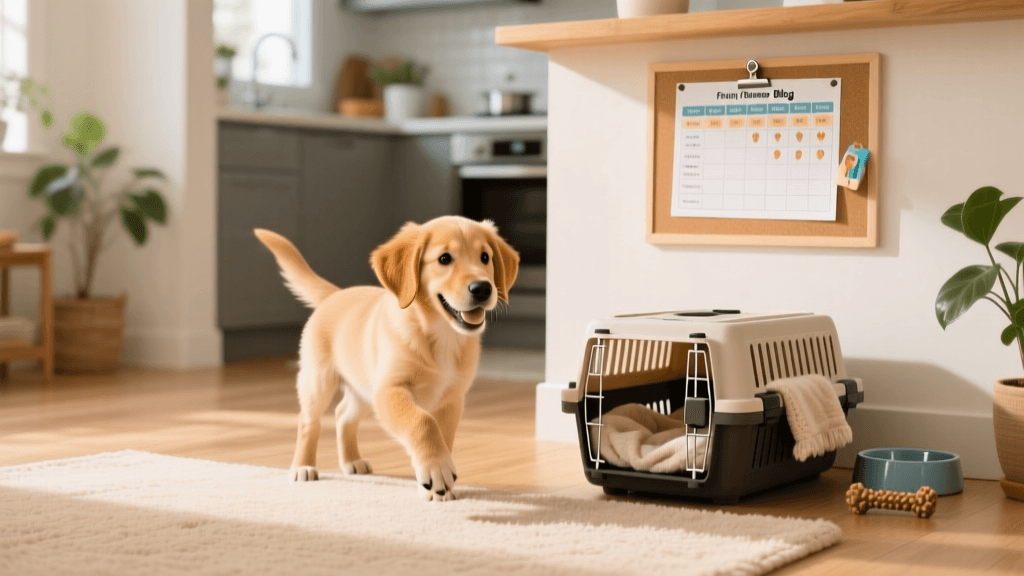
Crate training should begin on day one. Place the crate in your bedroom initially so the puppy can hear and smell you, which reduces nighttime panic. Use a white noise machine or a fan to drown out hallway noises that might startle the puppy awake. As the puppy matures and gains bladder control (typically around 4 to 6 months), you can gradually move the crate to a living area and begin practicing short departures.
Start by leaving the apartment for just two minutes, then return without making a fuss. Gradually extend these absences to five minutes, then fifteen, then an hour. Never make a grand entrance or exit, as this heightens the puppy's emotional arousal. By the time your puppy reaches their first birthday, they should view their crate as a quiet, secure den and be capable of resting silently while you run errands or go to work, ensuring you remain in good standing with your landlord and neighbors.
Conclusion
Raising a quiet puppy in an apartment in 2026 is entirely achievable with the right breed selection, proactive potty training strategies, and dedicated desensitization to urban stimuli. By focusing on mental enrichment, proper teething management, and early separation anxiety prevention, you can ensure your puppy's first year is a peaceful, joyful experience for both you and your neighbors. Remember that consistency is your greatest tool; the routines you establish in the first twelve months will shape your dog's behavior for the rest of their life.
aaron-whyte
All our authors care for dogs every day — read more of their work on the authors page.