Best Quiet Dog Breeds For Apartments In 2026: A Guide
Discover the best quiet dog breeds for apartments in 2026. Learn the canine psychology behind low-barking traits and how to manage spatial instincts.
The Psychology of the Quiet Apartment Dog in 2026
As urbanization continues to accelerate in 2026, high-density apartment living has become the norm for millions of dog owners worldwide. While sharing a small space with a canine companion is deeply rewarding, it comes with a unique set of acoustic challenges. Thin walls, shared hallways, and close-proximity balconies mean that a vocal dog can quickly become a source of neighborhood friction. However, finding a peaceful coexistence isn't just about rigorous obedience training; it is deeply rooted in canine psychology, breed history, and instinctual drives.
Understanding why certain dogs are naturally quiet requires us to look beyond basic breed descriptions and examine the evolutionary and historical purposes these dogs were bred to fulfill. In this comprehensive guide, we will explore the psychological mechanisms behind canine vocalization, analyze the breed instincts that favor silence, and identify the best quiet dog breeds for apartment living in 2026.
The Evolutionary Psychology of Canine Vocalization
To understand why some breeds are naturally quiet, we must first understand why dogs bark at all. Unlike their wild wolf ancestors, who primarily communicate through body language, scent, and occasional howling, domestic dogs utilize barking as a primary vocal tool. This trait is largely a result of neoteny—the retention of juvenile characteristics into adulthood. In the wild, wolf pups bark to solicit attention and care from adults. Through thousands of years of domestication, humans selectively bred dogs to retain this juvenile vocalization because it served as an effective alarm system.
According to the ASPCA's guide on common dog behavior issues, barking is a normal canine behavior that becomes problematic only when it is excessive or driven by underlying stress. The frequency and intensity of a dog's bark are heavily dictated by their historical "job." Terriers, for instance, were bred to hunt vermin underground, requiring them to bark continuously to signal their location to hunters above ground. Conversely, breeds developed solely for companionship or silent hunting were actively selected against vocal traits.
When selecting a dog for an apartment, you are essentially looking for breeds with low "territorial alert" instincts and high "companion" instincts. These dogs do not feel the psychological burden of needing to guard a vast perimeter, making them significantly more relaxed in high-density housing environments.
Top Quiet Dog Breeds for Apartments: An Instinctual Analysis
Based on 2026 behavioral assessments and historical breed standards, the following breeds consistently demonstrate the psychological profiles best suited for quiet apartment living.
1. The Greyhound: The 45-MPH Couch Potato
It may seem counterintuitive to recommend a racing breed for a small apartment, but the Greyhound is a masterclass in canine energy conservation. Psychologically, Greyhounds are sighthounds. Their instinct is driven by visual stimuli and short, explosive bursts of speed, followed by long periods of deep rest. They lack the territorial guarding instinct that plagues many apartment dwellers. When a Greyhound hears a noise in the hallway, their instinct is rarely to alert the "pack"; instead, they typically assess the threat level, realize it is not prey, and return to sleep. Their low spatial demand for roaming, combined with a naturally stoic temperament, makes them exceptionally quiet neighbors.
2. The Cavalier King Charles Spaniel: The Ultimate Companion
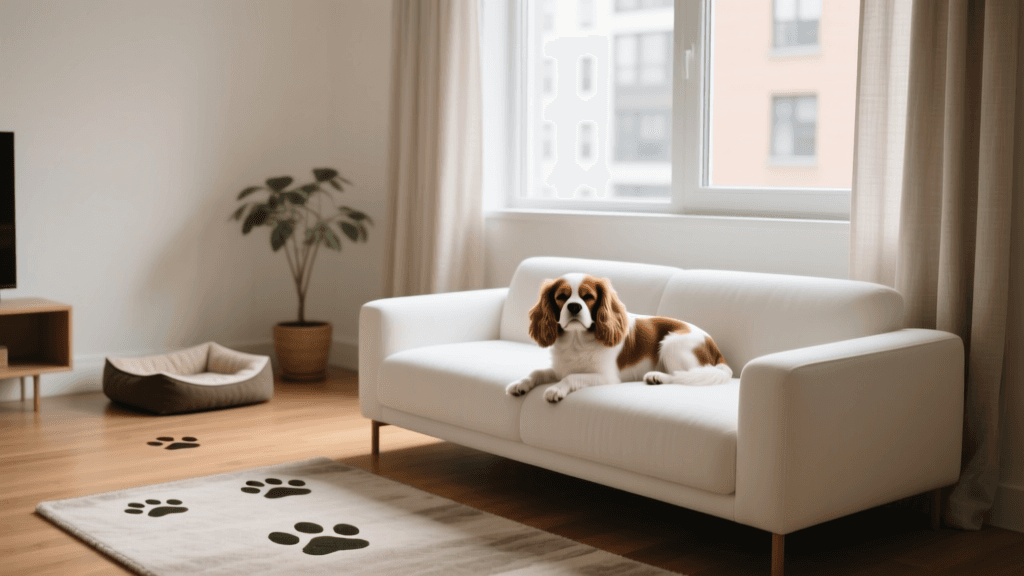
The Cavalier King Charles Spaniel was bred for one primary purpose: to provide affectionate companionship to royalty. Unlike the toy breeds that were later developed to act as miniature watchdogs, the Cavalier's psychological drive is centered entirely on human bonding. They possess a remarkably low "alert bark" drive. While they will happily greet you at the door, they are far more likely to seek physical contact than to bark at a passing shadow. Their adaptability to small spaces is rooted in their lack of working-dog anxiety; they do not feel unfulfilled without a "job" to do, provided they receive adequate mental enrichment and gentle walks.
3. The Japanese Chin: The Palace Ornament
The Japanese Chin is an ancient breed with a fascinating psychological profile. Bred specifically to be ornamental companions in the palaces of Asian nobility, these dogs were historically valued for their quiet dignity and cat-like independence. Unlike many toy breeds that suffer from "small dog syndrome" and compensate for their size with excessive yapping, the Chin possesses a natural aloofness. They are highly observant and intelligent but rarely feel the need to vocalize their observations. Their instinct is to watch and analyze from a comfortable vantage point, making them perfectly suited for the quiet observation required in apartment living.
4. The Bolognese: The Velcro Dog
Originating from Italy, the Bolognese is a small, fluffy companion dog that thrives on deep, quiet bonding with its owner. Psychologically, they are "velcro dogs" who experience separation anxiety if left alone for long periods, but when their human is present, they are incredibly serene. They do not possess the high-strung nervous energy of some modern toy breeds. Their historical role as diplomatic gifts among the European elite required a calm, unobtrusive demeanor. In a modern 2026 apartment setting, a Bolognese will happily spend the day curled in a bed near your work-from-home desk, rarely making a sound.
2026 Breed Comparison: Instincts and Apartment Adaptability
The table below provides a structured comparison of these breeds, focusing on the psychological and instinctual traits that impact their suitability for apartment living.
| Breed | Primary Instinctual Drive | Barking Frequency (1-5) | Apartment Adaptability | 2026 Avg. Puppy Cost (USD) |
|---|---|---|---|---|
| Greyhound | Visual prey chase / Energy conservation | 1 (Very Low) | High (Requires sprint access) | $1,500 - $2,500 |
| Cavalier King Charles | Human companionship / Pack bonding | 2 (Low) | Very High | $2,500 - $3,500 |
| Japanese Chin | Observational companionship / Dignity | 2 (Low) | Very High | $2,000 - $3,000 |
| Bolognese | Proximity bonding / Calm observation | 2 (Low) | High (Needs constant company) | $2,000 - $2,800 |
Environmental Enrichment and Managing the Alert Bark
Even the quietest breeds can develop nuisance barking if their psychological needs are unmet. In 2026, environmental enrichment goes far beyond a simple chew toy. For low-energy, quiet breeds, mental stimulation is the key to preventing boredom-induced vocalization. Utilizing modern smart puzzle feeders and automated snuffle mats engages their foraging instincts, keeping their minds occupied and their mouths busy with treats rather than barking.
Furthermore, managing the "alert bark" in high-density housing requires proactive desensitization. Apartment hallways are full of unpredictable noises: rolling suitcases, slamming doors, and muffled conversations. The American Kennel Club's training resources emphasize the importance of counter-conditioning. By pairing the sound of a hallway noise with a high-value treat, you can rewire your dog's psychological response from "alert the pack" to "good things happen when I hear the elevator."
For owners who work hybrid schedules, managing separation-related vocalization is critical. The Humane Society's resource on stopping excessive dog barking suggests utilizing interactive pet cameras that allow you to monitor your dog's stress levels and dispense treats remotely. However, technology should never replace the foundational need for a breed-appropriate lifestyle. A dog that is genetically predisposed to be quiet will still thrive best when its specific instinctual needs—whether that is a daily sprint in a fenced park for a Greyhound or dedicated lap-time for a Cavalier—are consistently met.
Conclusion
Choosing a quiet dog for an apartment is ultimately an exercise in aligning human living conditions with canine psychology. By understanding the evolutionary history and instinctual drives of breeds like the Greyhound, Cavalier King Charles Spaniel, Japanese Chin, and Bolognese, you can select a companion that is naturally predisposed to a peaceful, low-vocal lifestyle. In the evolving landscape of 2026 urban living, respecting these innate traits ensures a harmonious environment for you, your dog, and your neighbors.
anouk-beaumont
All our authors care for dogs every day — read more of their work on the authors page.