Quiet Apartment Dog Breeds 2026: Psychology & Instincts
Discover the psychology behind quiet apartment dog breeds in 2026. Learn breed instincts, vocalization triggers, and behavior tips for high-density living.
The Psychology of Silence: Understanding Canine Vocalization
As we navigate the urban housing landscape of 2026, where high-density co-living spaces and micro-apartments have become the norm, the demand for quiet, adaptable dog breeds has never been higher. However, finding the perfect apartment companion requires more than just browsing a list of small dogs. True harmony in shared living spaces comes from understanding the deep-seated psychological instincts and evolutionary history that dictate why certain breeds bark, while others remain stoically silent.
To understand why some dogs are naturally quiet, we must first look at the evolutionary basis of canine vocalization. In the wild, adult wolves rarely bark; they rely on subtle body language, scent marking, and low-frequency growls to communicate. Barking is largely a product of domestication and neoteny—the retention of juvenile traits into adulthood. Puppies bark to solicit attention and care from their mothers. Over thousands of years, humans selectively bred certain dogs to remain in this perpetual state of juvenile vocalization to serve as alarm systems, herders, and hunting partners.
Therefore, a dog's tendency to bark in an apartment setting is rarely just a 'bad habit.' It is often an expression of their foundational breed instincts. According to behavioral experts at the American Kennel Club (AKC), breeds that were historically tasked with alerting humans to danger or tracking game over vast distances possess a hardwired neurological trigger to vocalize. Conversely, breeds developed for silent stalking, close-quarters companionship, or independent observation lack this alarm-driven psychology, making them inherently better suited for the acoustic challenges of modern apartment living.
Breed Instincts vs. The 2026 Apartment Environment
The modern apartment environment of 2026 presents a unique set of psychological stimuli for dogs. Shared walls mean that hallway footsteps, elevator dings, and neighboring conversations are constant. For a dog with high territorial instincts or a strong 'alarm barking' drive, this environment is a minefield of triggers. Every sound is perceived as a potential intrusion, compelling the dog to vocalize to protect its pack.
On the other hand, breeds with low territorial drives or those that rely on visual rather than auditory stimuli process these environmental noises differently. Sighthounds, for example, are psychologically wired to react to movement rather than sound. A sighthound is far more likely to ignore a noisy neighbor and instead stare intently at a squirrel outside the window. Understanding this distinction is crucial for urban dwellers. It is not merely about finding a dog that 'cannot' bark, but rather finding a dog whose psychological thresholds for auditory triggers are naturally high.
Furthermore, the Humane Society of the United States notes that excessive barking in confined spaces is frequently linked to under-stimulation and boredom. A quiet breed is only quiet if its specific instinctual needs are met. A physically exhausted but mentally under-stimulated dog may develop repetitive vocalizations as a coping mechanism for anxiety. Thus, matching a breed's specific psychological profile to your lifestyle is the cornerstone of successful apartment dog ownership.
Top Quiet Apartment Breeds: A Behavioral Breakdown
Below is a comparative analysis of four exceptional breeds that thrive in high-density environments, evaluated not just on their size, but on their underlying psychological drives and instinctual behaviors.
| Breed | Primary Instinctual Drive | Indoor Arousal Level | Primary Vocalization Trigger | Apartment Suitability (2026) |
|---|---|---|---|---|
| Greyhound | Visual Prey Drive (Sprinting) | Very Low | Extreme Excitement / Play | 9.5 / 10 |
| Cavalier King Charles Spaniel | Empathic Companionship | Low to Moderate | Separation Anxiety / Greeting | 9 / 10 |
| Shiba Inu | Independent Observation | Low | Physical Restraint / Distress | 8.5 / 10 |
| Scottish Deerhound | Silent Stalking / Loyalty | Very Low | Rare (High Pain Tolerance) | 8 / 10 |
1. The Greyhound: The Sprinter Turned Couch Potato
It is a common misconception that Greyhounds require massive amounts of space due to their racing history. Psychologically, Greyhounds are burst-energy athletes. They are bred for short, intense sprints relying entirely on visual acuity. Once that burst of energy is expended in a secure outdoor area, their indoor psychological state shifts to extreme conservation of energy. They lack the territorial guarding instinct found in many smaller breeds, meaning they are largely unbothered by the sounds of neighbors in adjacent apartments. Their silence is rooted in their evolutionary focus: they are silent hunters who rely on speed and stealth, not vocalization, to secure prey.
2. The Cavalier King Charles Spaniel: The Empathic Companion
Unlike breeds developed for working, guarding, or hunting, the Cavalier King Charles Spaniel was bred exclusively for companionship. Their psychological profile is deeply attuned to human emotion and physical proximity. They do not possess an 'alarm' drive, making them notoriously poor guard dogs and exceptionally quiet apartment residents. Their primary instinct is to mirror their owner's energy. In a calm, modern apartment setting, a Cavalier will happily remain silent and relaxed. The only behavioral risk for this breed in an apartment is separation anxiety; because their instinct is to bond closely, they require gradual desensitization to being left alone to prevent distress vocalization.
3. The Shiba Inu: The Feline-Like Observer
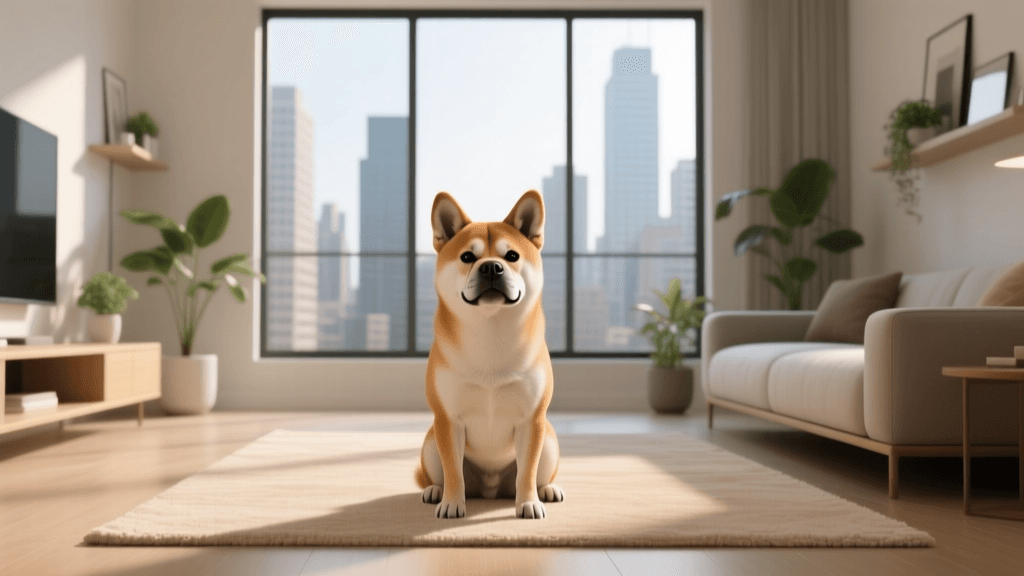
The Shiba Inu offers a fascinating psychological profile for apartment dwellers. Often described as cat-like, Shibas are fastidious, independent, and highly observant. They are an ancient basal breed that retains many wolf-like traits, including a strong instinct to remain silent to avoid alerting prey or predators. A Shiba will rarely bark at a knock on the door or a noise in the hallway; they are more likely to simply stare at the source of the noise and assess it. However, owners must understand that Shibas are prone to the infamous 'Shiba Scream'—a high-pitched vocalization triggered only by extreme displeasure, such as having their nails trimmed or being physically restrained against their will. In a respectful, low-stress apartment environment, they are profoundly quiet.
4. The Scottish Deerhound: The Gentle Giant
While their massive size might seem counterintuitive for apartment living, the Scottish Deerhound is psychologically one of the most suited breeds for quiet, indoor life. Historically bred to quietly stalk and course red deer across the Scottish Highlands, they possess an incredibly low indoor arousal level. They are dignified, docile, and possess a high threshold for environmental stimuli. The clatter of an apartment building simply does not register as a threat to a Deerhound. As long as they receive a moderate daily walk to satisfy their mild prey drive, they spend the vast majority of their time indoors sleeping silently on a large orthopedic bed.
Managing Vocalization Triggers in High-Density Housing
Even the most psychologically quiet breeds can develop vocalization issues if their environmental and mental needs are not met. In 2026, apartment dog ownership requires a proactive approach to behavioral enrichment and acoustic management to ensure your dog remains a respectful neighbor.
Environmental Enrichment and Scent Work
Boredom is the enemy of silence. When a dog's brain is under-stimulated, it will often create its own entertainment, which frequently involves barking at passersby or whining for attention. To combat this, urban dog owners are increasingly turning to indoor scent work and smart-puzzle feeders. By hiding high-value treats inside snuffle mats or utilizing app-controlled puzzle toys that dispense kibble only after the dog solves a cognitive task, you engage their olfactory and problem-solving instincts. A dog that spends 30 minutes working for its breakfast is a dog that will spend the next three hours sleeping silently, completely uninterested in the noises emanating from the apartment next door.
Acoustic Management and Desensitization
Modern apartments in 2026 are often equipped with smart-home technology, which can be leveraged to manage a dog's auditory environment. If your dog is sensitive to hallway noises, utilizing a white noise machine or a smart speaker playing low-frequency ambient sounds can mask the sharp, sudden noises that trigger alarm barking. Furthermore, proactive desensitization is vital. Recording common apartment sounds—elevators, muffled voices, doors closing—and playing them back at a very low volume while rewarding your dog with high-value treats can rewire their psychological response. Over time, the sound of a closing door transitions from a 'threat trigger' to a 'predictor of rewards,' effectively neutralizing the urge to bark.
Conclusion
Selecting a quiet dog for an apartment is ultimately an exercise in applied canine psychology. By looking beyond physical size and focusing on breed instincts, territorial drives, and historical purposes, you can find a companion whose natural behavioral tendencies align perfectly with high-density living. Whether you choose the silent sprinting focus of a Greyhound or the empathic calm of a Cavalier, understanding the 'why' behind your dog's behavior is the key to a peaceful, harmonious home in the modern urban landscape.
tom-renshaw
All our authors care for dogs every day — read more of their work on the authors page.