Canine Scent Psychology: Holistic Sniffari Enrichment Guide 2026
Discover how holistic sniffari enrichment taps into canine scent psychology to reduce anxiety and reactivity in 2026. Natural foraging tips inside.
The Neurology of the Canine Sniff
To truly understand your dog from a holistic perspective, you must first understand how they perceive the world. While humans are primarily visual creatures, dogs experience reality through a complex, three-dimensional landscape of scent. A dog's nose contains up to 300 million olfactory receptors, compared to our mere 6 million. Furthermore, the olfactory bulb in a dog's brain is proportionally 40 times larger than ours, dedicated entirely to analyzing odors.
When your dog stops to sniff a fire hydrant or a patch of grass, they are not simply smelling; they are reading a complex chemical bulletin board. According to the American Kennel Club, dogs possess a secondary olfactory system known as the vomeronasal organ (or Jacobson's organ), which detects pheromones. This allows them to determine the gender, health status, emotional state, and even the diet of other animals that have passed through the area. In 2026, holistic behaviorists emphasize that denying a dog the opportunity to engage this system is akin to blindfolding a human during a walk through a bustling city.
Decoding Scent-Driven Body Language
Understanding your dog's body language during scent work is crucial for holistic enrichment. A 'Sniffari'—a walk dedicated entirely to nose work—can trigger different psychological states. Learning to read these subtle cues helps you support your dog's nervous system naturally.
Signs of Relaxed Processing (The 'Zen' Sniff)
- Soft, Blinking Eyes: Indicates the parasympathetic nervous system is engaged.
- Deep Exhales and 'Chuffing': A natural grounding technique dogs use to release tension.
- Loose, Sweeping Tail Wags: Shows the dog is happily processing information without stress.
- Weight Shifted Backward: The dog is relaxed and taking time to analyze the environment.
Signs of Overstimulation or Stress
- Stiff, High Tail and Frozen Posture: The dog has detected a scent that triggers their prey drive or territorial anxiety.
- Rapid, Shallow Panting: Indicates a spike in cortisol; the dog may need you to gently guide them away from the scent source.
- Whale Eye (Showing the Whites of the Eyes): A sign of discomfort or hyper-vigilance.
The Holistic 'Sniffari': Beyond the Pavement
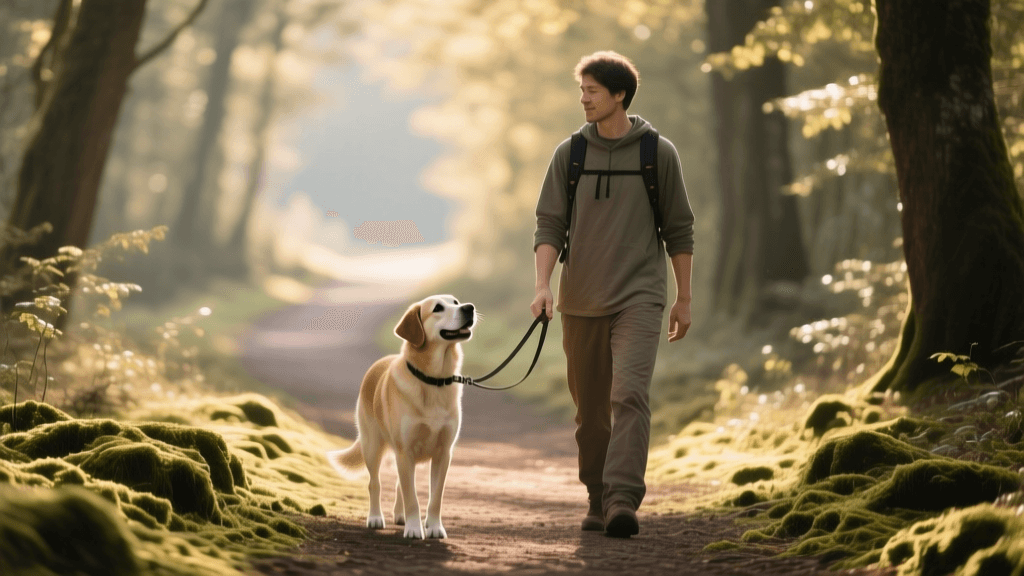
Traditional dog walking often focuses on physical exertion and strict heel commands. However, modern canine psychology in 2026 highlights that mental stimulation is vastly more effective for behavioral balance. The ASPCA notes that 15 minutes of intense mental enrichment can be as physically tiring for a dog as an hour of running. A holistic Sniffari shifts the goal from 'distance covered' to 'information processed.' It is a decompression exercise that allows the dog to lead the pace, engage their natural foraging instincts, and naturally lower their heart rate through rhythmic sniffing.
2026 Holistic Enrichment Toolkit
Creating a holistic scent environment at home or on the trail requires natural, non-toxic materials. Below is a comparison of the most effective holistic scent enrichment tools available this year.
| Enrichment Method | Natural Materials Used | Psychological Benefit | 2026 Estimated Cost |
|---|---|---|---|
| Organic Wool Snuffle Mat | Un-dyed sheep's wool, organic cotton base | Encourages natural foraging instincts; reduces meal-time anxiety. | $45 - $85 |
| Herbal Scatter Garden | Chamomile, Calendula, Sweet Basil, bare soil | Provides safe, calming aromatherapy while satisfying digging urges. | $20 - $40 (Seeds/Plants) |
| Raw Scent Trails | Goat milk, bone broth, crushed dried liver | Stimulates tracking instincts; builds confidence in shy dogs. | $15 - $30 per month |
| Decompression Field Trip | Untreated forest leaves, natural moss, earth | Resets the nervous system; lowers reactivity to urban triggers. | Free (Transportation only) |
Safe Botanicals for Scent Enrichment
A truly holistic approach to understanding your dog involves utilizing the healing properties of nature. You can cultivate a 'scent garden' in your backyard or use dried herbs in indoor scatter games. Always ensure plants are non-toxic to canines. The Humane Society of the United States frequently advocates for safe, natural environmental modifications to keep dogs mentally stimulated and emotionally balanced.
- Chamomile (Matricaria recutita): Known for its mild sedative properties, the scent of chamomile can help soothe dogs suffering from separation anxiety or noise phobias.
- Rosemary (Salvia rosmarinus): A stimulating herb that has been linked to improved cognitive function and memory retention in aging dogs.
- Lavender (Lavandula angustifolia): While the essential oil must be used with extreme caution and heavy dilution, the dried plant matter is safe for sniffing and promotes a relaxed state during rest periods.
- Calendula (Calendula officinalis): Offers an earthy, slightly pungent scent that is highly attractive to dogs while being completely safe if ingested during foraging.
Implementing the 15-Minute Holistic Sniffari Protocol
To integrate scent psychology into your daily routine, follow this structured, natural protocol designed to ground your dog and fulfill their breed instincts.
Step 1: The Grounding Departure (Minutes 1-3)
Before leaving the house, allow your dog to sniff a specific 'calming herb' sachet (filled with dried chamomile and valerian root). This creates a Pavlovian response, signaling to their brain that it is time to transition from indoor resting to outdoor exploration without hyper-arousal.
Step 2: The Long-Line Release (Minutes 4-12)
Use a 15-to-30-foot biothane long line attached to a well-fitted, Y-front harness. Avoid retractable leashes, which create constant tension and mimic the feeling of being restrained, thereby increasing anxiety. Allow the line to remain slack. Follow your dog. If they spend five minutes investigating a single patch of clover, let them. This is deep psychological work.
Step 3: The Scatter and Search (Minutes 12-15)
Conclude the walk by tossing a handful of high-value, single-ingredient treats (like freeze-dried minnows or beef lung) into a patch of natural grass or leaves. This triggers the final foraging sequence—search, locate, and consume—which naturally completes the dopamine reward loop and leaves the dog in a state of deep neurological satisfaction.
Conclusion: Honoring the Nose
Understanding your dog requires looking past human priorities and embracing their natural, holistic design. By shifting your perspective from physical exercise to psychological enrichment, you validate your dog's primary way of interacting with the world. The holistic Sniffari is more than just a walk; it is a daily practice of respect, communication, and natural healing that will result in a calmer, more grounded, and deeply understood companion in 2026 and beyond.
marcus-aldridge
All our authors care for dogs every day — read more of their work on the authors page.