Best Dog Breeds For Remote Workers In 2026: Wellness Guide
Discover the best dog breeds for remote workers in 2026. Learn how low-stress companions improve mental health, reduce Zoom fatigue, and enforce healthy breaks.
The Mental Health Reality of Remote Work in 2026
As we settle into the mature remote and hybrid work landscapes of 2026, the boundaries between our personal lives and professional obligations have never been more blurred. While working from home offers unparalleled flexibility, it has also ushered in a unique set of wellbeing challenges. 'Zoom fatigue,' sedentary lifestyles, and the isolation of the home office have led to a significant rise in chronic stress and burnout among remote professionals. Enter the ultimate wellness intervention: the right canine companion. Choosing a dog that aligns with your work-from-home lifestyle is not just about finding a cute pet; it is a strategic decision for your mental and physical health.
The Science Behind Dogs and Cortisol Reduction
Before diving into specific breeds, it is essential to understand why dogs are so effective at improving remote worker wellbeing. Interacting with a dog has been scientifically proven to lower cortisol (the primary stress hormone) and increase the production of oxytocin, dopamine, and serotonin. According to Harvard Health Publishing, the simple act of petting a dog can lower blood pressure and reduce symptoms of depression and anxiety. Furthermore, the American Veterinary Medical Association (AVMA) highlights that the human-animal bond provides critical emotional support, mitigating the loneliness that often accompanies isolated remote work setups. For the remote worker, a dog acts as a living, breathing biofeedback mechanism, encouraging mindfulness and grounding you in the present moment during high-stress virtual meetings.
'The presence of a calm, empathetic dog in a home office acts as a biological anchor, pulling remote workers out of digital anxiety and back into the physical present.'
Top 3 Low-Stress Dog Breeds for the Home Office
Not all dogs are suited for the home office environment. High-energy working breeds, such as Border Collies or Belgian Malinois, may become destructive or anxious if they cannot burn off energy while you are chained to your desk. Instead, remote workers thrive with breeds that are emotionally intuitive, relatively quiet, and capable of relaxing for extended periods. Here are the top three breeds optimized for remote work wellbeing in 2026.
1. Cavalier King Charles Spaniel: The Anxiety-Reducing Lap Warmer
The Cavalier King Charles Spaniel is widely considered the ultimate 'Velcro dog.' They are deeply empathetic and possess an uncanny ability to sense when their owner is stressed. If you are grappling with a tight deadline or a difficult email, a Cavalier will quietly rest its head on your foot or curl up in your lap, providing deep pressure therapy that naturally calms the nervous system. They require only moderate exercise—typically a 30-minute leisurely walk in the morning and another in the evening—making them perfect for busy professionals. Their low barking tendency ensures your microphone remains clear during conference calls, and their small size makes them ideal for apartment dwellers.
2. Greyhound: The Quiet Ergonomic Enforcer
It may seem counterintuitive to recommend a racing breed for a sedentary home office, but retired Greyhounds are famously known as '45-mph couch potatoes.' They are incredibly quiet, gentle, and spend up to 18 hours a day sleeping. For remote workers, a Greyhound serves as an 'ergonomic enforcer.' Because they need to stretch their long legs and relieve themselves every 4 to 5 hours, they naturally force you to step away from your monitor, preventing the deep vein thrombosis and lower back pain associated with prolonged sitting. Despite their size, they are notoriously lazy indoors and will happily snooze on a large orthopedic bed right beside your standing desk without demanding constant attention.
3. Bichon Frise: The Hypoallergenic Mood Lifter
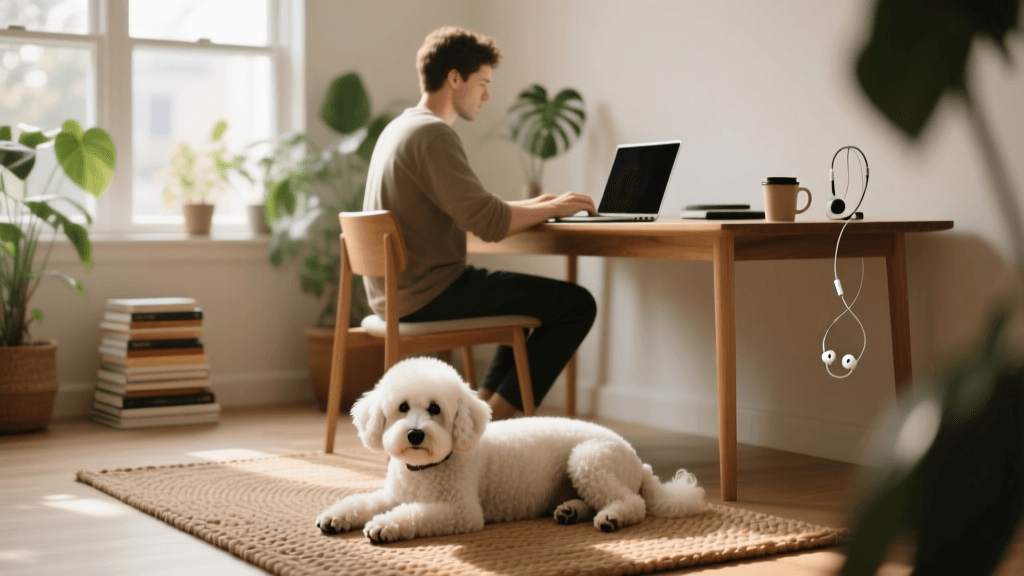
If your home office is prone to gloomy days or seasonal affective disorder, the Bichon Frise is your antidote. Known for their cheerful, clownish demeanor, Bichons are natural mood lifters. Crucially, they are a hypoallergenic breed, meaning their hair-like coat produces less dander, keeping your home office air quality high and preventing allergy-induced brain fog. The Bichon's grooming requirements also serve as a wellbeing tool; the daily brushing and regular professional grooming appointments enforce a consistent self-care and mindfulness routine, pulling you out of the digital world and into a tactile, grounding activity.
Breed Comparison Chart for Remote Professionals
| Breed | Energy Level | Barking Tendency | Best Wellness Benefit | Daily Walk Requirement |
|---|---|---|---|---|
| Cavalier King Charles Spaniel | Low to Moderate | Low | Anxiety reduction via physical touch | 45-60 minutes total |
| Greyhound (Retired) | Low (Indoors) | Very Low | Enforces ergonomic screen breaks | 40-50 minutes total |
| Bichon Frise | Moderate | Moderate | Mood elevation and allergy-friendly | 30-45 minutes total |
Designing a Wellbeing-Focused Daily Routine
To maximize the health benefits of your canine companion, structure your 2026 remote workday around their natural rhythms. This creates a symbiotic routine that benefits both human and hound.
- 8:00 AM - The Circadian Reset: Begin your day with a 20-minute outdoor walk. Exposure to morning sunlight regulates your circadian rhythm, boosting daytime alertness and improving nighttime sleep quality. This also satisfies your dog's morning sniffing and enrichment needs.
- 10:30 AM - The 20-20-20 Rule & Hydration: Every 20 minutes, look at something 20 feet away for 20 seconds. Use this micro-break to toss a treat or engage in a 2-minute gentle petting session with your dog, lowering your heart rate before returning to the screen.
- 12:30 PM - The Mid-Day Reset: Step away from your desk for a 30-minute lunch and a second dog walk. This physical transition mimics the 'commute' that remote workers lack, providing a clear psychological boundary between morning deep-work and afternoon collaborative tasks.
- 3:30 PM - The Enrichment Break: Combat the afternoon slump by providing your dog with a snuffle mat or a frozen Kong toy. Watching them engage in problem-solving provides a mental break for you, shifting your brain from focused analytical work to relaxed observation.
Optimizing Your Home Office for Canine Wellness
Your dog's wellbeing directly impacts your own. A stressed or uncomfortable dog will pace, whine, and distract you. To maintain a tranquil home office environment, invest in the right setup. First, provide a high-quality orthopedic bed, such as the Furhaven Memory Foam Dog Bed (typically costing between $60 and $120 depending on size). This supports their joints during long hours of sleeping beside your desk. Second, consider using an Adaptil Calm Home Diffuser (around $25 for a refill). This device releases synthetic dog-appeasing pheromones that have been clinically shown to reduce stress-related behaviors in dogs, ensuring they remain relaxed even when you are hosting loud, high-stakes virtual meetings. According to the Mayo Clinic, creating a shared, comfortable environment enhances the mutual health benefits of pet ownership, fostering a space where both you and your dog can thrive.
Final Thoughts on Remote Work and Pet Companionship
As remote work continues to evolve in 2026, prioritizing your mental and physical health is no longer optional; it is a professional necessity. Bringing a low-stress, emotionally intuitive dog breed like a Cavalier King Charles Spaniel, a retired Greyhound, or a Bichon Frise into your life offers a profound, scientifically backed intervention against burnout. By selecting a breed that matches your work habits and structuring your day to accommodate their needs, you transform your home office from a place of isolated labor into a sanctuary of mutual wellness and companionship.
anouk-beaumont
All our authors care for dogs every day — read more of their work on the authors page.