Quiet Apartment Dog Breeds: Behavior & Top Picks 2026
Discover the psychology behind quiet dog breeds for apartments in 2026. Learn why some breeds rarely bark and how to manage low-vocalization behavior.
The Psychology of a Quiet Dog: Why Some Breeds Rarely Bark
As urbanization continues to accelerate in 2026, high-density apartment living has become the norm for millions of dog owners. With shared walls, narrow hallways, and strict strata or HOA noise regulations, the demand for quiet dog breeds has never been higher. But to truly understand which dogs thrive in these environments, we must look beyond a simple 'top 10 list' and examine the evolutionary psychology and ancestral instincts that dictate canine vocalization.
Barking is not just random noise; it is a complex, selectively bred communication tool. According to the American Kennel Club, dogs bark for a variety of reasons rooted in their historical jobs: alerting the pack to danger, herding livestock over long distances, or expressing frustration. Breeds that were developed for guarding (like German Shepherds) or alert-hunting (like Beagles) possess a deep-seated genetic imperative to vocalize. Conversely, breeds that were selected for stealth hunting, independent tracking, or silent companionship possess a neurological baseline that favors quiet observation over vocal outbursts.
Top Quiet Dog Breeds for Apartments in 2026
When selecting a dog for an apartment, it is crucial to match the dog's ancestral energy and vocal tendencies with your living space. Below is a comparative analysis of the best low-vocalization breeds suited for modern apartment living.
| Breed | Ancestral Purpose | Vocalization Tendency | 2026 Apartment Suitability |
|---|---|---|---|
| Basenji | Stealth Hunting | Extremely Low (Yodels) | High (Requires mental puzzles) |
| Cavalier King Charles Spaniel | Royal Companionship | Low | Very High (Ideal for small spaces) |
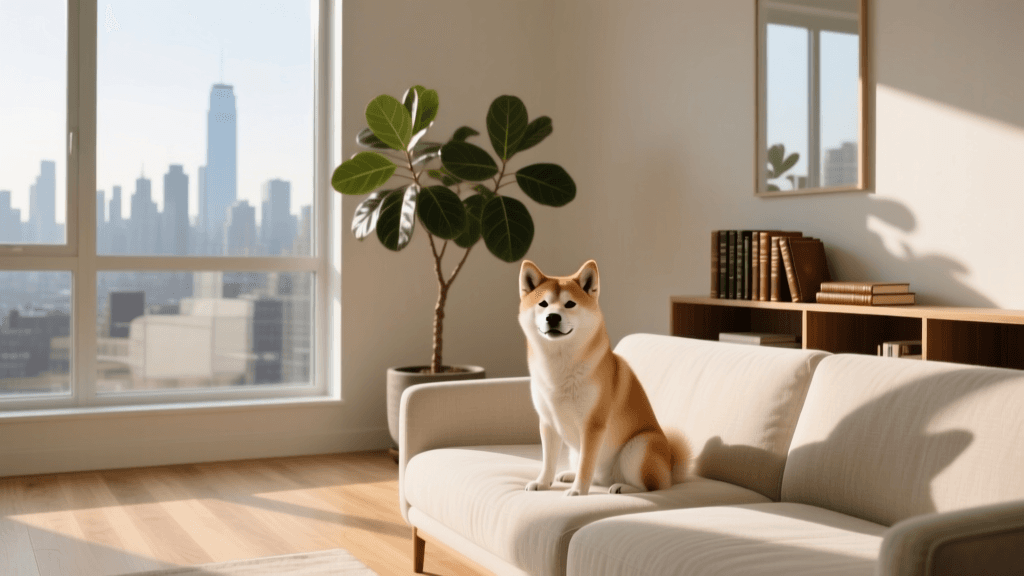
| Shiba Inu | Independent Flush Hunting | Low to Moderate (Alert barks) | Moderate (Needs strict socialization) |
| Greyhound | Course Luring / Sprinting | Very Low | High (Surprisingly great couch potatoes) |
| Japanese Chin | Aristocratic Lap Dog | Very Low | Very High (Low exercise needs) |
The Basenji: The Barkless Phenomenon
The Basenji is famous for being 'barkless,' but this is due to a unique physiological trait rather than just behavioral conditioning. Their larynx is uniquely shaped, preventing the standard bark and resulting in a yodel-like sound called a 'baroo.' Psychologically, Basenjis are highly independent and cat-like. They do not look to humans for constant direction, which means they rarely engage in attention-seeking barking. However, their high intelligence requires rigorous daily enrichment to prevent destructive behaviors in an apartment.
The Cavalier King Charles Spaniel
Bred exclusively for companionship, the Cavalier lacks the territorial guarding instinct that triggers alarm barking in other breeds. Their psychological baseline is deeply attuned to human emotional states, making them incredibly empathetic and quiet indoor companions. They are highly adaptable to the square footage of modern 2026 micro-apartments, provided they receive adequate daily sniffari walks to satisfy their mild scent-hound instincts.
The Greyhound
Despite their reputation for speed, retired racing Greyhounds are famously lazy indoors. As sight hounds, their prey drive is triggered by movement, not sound. In an apartment setting where visual stimuli are limited, Greyhounds typically remain silent and relaxed. They are sensitive dogs that prefer a calm, predictable environment, making them excellent neighbors in high-rise buildings.
Understanding 'Quiet' vs. 'Suppressed' Behavior
A critical distinction in canine psychology is the difference between a genetically quiet dog and a behaviorally suppressed dog. In the rush to find the perfect apartment pet, some owners inadvertently punish all vocalization, leading to a state of learned helplessness. A suppressed dog does not bark because they have learned that expressing themselves results in negative consequences, not because they are relaxed.
According to the ASPCA's guide on canine body language, suppressed stress often manifests in subtle, non-vocal ways. If your apartment dog is unusually silent but exhibits the following signals, they may be experiencing chronic anxiety rather than contentment:
- Whale Eye: Showing the whites of their eyes while turning their head away from a trigger (like a noisy neighbor).
- Lip Licking and Yawning: Frequent, out-of-context yawning or rapid lip licking when exposed to environmental stressors.
- Freezing: Becoming completely rigid and silent when hearing hallway noises, rather than relaxing or investigating.
- Pacing: Silent, repetitive walking patterns near the front door or shared walls.
It is vital to reward quiet relaxation while still allowing your dog to communicate. If a dog gives a single, low 'boof' at a delivery driver, acknowledging their alert and asking them to settle is far healthier than punishing the vocalization entirely.
Environmental Enrichment for Low-Vocalization Breeds
Quiet dogs still possess energy and cognitive needs. In 2026, the latest trends in canine psychology emphasize 'decompression enrichment'—activities that allow dogs to engage their natural instincts silently. For apartment dwellers, this is the key to maintaining a peaceful home.
- Smart Snuffle Mats and Foraging Boxes: Hiding high-value treats in dense fabric mats engages the olfactory cortex, tiring the dog out mentally without requiring physical space or generating noise.
- Lick Mats with Frozen Broth: The repetitive action of licking releases endorphins in the canine brain, naturally soothing anxiety triggered by urban noise pollution.
- Scent Work Games: Teaching your dog to identify specific essential oils (like birch or anise) and find them hidden around the apartment provides intense mental stimulation that satisfies the hunting instincts of breeds like the Shiba Inu or Basenji without the barking.
Managing Shared-Wall Triggers in High-Density Living
Even the quietest breeds can develop noise phobias or barrier frustration in apartment buildings. The psychological phenomenon of 'barrier frustration' occurs when a dog can hear or smell another dog in the hallway but cannot access them, leading to a buildup of arousal that eventually breaks their silence.
To combat this in 2026, many urban dog owners are utilizing smart home acoustics. Utilizing white noise machines specifically calibrated to mask the frequencies of human footsteps and elevator dings can significantly reduce a dog's hyper-vigilance. Furthermore, desensitization training is crucial. Playing recorded sounds of hallway chatter and elevator bells at a very low volume while feeding your dog high-value treats rewires their psychological association from 'intruder alert' to 'predictor of good things.'
The Role of Epigenetics and Early Socialization
Modern behavioral science in 2026 heavily emphasizes the role of epigenetics and early neurological stimulation. A puppy's tendency to be quiet or vocal is not just dictated by breed, but by their mother's stress levels during gestation and their exposure to environmental stimuli between weeks 3 and 12 of life.
When sourcing a quiet apartment dog, it is imperative to speak with breeders or rescue coordinators about the puppy's early sound exposure. Puppies raised in quiet, rural environments may become highly reactive and vocal when suddenly exposed to the acoustic chaos of a city apartment. Conversely, puppies raised in busy, urban foster homes are often neurologically primed to ignore the sounds of sirens, slamming doors, and neighboring footsteps, maintaining their genetic predisposition for quietness.
Conclusion
Choosing a quiet dog breed for an apartment is about more than just avoiding noise complaints; it is about aligning a dog's ancestral psychology with your modern lifestyle. By understanding why breeds like the Basenji, Cavalier, and Greyhound are genetically inclined toward silence, and by recognizing the difference between a relaxed dog and a suppressed one, you can create a harmonious living space. Coupled with 2026's best practices in silent enrichment and acoustic management, even high-density urban living can be a peaceful haven for you and your low-vocalization companion.
anouk-beaumont
All our authors care for dogs every day — read more of their work on the authors page.