Canine Scent Psychology: Holistic Enrichment In 2026
Discover how holistic scent enrichment and olfactory psychology can naturally calm your dog's anxiety in 2026 using snuffle mats, herbs, and sniffaris.
The Olfactory Brain: Why Sniffing is Psychological Medicine
When we look at our dogs, we often focus on their expressive eyes or their wagging tails. However, to truly understand canine psychology and behavior, we must look at the world through their noses. In 2026, holistic veterinarians and certified animal behaviorists are increasingly moving away from synthetic pharmaceutical interventions for mild canine anxiety, turning instead to natural, species-appropriate olfactory enrichment. A dog's brain is hardwired to process the world through scent, and fulfilling this instinct is one of the most powerful, natural ways to regulate their nervous system.
Unlike humans, who possess roughly 6 million olfactory receptors, dogs have up to 300 million. Furthermore, the part of a dog's brain that is devoted to analyzing smells is proportionally 40 times greater than ours. When a dog engages in deep, sustained sniffing, it is not merely gathering information; they are engaging their parasympathetic nervous system. This is the body's natural 'rest and digest' mode. Studies in canine cognition have repeatedly shown that allowing a dog to sniff freely lowers their heart rate, reduces cortisol levels, and induces a state of calm focus. By leveraging this biological reality, we can use holistic scent enrichment as a primary tool for managing stress, boredom, and reactive behaviors.
Holistic Scent Profiles for Canine Anxiety
Incorporating plant-based aromatics into your dog's environment is a cornerstone of holistic behavioral therapy. However, because a dog's sense of smell is so acute, the approach must be subtle, safe, and grounded in botanical science. In 2026, the most recommended holistic scent profiles for canine calming include:
- True Lavender (Lavandula angustifolia): Renowned for its linalool content, true lavender has a documented soothing effect on the mammalian nervous system. It is excellent for dogs who experience environmental stressors like thunderstorms or construction noise.
- Chamomile (Matricaria recutita): Often used in holistic canine teas, the scent of Roman or German chamomile promotes relaxation and can help ease gastrointestinal tension that often accompanies anxiety.
- Valerian Root (Valeriana officinalis): While its smell is quite pungent and earthy (often described as similar to dirty socks), valerian root is a powerful natural sedative. Many holistic practitioners use highly diluted valerian sprays for severe separation anxiety or hyperarousal.
- Sweet Basil (Ocimum basilicum): A lesser-known but highly effective adaptogenic herb, sweet basil can help dogs cope with chronic stress and mental fatigue, making it ideal for working breeds or dogs in busy urban environments.
'We must remember that a dog's nose is their primary interface with reality. When we provide complex, natural scents, we are giving their brain a rich, calming puzzle to solve, which is infinitely more effective than simply telling them to 'settle'.'
— Dr. Elena Rostova, Holistic Veterinary Behaviorist, 2026
Actionable Natural Enrichment Techniques for 2026
Understanding the psychology of scent is only the first step; applying it through natural enrichment is where the behavioral transformation occurs. Here are the most effective, actionable techniques you can implement at home today.
1. The Organic Snuffle Mat and Foraging Box
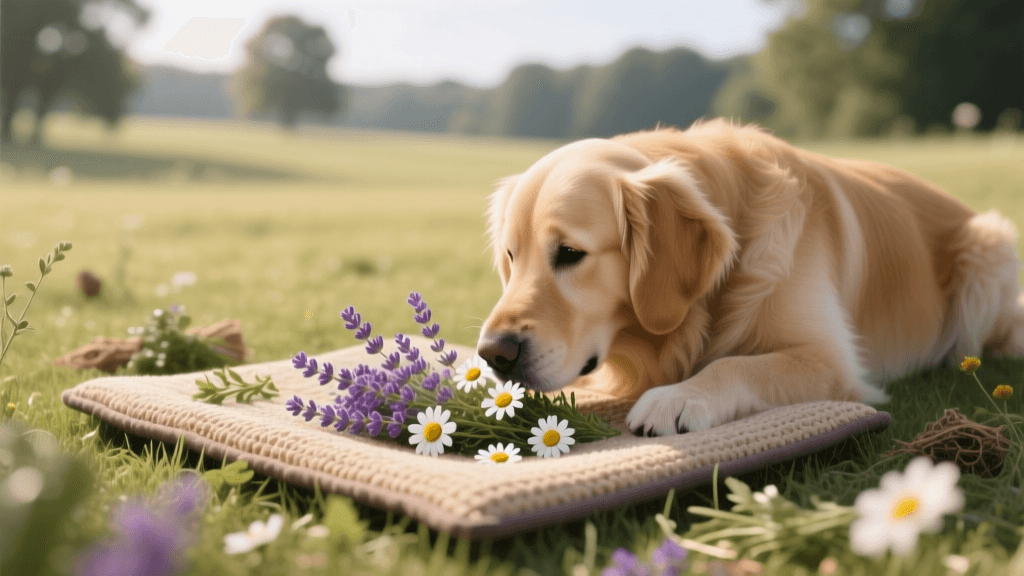
The snuffle mat remains a staple of indoor holistic enrichment. In 2026, the market has shifted away from synthetic fleece mats toward upcycled, organic cotton and hemp blends, which hold natural scents better and are safer if accidentally ingested. A premium organic snuffle mat typically costs between $35 and $55. To maximize the psychological benefit, do not just sprinkle dry kibble on top. Rub the mat with a small amount of dried chamomile flowers or a dog-safe bone broth, then hide high-value, single-ingredient treats deep within the fibers. This forces the dog to use their nose rather than their eyes, extending the foraging session to 15-20 minutes and providing immense mental fatigue.
2. The 'Sniffari' Decompression Walk
A 'Sniffari' is a dedicated walk where the dog dictates the pace and the route, with the sole purpose of olfactory exploration. This is crucial for reactive or anxious dogs who feel pressured by traditional heel-walking. Use a 15-to-30-foot biothane long line attached to a well-fitted Y-harness. Allow your dog to stop and sniff a single bush for five minutes if they wish. The psychological decompression achieved during a 45-minute Sniffari is often equivalent to a two-mile physical run, leaving the dog deeply relaxed and satisfied.
3. Passive Aromatic Diffusion Zones
Create a 'calm zone' in your home using passive diffusion. Avoid heat-based or ultrasonic diffusers that can overwhelm a dog's respiratory tract or disperse concentrated droplets into the air. Instead, use a holistic passive reed diffuser or a simple terracotta stone placed out of reach, infused with two drops of true lavender hydrosol. This creates a subtle, ambient scent profile that signals to the dog's brain that the environment is safe and secure.
Comparison Chart: Holistic Scent Enrichment Methods
| Method | Setup Time | Estimated Cost (2026) | Best Psychological Application |
|---|---|---|---|
| Organic Snuffle Mat | 2-3 Minutes | $35 - $55 | Hyperactivity, mealtime anxiety, indoor boredom |
| Sniffari Decompression Walk | 5 Minutes (Gear prep) | $40 (Long line & harness) | Leash reactivity, generalized anxiety, fear periods |
| Passive Hydrosol Diffusion | 1 Minute | $15 - $25 (Hydrosol) | Separation anxiety, sleep disturbances, noise phobias |
| DIY Scent Trail (Yard) | 10-15 Minutes | $5 (Treats/Herbs) | Confidence building, focus training, instinct fulfillment |
Safety First: Navigating Essential Oils and Herbs
While natural approaches are highly effective, 'natural' does not automatically mean 'safe.' Canine livers lack certain enzymes required to metabolize specific plant compounds, making some common human essential oils highly toxic to dogs. When exploring holistic scent psychology, strict safety protocols must be followed.
According to the ASPCA Animal Poison Control Center, oils such as tea tree (melaleuca), pennyroyal, wintergreen, pine, and ylang-ylang are strictly contraindicated for canine use and can cause severe neurological and hepatic damage. Even safe oils like lavender must never be applied directly to the dog's skin or nose undiluted.
- Use Hydrosols Over Essential Oils: Hydrosols (the floral water left over after essential oil distillation) are vastly safer for dogs. They contain the therapeutic aromatic properties of the plant but at a fraction of the concentration, eliminating the risk of chemical burns or respiratory distress.
- The 1% Dilution Rule: If you must use a high-quality, therapeutic-grade essential oil for environmental scenting, dilute it to a maximum of 1% (approximately 1 drop of essential oil per 100 drops or 5ml of a carrier oil like fractionated coconut oil).
- Provide an Escape Route: Never use a scent diffuser in a closed room or a crate. Your dog must always have the autonomy to leave the scented area if they find it overwhelming. Respecting their agency is a core tenet of holistic behavioral psychology.
- Consult a Professional: Always cross-reference any new herb or supplement with your veterinarian. Organizations like the American Veterinary Medical Association (AVMA) provide excellent baseline resources for integrating complementary therapies safely into your dog's routine.
Conclusion: Honoring the Canine Nose
Understanding your dog requires stepping outside of our human, visually-dominant perception of the world. By embracing holistic scent enrichment in 2026, we are not just giving our dogs a fun activity; we are providing them with a biological necessity. Whether through the deep, rhythmic sniffing of a Sniffari, the mental puzzle of an organic snuffle mat, or the gentle, calming ambiance of a lavender hydrosol, we can naturally regulate their nervous systems. When we honor the profound psychology of the canine nose, we unlock a deeper, more harmonious bond with our best friends, proving that sometimes, the most powerful behavioral medicine is simply a scent on the wind.
beth-carrasco
All our authors care for dogs every day — read more of their work on the authors page.