Azawakh Breed Guide 2026: Psychology, Traits & Care
Discover the unique psychology, guarding instincts, and body language of the rare Azawakh sighthound in our comprehensive 2026 breed profile.
Introduction to the Sahel's Fierce Guardian
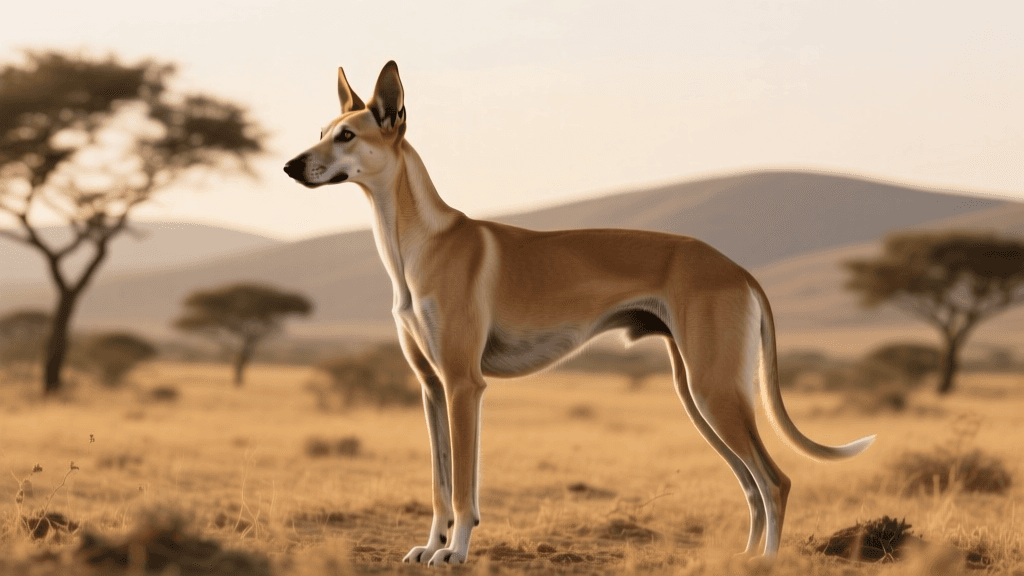
The Azawakh is a striking, elegant, and profoundly complex sighthound originating from the harsh Sahel region of West Africa, specifically Mali, Niger, and Burkina Faso. Historically bred by the nomadic Tuareg people, these dogs were not merely hunting companions; they were fierce protectors of the camp and the herd. As exotic and international breed profiles go, the Azawakh stands in a league of its own. While many Western dog owners are familiar with the laid-back temperament of the Greyhound or the aloof independence of the Saluki, the Azawakh brings a deeply ingrained guarding instinct and an intense pack bond that defies typical sighthound stereotypes. In 2026, as more canine enthusiasts seek out rare, purpose-bred dogs, understanding the deep psychological roots of the Azawakh is critical for any prospective owner or behavioral specialist.
The Azawakh Mindset: Beyond the Sighthound Stereotype
To truly understand the Azawakh, one must discard the notion that all sighthounds are docile couch potatoes. According to the American Kennel Club, the Azawakh is remarkably aloof with strangers but intensely affectionate and loyal to its family. This dichotomy is the cornerstone of their psychology. In the Sahel, a dog that wandered off with strangers or failed to challenge approaching predators was a liability. Therefore, the Azawakh's brain is wired for hyper-vigilance and deep tribal loyalty.
Unlike Western breeds that have been selectively bred for centuries to be universally sociable or compliant, the Azawakh retains a primal, almost wolf-like pack mentality. They do not view humans as masters to be blindly obeyed; rather, they view their family as a pack to be protected and cooperated with. This makes their psychological profile much closer to that of a primitive livestock guardian breed than a traditional coursing hound.
Decoding Azawakh Body Language
Because the Azawakh is a primitive breed, their body language is nuanced, subtle, and sometimes easily misinterpreted by those accustomed to more expressive breeds like Golden Retrievers. Understanding these signals is vital for preventing behavioral misunderstandings.
- The Alert Posture: When an Azawakh senses an intruder or an unfamiliar stimulus, they do not immediately bark. Instead, they freeze, shift their weight forward, and raise their tail high, often curling it over their back. Their ears, which are typically dropped or semi-pricked, will swivel forward and stiffen.
- The 'Roach' Back: When highly stimulated or preparing to sprint, the Azawakh may exhibit a pronounced arch in their lumbar region, known as a roached back. This is a sign of kinetic potential and extreme focus, not a spinal defect.
- Aloofness vs. Aggression: An Azawakh will often turn its head away or physically step back from a stranger attempting to pet it. This is not fear; it is a boundary-setting behavior. If the stranger pushes past this boundary, the dog may escalate to a low growl or a warning snap. Respecting their spatial autonomy is key to managing their stress levels.
- Vocalization: They are generally quiet dogs, but they possess a unique, deep, resonant bark used specifically for alarm purposes. In 2026, urban owners must recognize that an Azawakh barking is almost always a genuine alert, not attention-seeking behavior.
Breed Comparison: Azawakh vs. Other Sighthounds
To contextualize the Azawakh's unique behavioral traits, it is helpful to compare them to other well-known sighthounds. The following table highlights the distinct psychological and instinctual differences that define the breed.
| Trait | Azawakh | Greyhound | Saluki |
|---|---|---|---|
| Primary Historical Role | Guarding & Coursing | Track Racing & Coursing | Desert Hunting |
| Stranger Tolerance | Very Low (Suspicious) | High (Indifferent/Friendly) | Low (Aloof) |
| Pack Bonding | Intense / Tribal | Moderate / Sociable | Independent / Feline |
| Guarding Instinct | High (Territorial) | None | Low |
| Trainability | Moderate (Requires Respect) | Moderate (Food/Motivation) | Low (Highly Independent) |
Guarding Instincts and Territorial Psychology
The guarding instinct of the Azawakh is perhaps its most defining and challenging trait for modern owners. The American Azawakh Association emphasizes that this breed is a natural guardian, possessing an innate drive to protect its territory and its people from perceived threats. This behavior is not trained into them; it is genetically hardcoded.
In a modern suburban or urban environment, this can manifest as intense reactivity to delivery drivers, joggers passing the property line, or guests entering the home. The Azawakh does not guard objects like toys or food; they guard space and pack members. When a guest enters an Azawakh's home, the dog will likely stand between the guest and the owner, monitoring the stranger's every move. Once the owner signals acceptance and the guest sits calmly, the Azawakh will typically de-escalate, though they will remain watchful.
'The Azawakh is not a dog for everyone. They require an owner who understands primitive guarding behaviors and can provide firm, fair, and consistent leadership without resorting to harsh corrections, which will only destroy the dog's trust.'
Prey Drive and Environmental Management
Like all sighthounds, the Azawakh possesses a high prey drive. However, their prey drive is compounded by their territorial nature. If a stray cat or a wild animal enters their perceived territory, the Azawakh will pursue it not just for the thrill of the chase, but to eliminate a perceived threat to the camp.
Environmental management in 2026 requires secure, physical barriers. A standard four-foot fence is entirely insufficient for an Azawakh, who can easily scale or jump it when stimulated. Experts recommend a minimum six-foot privacy fence, often equipped with coyote rollers at the top to prevent climbing. Furthermore, off-leash recall is notoriously unreliable in this breed once their visual prey drive is triggered. Modern GPS tracking collars are highly recommended for any outdoor excursions in unfenced areas, though a long-line leash remains the safest physical restraint.
2026 Health, Genetics, and Veterinary Care
Understanding a breed's psychology also requires understanding their physical vulnerabilities, as pain or discomfort can drastically alter behavior. The Azawakh is a generally robust breed, but they are prone to specific genetic conditions, including autoimmune thyroiditis, idiopathic epilepsy, and spondylosis.
Furthermore, veterinary protocols for sighthounds have evolved. As noted by specialists at VCA Hospitals, sighthounds possess unique physiological traits, including a lower percentage of body fat and different liver enzyme processing capabilities. This makes them highly sensitive to standard doses of barbiturate-based anesthetics. In 2026, it is imperative that any Azawakh owner ensures their veterinarian is well-versed in modern sighthound-safe anesthesia protocols (such as propofol or isoflurane) before any surgical or dental procedures are performed. Behavioral issues such as sudden aggression or lethargy should always be evaluated for underlying thyroid dysfunction or spinal pain before being labeled as purely psychological.
Training Strategies for an Independent Mind
Training an Azawakh requires a paradigm shift. Traditional obedience methods based on repetitive drilling and dominance theory will fail spectacularly with this breed. They are highly intelligent but lack the 'eager to please' biddability of a Border Collie or Labrador.
The most effective approach in 2026 is based on LIMA (Least Intrusive, Minimally Aversive) principles, utilizing positive reinforcement, high-value rewards, and mutual respect. Socialization must begin early and continue throughout the dog's life. However, socialization for an Azawakh does not mean forcing them to interact with every person and dog they meet. Instead, it means exposing them to various environments, sounds, and sights, and rewarding them for remaining calm and neutral. Teaching a 'place' command or a 'touch' (hand target) gives the dog a predictable job to do when they feel overwhelmed by strangers, reducing their anxiety and preventing defensive guarding behaviors.
Conclusion
The Azawakh is a magnificent, deeply psychological breed that offers an unparalleled bond to those willing to understand their primitive roots. They are not pets in the conventional sense; they are partners, guardians, and living relics of the Sahel. By respecting their boundaries, managing their environment, and honoring their guarding instincts, owners can forge a profound relationship with one of the most unique and exotic sighthounds in the canine world.
robin-maitland
All our authors care for dogs every day — read more of their work on the authors page.