Quiet Apartment Dog Breeds: 2026 Training Masterclass
Discover 2026 training techniques for quiet apartment dog breeds. Learn bark control, hallway desensitization, and calmness conditioning for small spaces.
Why Naturally Quiet Breeds Need Specialized Apartment Training
When you bring a Basenji, Greyhound, or Cavalier King Charles Spaniel into a high-density apartment in 2026, you might assume their naturally low vocalization means your training work is already done. However, modern apartment living presents unique acoustic and spatial challenges that can trigger even the most stoic breeds. Shared walls, echoing hallways, and the constant hum of smart-building intercoms can create a high-stress environment for dogs not properly conditioned to urban density.
According to the American Kennel Club's apartment living guidelines, selecting a low-bark breed is only the first step; proactive environmental desensitization is mandatory to prevent reactive behaviors from developing. A naturally quiet dog that becomes chronically stressed by hallway foot traffic may not bark, but they might develop destructive chewing habits, pacing, or sudden aggression when startled. This 2026 masterclass focuses on actionable, science-backed training protocols designed specifically to maintain the calm demeanor of quiet breeds in compact living spaces.
The Quiet Breed Paradox: Startle vs. Territorial Barking
Unlike terriers or hounds, which often bark out of territorial instinct or prey drive, quiet breeds typically vocalize in apartments due to the startle response or barrier frustration. Because these breeds are genetically predisposed to internalize stress rather than project it, owners often miss the subtle early warning signs of anxiety, such as lip licking, whale eye, or rigid freezing, until the dog reaches a threshold and finally lets out a sharp, unexpected alarm bark.
To combat this, we must shift our training focus from traditional 'quiet commands' (which are unnecessary for dogs that rarely bark) to proactive nervous system regulation. The goal in 2026 is to utilize modern behavioral conditioning techniques that teach the dog to process sudden environmental noises as cues for relaxation rather than alerts for danger.
Hallway Desensitization: The Engage-Disengage Protocol
The most common trigger for apartment dogs is the sound of neighbors walking past the front door or using the elevator. To address this, we utilize the Engage-Disengage protocol, a cornerstone of modern counterconditioning. The ASPCA's guide on desensitization and counterconditioning emphasizes that changing a dog's emotional response to a trigger requires pairing the trigger with a high-value reward before the dog crosses their reactivity threshold.
Step-by-Step Implementation
- Step 1: Establish the Baseline. Sit with your dog in the living room, about 10 feet from the front door. Have a pouch of ultra-high-value, low-volume treats ready (e.g., Ziwi Peak air-dried venison or freeze-dried beef liver).
- Step 2: The Engage Phase. The moment you hear a muffled sound from the hallway (footsteps, keys jingling), mark the sound with a calm verbal cue like 'Yes' or a soft clicker, and immediately deliver a treat. The dog engages with the sound, and the reward follows.
- Step 3: The Disengage Phase. After 5-7 repetitions, wait for the hallway noise. If your dog hears the noise and immediately looks up at you before you mark the behavior, they have successfully disengaged from the trigger and are offering a conditioned calm response. Reward heavily with a 'jackpot' of 3-4 treats.
- Step 4: Environmental Management. During the initial 30-day training window in 2026, use a white noise machine like the Yogasleep Dohm Classic (retailing around $45) placed near the entryway to artificially raise the auditory threshold, ensuring your dog isn't ambushed by sudden loud noises while you are away.
Boundary and Mat Training for Shared Walls
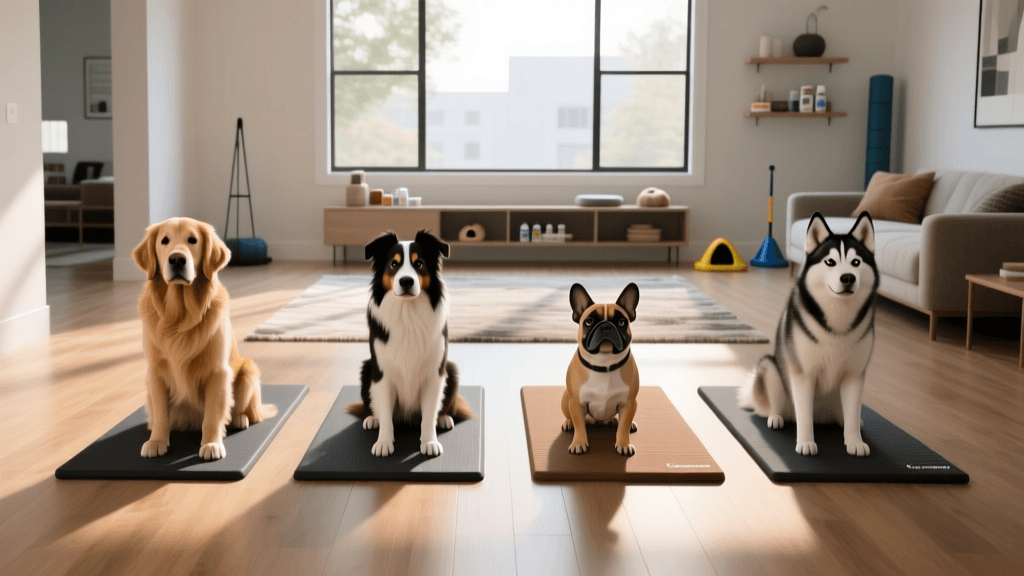
Quiet breeds like the Greyhound or the Shiba Inu often prefer to observe their environment from a fixed vantage point. In an apartment, this can lead to 'window guarding' or pacing along shared walls. Teaching a rock-solid 'Place' command directs this natural instinct to a designated, comfortable zone away from high-traffic boundaries.
Invest in an elevated cot, such as the Kuranda Chewproof Dog Bed (approx. $130), or an orthopedic memory foam mat. The elevation provides a sense of security and defines a clear physical boundary. Train the 'Place' command using a shaping protocol: reward any interaction with the mat, then reward sitting, then reward lying down. Once the dog is reliably settling on the mat, introduce duration. In 2026, many trainers recommend using a smart treat-dispensing camera, like the Furbo 360, to remotely reward your dog for staying on their mat when you are at work, reinforcing calm independence and preventing separation-related pacing.
Top Quiet Breeds and Their Specific Apartment Triggers
Not all quiet breeds react to the same stimuli. Understanding your specific breed's psychological profile is critical for tailoring your 2026 training regimen. Below is a comparative breakdown of popular quiet apartment breeds and their primary behavioral hurdles.
| Breed | Energy Level | Primary Apartment Trigger | 2026 Training Focus |
|---|---|---|---|
| Greyhound | Low (Sprint) | Sudden hallway noises / Startle | Auditory desensitization & 'Settle' cue |
| Basenji | High | Visual triggers (windows / balconies) | 'Leave it' command & privacy window film |
| Cavalier King Charles | Low | Separation anxiety / Velcro behavior | Independence conditioning & mat training |
| Shiba Inu | Medium | Intercom buzzers / Smart doorbells | Intercom desensitization & impulse control |
| Borzoi | Low | Confined spaces / Claustrophobia | Spatial confidence games & scent work |
Smart Tech and Pheromones for Apartment Calmness
The integration of smart home technology into dog training has evolved significantly by 2026. For quiet breeds that internalize stress, chemical signaling and environmental control are just as important as mechanical training. The ASPCA's resources on managing dog behavior frequently note that reducing environmental stressors is the fastest way to curb unwanted vocalization and anxiety.
We highly recommend utilizing the Adaptil Calm Smart Diffuser. Unlike older models, the 2026 smart versions can be integrated into your apartment's smart home ecosystem via Bluetooth or Wi-Fi, allowing you to schedule pheromone release to coincide with high-stress times, such as garbage collection hours or peak elevator traffic. Pairing the synthetic dog-appeasing pheromone (DAP) with your mat training protocol creates a powerful associative bond between the diffuser's subtle scent and the act of relaxing on their bed.
Cost and Timeline Expectations
Training a quiet breed for apartment living does not require expensive board-and-train facilities, which can often induce unnecessary stress in sensitive dogs. Instead, opt for micro-sessions. Plan for three 5-minute sessions per day. If you choose to hire a certified professional dog trainer (CPDT-KA) for in-home apartment desensitization, expect to pay between $85 and $120 per hour in major metropolitan areas in 2026. Most apartment-specific trigger issues can be resolved within 4 to 6 weeks of consistent, daily owner-led practice.
Conclusion: Preserving the Peace
Owning a quiet dog breed in an apartment is a privilege that comes with the responsibility of proactive environmental management. By utilizing the Engage-Disengage protocol for hallway noises, implementing strict mat training for shared boundaries, and leveraging 2026's smart calming technology, you can ensure your dog remains a peaceful, happy neighbor. Remember, a quiet dog is not a dog without feelings; it is simply a dog waiting for you to teach them how to process the world around them with confidence and calm.
tom-renshaw
All our authors care for dogs every day — read more of their work on the authors page.