Best Puzzle Toys for Herding Breeds: A Buyer's Guide
Discover the best puzzle toys for herding breeds. Understand your dog's instincts and choose the right mental stimulation gear to prevent boredom.
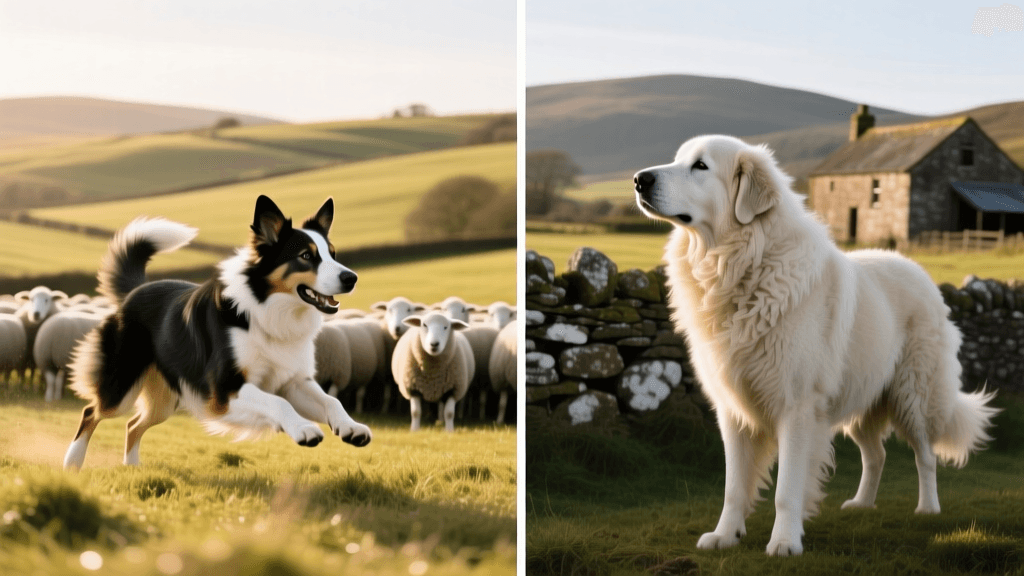
Herding breeds like Border Collies, Australian Shepherds, Shetland Sheepdogs, and Pembroke Welsh Corgis are renowned for their breathtaking intelligence, agility, and intense work ethic. Bred over centuries to control livestock across vast, rugged terrains, these dogs possess a unique psychological makeup that sets them apart from other canine groups. However, in a modern suburban or urban environment, this deeply ingrained drive can easily manifest as destructive behavior, neurotic pacing, or excessive barking if left unchanneled. Understanding the 'why' behind your herder's behavior is the first step toward a harmonious household, and selecting the right cognitive enrichment tools is the second.
According to the American Kennel Club, mental stimulation is just as critical as physical exercise for working breeds. Without a 'job' to do, a herding dog will invent one—and you likely won't approve of their chosen profession, whether that involves herding your children, obsessively stalking shadows, or dismantling your sofa cushions. This buyer's guide bridges the gap between canine psychology and practical product selection, helping you choose the best puzzle toys to satisfy your herding dog's brilliant, busy brain.
The Psychology of the Herding Brain
To choose the right products, we must first understand the predatory motor sequence. In wild canines, the sequence to catch prey is: Eye, Stalk, Chase, Grab-Bite, Kill-Bite, Dissect, and Consume. Through generations of selective breeding, humans have amplified the 'Eye' and 'Stalk' phases in herding breeds while heavily suppressing the 'Kill-Bite' and subsequent phases. This leaves your dog with an overwhelming, genetically hardwired urge to control movement and solve spatial problems, but without the natural conclusion of a predatory cycle.
When a Border Collie stares intensely at a tennis ball or a moving car, they are expressing this modified predatory sequence. Puzzle toys that require spatial reasoning, tracking, and problem-solving tap directly into this 'Eye' and 'Stalk' cognitive space, providing a safe, indoor outlet for their working drive.
Why Physical Exercise Isn't Enough
A common misconception among new herding breed owners is that a five-mile run will tire the dog out. While cardiovascular health is vital, physical exercise alone often just builds a canine marathon runner. A physically exhausted herder with an unexercised brain is still prone to anxiety and hyper-vigilance. Mental fatigue, achieved through sniffing, problem-solving, and decision-making, burns calories and releases dopamine in a way that physical running does not. As noted by experts at Fear Free Pets, cognitive enrichment lowers a dog's heart rate and reduces stress hormones, promoting genuine relaxation rather than mere physical exhaustion.
Key Features to Look for in Herding Breed Toys
Not all puzzle toys are created equal, and herding dogs will exploit design flaws in seconds. When shopping, keep these behavioral traits in mind:
- Adjustable Difficulty: Herders learn by observation and rapid trial-and-error. A toy with only one difficulty level will be mastered in an afternoon. Look for toys with modular parts or adjustable gates.
- Frustration Tolerance: Herding dogs are notorious for 'throwing their weight around' when a sheep doesn't move. Similarly, they will chew or flip a puzzle toy if it doesn't yield rewards quickly. Heavy-duty, non-slip bases are essential.
- Olfactory vs. Visual Engagement: While herders are highly visual, incorporating scent work forces them to slow down and engage different neural pathways, promoting calmness.
Top 4 Puzzle Toys for Herding Breeds: A Buyer's Guide
1. Outward Hound Nina Ottosson Dog Brick (Intermediate)
Best For: Spatial reasoning and paw-nose coordination.
Estimated Cost: $16 - $20
Measurements: 12.5 x 9.5 x 2 inches
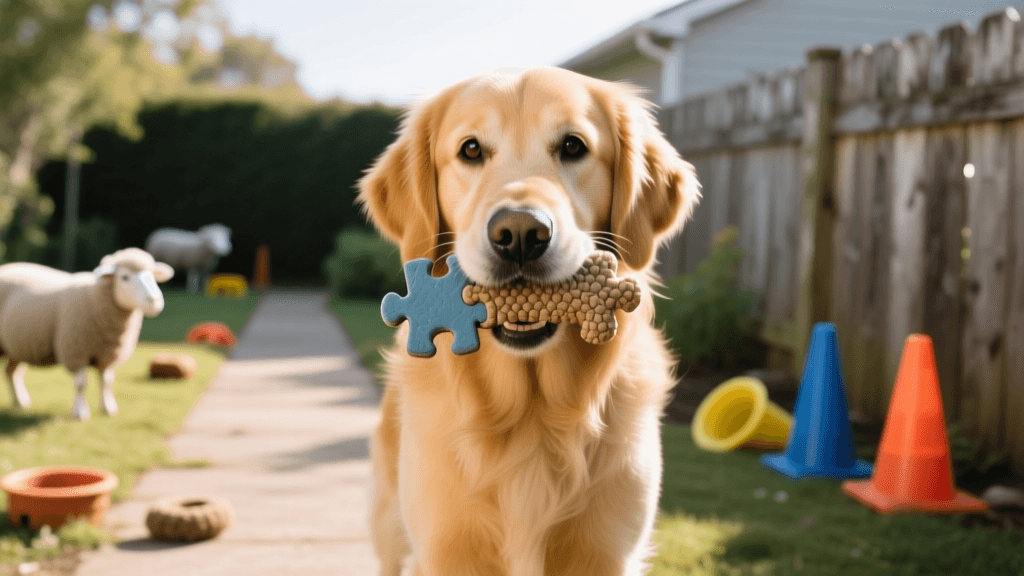
The Dog Brick is a staple in the canine enrichment community. It features three types of treat-hiding compartments: flip lids, sliding blocks, and removable bone covers. For a herding dog, the sliding blocks mimic the spatial problem-solving required when navigating livestock pens. Because herders tend to use their paws to 'grab' and move objects, the sliding mechanism satisfies their urge to manipulate their environment. Pro Tip: To prevent your dog from simply flipping the entire board, place it in a corner or use the built-in non-slip rubber feet on a textured rug.
2. KONG Wobbler (Large)
Best For: Channeling the 'Stalk and Chase' instinct safely.
Estimated Cost: $20 - $25
Measurements: 7.5 inches tall, holds up to 3 cups of kibble
The KONG Wobbler is an action-oriented puzzle feeder. It sits upright until the dog paws or noses it, at which point it spins, wobbles, and unpredictably dispenses kibble. For a herding breed, the unpredictable movement triggers their visual tracking and stalking instincts in a highly controlled, indoor-friendly way. The heavy-duty, FDA-approved plastic is robust enough to withstand the enthusiastic paw-strikes of an Australian Shepherd. It is particularly useful for fast eaters, turning a 30-second meal into a 15-minute cognitive workout.
3. Starmark Bob-A-Lot Interactive Dog Toy
Best For: Impulse control and adjustable difficulty.
Estimated Cost: $18 - $22
Measurements: Large holds 3 cups; adjustable dual-gate system
Similar to the Wobbler but with a distinct mechanical advantage, the Bob-A-Lot features two adjustable openings (one on top, one on the bottom). Herding breeds thrive on precision. By adjusting the gates to the smallest opening, you force your dog to practice impulse control and gentle manipulation rather than frantic, destructive pawing. If your dog begins to exhibit frustration-based barking, widen the gates slightly to reward calm persistence. Experts at Preventive Vet highly recommend adjustable dispensers for dogs that easily become over-aroused during meal times.
4. Woolzies or Snuffle Mat (Foraging)
Best For: Decompression, scent work, and lowering arousal.
Estimated Cost: $25 - $35
Measurements: Typically 18 x 18 inches with dense felt strips
While herding is a visual and kinetic job, sniffing is a deeply primal, decompressing activity. A high-quality snuffle mat with dense, varied fleece strips forces the dog to use their olfactory cortex to locate scattered treats. Sniffing has been scientifically shown to lower a dog's pulse rate. For a high-strung herder that struggles to 'turn off' after a walk, a 10-minute snuffle session acts as a neurological bridge between high-arousal work and deep sleep.
Comparison Chart: Finding the Right Fit
| Product Name | Cognitive Demand | Physical Demand | Primary Instinct Targeted | Est. Price |
|---|---|---|---|---|
| Nina Ottosson Dog Brick | High | Low | Spatial Problem Solving | $18 |
| KONG Wobbler | Medium | High | Visual Tracking / Stalking | $22 |
| Starmark Bob-A-Lot | Medium-High | Medium | Impulse Control / Precision | $20 |
| Dense Snuffle Mat | Medium | Low | Olfactory Foraging | $30 |
How to Introduce Puzzle Toys Without Causing Frustration
Herding dogs are sensitive and prone to frustration if they cannot immediately solve a problem. If introduced to a Level 3 puzzle on day one, they may resort to destructive chewing or simply walk away, defeating the purpose of the enrichment.
- Start Transparent: Leave all lids open and blocks slid back. Let your dog eat the treats directly from the compartments to build a positive association with the toy.
- Shape the Behavior: Use a marker word like 'Yes!' or a clicker when your dog interacts with the moving parts. Reward any accidental movement of a block so they understand the mechanics.
- Monitor for Stress Signals: If your dog begins lip-licking, yawning, whining, or aggressively biting the plastic, the puzzle is too difficult. Remove the toy, scatter the treats on the floor, and try an easier setting next time.
- Rotate the Toys: Herders get bored easily. Keep only two puzzle toys available at a time, rotating them weekly to maintain novelty and cognitive engagement.
Final Thoughts
Owning a herding breed is a rewarding but demanding experience. By understanding the deep-seated psychological needs of your dog—specifically their drive to control movement, solve spatial puzzles, and work tirelessly—you can transform potential behavioral issues into opportunities for bonding and growth. Investing in high-quality, adjustable puzzle toys like the Dog Brick or the Bob-A-Lot isn't just about buying a plastic accessory; it is about honoring your dog's genetic heritage and providing them with the fulfilling, mentally exhausting 'job' they were born to do.
tom-renshaw
All our authors care for dogs every day — read more of their work on the authors page.