The Puppy Teething Timeline: Safe Chews and Bite Training
Navigate your puppy's teething stages with our month-by-month timeline. Discover safe chew toys, costs, and proven bite inhibition training techniques.
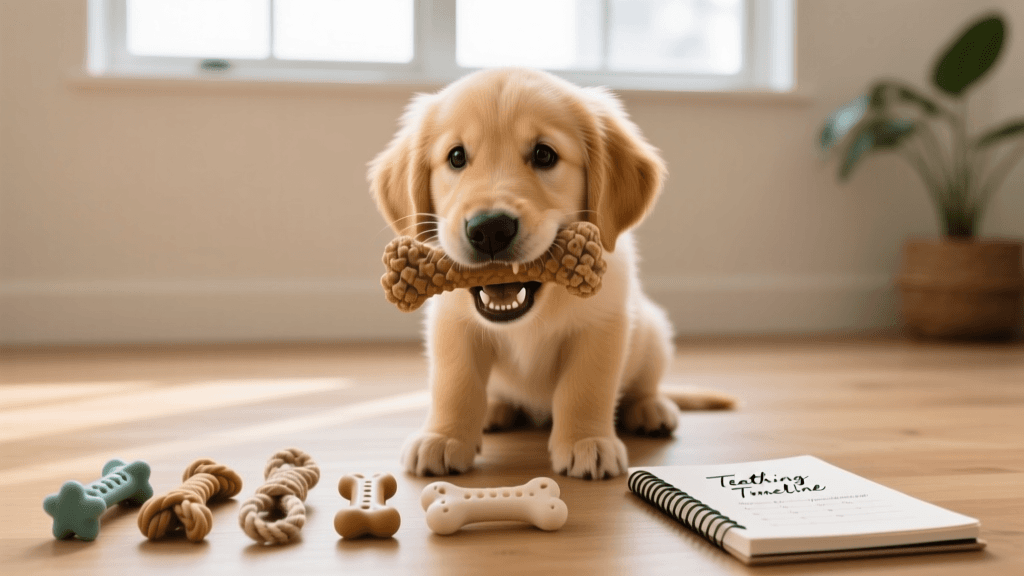
Understanding the Puppy Teething Life Stage
Welcoming a new puppy into your home is an exhilarating experience, but it comes with a unique set of developmental challenges. One of the most physically and behaviorally demanding phases in a dog's first year is the teething stage. As a critical life stage care guide, understanding the biology behind puppy teething is essential for managing discomfort, protecting your belongings, and shaping lifelong behavioral habits. According to the American Society for the Prevention of Cruelty to Animals (ASPCA), puppies are born without teeth. Their deciduous teeth, commonly known as milk teeth, begin to erupt at around three to four weeks of age. By the time a puppy is eight weeks old, they typically have a full set of 28 sharp baby teeth. These teeth are remarkably sharp, designed by nature to help puppies transition from their mother's milk to solid food, but they can also feel like tiny needles against human skin.
Between the ages of three and six months, a massive developmental shift occurs. The puppy's jaw grows, and the 42 permanent adult teeth begin to push through the gums, forcing the baby teeth to fall out. This process causes significant gum inflammation, soreness, and an intense, instinctual urge to chew. Chewing applies counter-pressure to the gums, which temporarily relieves the pain of erupting teeth. If you do not provide appropriate, safe outlets for this chewing drive, your puppy will happily substitute your favorite shoes, furniture legs, or even your hands. Furthermore, this life stage is the critical window for teaching bite inhibition, a behavioral milestone that ensures your puppy learns to control the force of their jaw.
Month-by-Month Puppy Teething Timeline
Tracking your puppy's dental development helps you anticipate behavioral changes and prepare the right tools. Below is a comprehensive timeline of the teething life stage.
| Age Range | Dental Milestone | Common Symptoms | Action Required |
|---|---|---|---|
| 3 to 6 Weeks | Eruption of 28 deciduous (baby) teeth. | Increased nursing friction, mild fussiness. | Monitor nursing; ensure mother is not getting scratched. |
| 8 to 12 Weeks | Full set of baby teeth present. Jaw begins to grow. | Exploratory mouthing, nipping, chewing on soft items. | Introduce soft puppy toys; begin gentle handling of the muzzle. |
| 12 to 16 Weeks | Incisors and canines begin to loosen and fall out. | Drooling, mild bleeding on toys, decreased appetite. | Offer chilled chew toys; soften kibble with warm water if needed. |
| 4 to 6 Months | Premolars and molars erupt. All 42 adult teeth emerge. | Intense chewing drive, swallowed baby teeth (normal), bad breath. | Provide durable rubber chews; begin daily tooth brushing routine. |
| 6 to 8 Months | Adult dentition fully set and settling into the jawbone. | Chewing transitions from pain-relief to boredom relief. | Shift to adult dental chews; enforce strict bite inhibition rules. |
Curating a Safe Teething Toy Box
During the peak teething months, your puppy needs a variety of textures and temperatures to soothe their aching gums. However, not all chew toys are created equal. The Humane Society of the United States emphasizes that selecting the right chew toys is vital to prevent fractured teeth and gastrointestinal blockages. When building your puppy's teething toy box, consider the following specific, vet-approved products and homemade remedies:
- Classic KONG Puppy Toy (Cost: $12 - $16): Made from a softer, proprietary red rubber formula designed specifically for developing puppy teeth and jaws. You can stuff the hollow center with plain canned pumpkin or xylitol-free peanut butter and freeze it for two hours. The cold temperature acts as an ice pack for inflamed gums, while the mental enrichment of extracting the food tires out your puppy.
- Nylabone Puppy Chew Keys (Cost: $8 - $11): These feature raised dental nubs that help clean teeth and massage gums. They are flavored with puppy-safe bacon or chicken essence to encourage chewing. Ensure you select the 'Puppy' line, as adult Nylabones are too hard and can fracture fragile baby teeth.
- Frozen Washcloths (Cost: Under $5): Take a clean, cotton washcloth, soak it in water or low-sodium chicken broth, wring it out, twist it into a rope, and freeze it solid. The icy fabric provides excellent relief. Always supervise your puppy with a washcloth to ensure they do not swallow pieces of the fabric, which can cause intestinal blockages.
- Whole Carrots (Cost: Pennies per serving): Large, peeled, and chilled whole carrots are an excellent, low-calorie, edible chew option. They are hard enough to satisfy the chewing urge but will eventually soften and break down safely in the digestive tract.
It is equally important to know what to avoid. Never give a teething puppy real animal bones, antlers, or hard nylon hooves. The American Veterinary Medical Association (AVMA) and veterinary dentists routinely treat puppies for slab fractures of the upper premolars caused by chewing on objects that are harder than their tooth enamel. A good rule of thumb is the 'kneecap test': if you cannot indent the chew toy with your thumbnail, or if it would hurt to hit yourself in the kneecap with it, it is too hard for a puppy's mouth.
Bite Inhibition Training: Teaching a Soft Mouth
Teething is not just a physical milestone; it is a critical behavioral window. Puppies explore the world with their mouths, but they must learn that human skin is entirely off-limits. Bite inhibition is the process of teaching a puppy to control the force of their bite. A dog with excellent bite inhibition might still put their mouth on your hand in a moment of extreme stress or play, but they will do so without applying pressure, preventing puncture wounds.
Here is a step-by-step, actionable guide to teaching bite inhibition during the teething life stage:
- The 'Ouch' Method (Feedback): When playing with your puppy, if their teeth make contact with your skin, immediately let out a high-pitched, genuine-sounding 'Ouch!' or yelp. This mimics the sound a littermate would make when bitten too hard. Stop all movement and ignore the puppy for 10 to 15 seconds. This teaches them that hard bites make the fun stop.
- Redirection (Alternative Outlets): After the brief time-out, re-engage the puppy by offering an appropriate chew toy, such as the frozen KONG mentioned earlier. When the puppy bites the toy instead of your hand, offer verbal praise and gentle petting. This clearly communicates what is acceptable to chew on.
- Managing Overstimulation (Time-Outs): Puppies often bite hardest when they are overtired or overstimulated, much like a cranky toddler. If redirection fails and the puppy continues to nip aggressively, calmly place them in their crate or a safe puppy playpen for a 5-minute nap. Do not use the crate as a punishment; frame it as a mandatory wind-down period.
- Consistency Across the Household: Every family member and visitor must enforce the exact same rules. If one person allows the puppy to gently nibble their fingers while another person scolds them for it, the puppy will become confused, and the training will fail.
Establishing a Lifelong Dental Care Routine
The teething life stage is the absolute best time to acclimate your puppy to oral hygiene routines. Once the adult teeth have fully erupted around six months of age, plaque and tartar will begin to accumulate. According to veterinary dental guidelines, periodontal disease can begin to develop in dogs as early as three years of age if preventive care is not established.
Start by purchasing a veterinary-approved enzymatic toothpaste. Brands like Virbac C.E.T. or Sentry Pet Care offer poultry or beef-flavored toothpastes that contain enzymes designed to break down plaque. Never use human toothpaste, as ingredients like fluoride and xylitol are highly toxic to dogs. Begin by simply letting the puppy lick the toothpaste off your finger. Next, rub the toothpaste along their gums with your bare finger. Finally, introduce a dual-headed canine toothbrush or a finger brush. Aim to brush the outer surfaces of the teeth for 30 to 60 seconds daily. By pairing this routine with high-value treats immediately afterward, your puppy will learn to tolerate and even enjoy their daily dental spa, setting the foundation for a lifetime of optimal health and fresh breath.
beth-carrasco
All our authors care for dogs every day — read more of their work on the authors page.