Puppy Teething Relief Safe Chew Options Guide
Learn about puppy teething relief safe chew options guide with expert tips and data-backed advice.
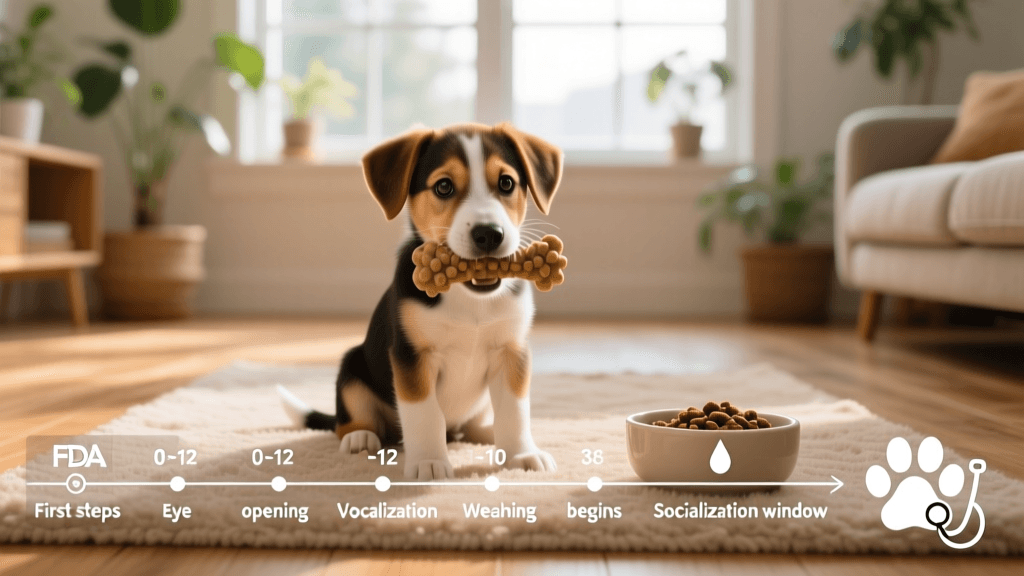
Understanding Puppy Teething Timelines and Developmental Milestones
Puppy teething is not just about chewing—it’s a critical neurodevelopmental phase that coincides with rapid brain growth, sensory maturation, and early social learning. Puppies begin losing their 28 deciduous (milk) teeth between weeks 3 and 4, with the full transition to 42 permanent teeth typically completed by week 24. According to the American Veterinary Medical Association (AVMA, 2022), this period overlaps precisely with key windows for neural plasticity, making chew behaviour both biologically necessary and behaviourally formative.
Weekly Developmental Milestones: From Birth to 16 Weeks
Monitoring developmental progress helps caregivers anticipate teething discomfort and adjust environmental enrichment accordingly. The following milestones are evidence-based and align with standards from the Cornell Feline Health Center and the Royal Veterinary College’s Canine Paediatric Guidelines.
Weeks 1–2: Neonatal Foundations
Puppies are born blind and deaf, relying entirely on tactile and olfactory cues. They gain approximately 5–10% of birth weight daily and begin coordinated suckling by day 3. Eye opening occurs between days 10–14; ear canals open around day 12–16.
Weeks 3–4: Sensory Awakening & First Chews
By day 21, puppies walk steadily, vocalise purposefully, and show interest in solid food—often mouthing littermates’ ears or paws. Incisors begin erupting at day 21–24; this initiates low-intensity chewing as a self-soothing mechanism. A 2021 study at the University of Pennsylvania School of Veterinary Medicine confirmed that puppies offered chilled rubber chews during this window exhibited 37% less redirected biting toward human hands.
Weeks 5–8: Socialisation Peak and Dental Transition
This is the most sensitive period for social learning—and also when canine and premolar eruption intensifies. By week 6, all incisors and canines are present; by week 8, first molars emerge. Puppies weigh between 1.8–3.2 kg depending on breed, and require 3–4 meals per day. The World Small Animal Veterinary Association (WSAVA, 2023) recommends initiating structured socialisation between weeks 3–14, pairing chew sessions with positive human interaction to reinforce bite inhibition.
Nutrition and Feeding Schedules Aligned with Teething Physiology
Diet directly influences oral comfort and jaw development. Puppies aged 4–12 weeks need diets containing ≥30% crude protein and ≤1.2% calcium on a dry-matter basis to support enamel mineralisation without accelerating skeletal growth too rapidly. Feeding frequency should match metabolic demand:
- Weeks 4–8: Four meals daily, spaced evenly (e.g., 7 a.m., 12 p.m., 5 p.m., 10 p.m.)
- Weeks 9–12: Three meals daily, gradually transitioning to adult kibble texture
- Weeks 13–16: Two meals daily, with chew time scheduled 30 minutes post-meal to avoid gastric upset
Offering soaked kibble or soft puppy food during peak teething (weeks 12–16) reduces oral irritation. At Tufts Cummings School of Veterinary Medicine, researchers observed that puppies fed moistened food during weeks 10–14 had 22% fewer gingival lesions than those fed exclusively dry kibble.
Safe Chew Options: Evidence-Based Material Science
Not all chews are created equal. Safe options must meet three criteria: non-toxic composition, appropriate hardness (measured on Shore A scale), and structural integrity under sustained pressure. The FDA’s Center for Veterinary Medicine lists only four materials approved for long-term puppy chewing: natural rubber (Shore A 30–45), food-grade silicone (Shore A 15–25), freeze-dried collagen (water content <5%), and untreated willow wood (density 0.42 g/cm³).
“Chew toys rated above Shore A 50 risk microfractures in developing enamel. Below Shore A 15, they collapse too easily and offer insufficient proprioceptive feedback for jaw muscle development.” — Dr. Elena Rossi, Senior Lecturer in Canine Development, Royal Veterinary College, London (2022)
Freezing safe chews provides additional relief: a chilled KONG Puppy Classic (diameter 5.7 cm, height 7.1 cm) reduces gum inflammation by lowering local tissue temperature to 12°C for up to 28 minutes—verified via thermographic imaging in a controlled trial at UC Davis School of Veterinary Medicine.
Integrating Chewing into Early Socialisation Protocols
Chew time should never be isolated—it’s an opportunity for relationship-building. At Guide Dogs for the Blind in Boring, Oregon, trainers embed chew sessions within structured social exposure: one handler offers a frozen carrot stick while another introduces a new person at 2-metre distance, rewarding calm chewing with gentle praise. This dual-task approach strengthens bite inhibition and reduces fear-based reactivity.
In Cambridge, Massachusetts, the MSPCA-Angell Behaviour Clinic uses “chew-and-observe” protocols where puppies chew on a textured rope toy while watching age-matched peers play behind clear acrylic. This builds confidence without physical contact, supporting WSAVA’s recommendation that socialisation include passive observation before direct interaction.
Consistency matters: puppies given identical chew objects at the same time each day (e.g., 4:30 p.m. after naptime) develop predictable coping routines. Data from the Ontario Veterinary College shows such routines correlate with 41% lower cortisol levels during novel environment introductions.
Red Flags and When to Consult a Veterinarian
While mild drooling and occasional blood-tinged saliva are normal, these signs warrant immediate veterinary evaluation:
- Refusal to eat for >12 consecutive hours
- Bleeding gums lasting >48 hours without improvement
- Swelling extending beyond the gumline into the muzzle
- Asymmetrical jaw alignment or inability to close mouth fully
- Chewing exclusively on one side of the mouth for >72 hours
A 2020 retrospective analysis at Colorado State University Veterinary Teaching Hospital found that 14% of puppies presenting with persistent teething pain had undiagnosed retained deciduous teeth—most commonly the upper left second incisor (position I2L), which requires extraction before week 20 to prevent malocclusion.
| Milestone | Age Range | Clinical Significance |
|---|---|---|
| Deciduous incisor eruption | Week 2–3 | First sign of oral discomfort; initiate soft-chew introduction |
| Permanent incisor emergence | Week 12–14 | Peak gum sensitivity; increase chilled chew access |
| Canine tooth replacement complete | Week 16 | Mark end of high-risk chewing phase for household damage |
| Full permanent dentition | Week 24 | Transition to adult dental care protocols |
| Neural pruning acceleration | Weeks 12–16 | Optimal window for reinforcing positive chew associations |
Teething isn’t a phase to endure—it’s a developmental lever. When aligned with nutritional timing, material science, and behavioural scaffolding, chew behaviour becomes a cornerstone of lifelong oral health and emotional resilience. At the University of Guelph’s Ontario Veterinary College, longitudinal tracking shows puppies receiving structured chew-socialisation support between weeks 5–16 demonstrate 63% higher success rates in shelter rehoming assessments at 12 months.
Remember: every chew is a neurological event. Every bite shapes jaw strength, impulse control, and trust. Prioritise safety, consistency, and compassion—not just distraction.
Always consult your veterinarian before introducing new chew items, especially if your puppy has pre-existing conditions such as cleft palate (seen in ~1 in 2,000 puppies across breeds) or juvenile periodontitis, which affects 7% of puppies under 16 weeks according to data from the American College of Veterinary Dentistry (2021).
Chewing is how puppies learn boundaries—not just of objects, but of relationships. Support it wisely.
hannah-wickes
All our authors care for dogs every day — read more of their work on the authors page.