Best Puppy Teething Toys 2026: Behavior & Relief Guide
Discover the psychology behind puppy chewing and explore the best teething toys of 2026 to soothe pain, redirect behavior, and save your furniture.
The Psychology and Biology of Puppy Teething
Welcoming a new puppy into your home is a joyous occasion, but it quickly introduces a challenging developmental phase: teething. While many new owners view teething purely as a physiological milestone, veterinary behaviorists emphasize that it is deeply intertwined with canine psychology, sensory exploration, and instinctual development. When you begin researching the best teething toys in 2026, it is crucial to understand that your puppy is not simply destroying your belongings out of spite or boredom. They are navigating a complex neurological and physical transition.
Chewing is an innate canine behavior that serves multiple purposes. For a teething puppy, the act of gnawing stimulates the trigeminal nerve in the jaw, which sends signals to the brain to release endorphins and dopamine. These neurotransmitters act as natural painkillers and mood stabilizers, providing immense psychological comfort during a period of significant oral inflammation. According to the American Kennel Club (AKC), the discomfort of adult teeth pushing through the gum line can cause puppies to feel irritable, anxious, and restless. Providing the correct outlet for this chewing urge is not just about saving your shoes; it is about supporting your puppy's emotional regulation and neurological development.
The 2026 Teething Timeline: What to Expect
Understanding the biological timeline of dental development allows you to anticipate behavioral shifts and introduce the appropriate teething toys at the exact moment your puppy needs them. Below is the standard developmental timeline for canine dentition.
| Age Range | Dental Milestone | Behavioral Impact & Toy Needs |
|---|---|---|
| 2 to 4 Weeks | Deciduous (baby) teeth begin to erupt. | Puppies rely on mother's milk; minimal chewing behavior observed. |
| 5 to 6 Weeks | All 28 baby teeth are fully emerged. | Puppies begin exploring the world with their mouths; soft textures preferred. |
| 12 to 16 Weeks | Baby teeth fall out; adult teeth push through. | Peak pain and inflammation. Intense urge to gnaw on firm, textured, and cold items. |
| 4 to 6 Months | Adult molars and canines fully emerge. | Jaw strength increases significantly. Transition to durable, long-lasting chew toys. |
| 6+ Months | All 42 adult teeth are fully established. | Teething pain subsides, but recreational chewing continues for dental health and stress relief. |
Why Your Puppy Chooses Your Shoes Over Their Toys
A common source of frustration for owners is the puppy who ignores a basket full of expensive toys in favor of a leather shoe or a wooden table leg. To understand this, we must look at canine sensory perception. Puppies explore their environment primarily through olfaction (smell) and tactile feedback (texture).
Leather shoes offer a specific tactile resistance that closely mimics the cartilage and bone of natural prey, providing the exact gum pressure a teething puppy craves. Furthermore, your shoes are saturated with your scent. In canine psychology, the scent of their primary caregiver provides a profound sense of security. When a puppy is experiencing the physical stress of teething, they instinctively seek out items that offer both physical relief and emotional comfort. The ASPCA notes that destructive chewing is often a symptom of unmet tactile needs or mild separation anxiety, both of which are exacerbated during the teething window.
Best Teething Toys of 2026: Matched to Canine Behavior
The market for canine enrichment has evolved significantly. The best teething toys of 2026 are designed not just to withstand sharp teeth, but to actively engage a puppy's predatory motor patterns and provide targeted physiological relief. Here are the top veterinary-recommended toys, analyzed through a behavioral lens.
1. KONG Puppy Toy (2026 Updated Formula)
Behavioral Match: Prey drive engagement and food-motivated problem solving.
Why it Works: The KONG Puppy is crafted from a proprietary, softer natural rubber formula designed specifically for developing jaws. Behaviorally, its unpredictable bounce pattern triggers a puppy's chase instinct, transforming a painful teething session into an engaging game of prey capture. When stuffed with frozen puppy-safe yogurt or kibble, it forces the puppy to use their tongue and teeth in a licking and gentle gnawing motion, which increases saliva production and naturally soothes inflamed gums.
2. Nylabone Puppy Chew Textured Rings
Behavioral Match: The instinct to strip meat from bone and massage the gum line.
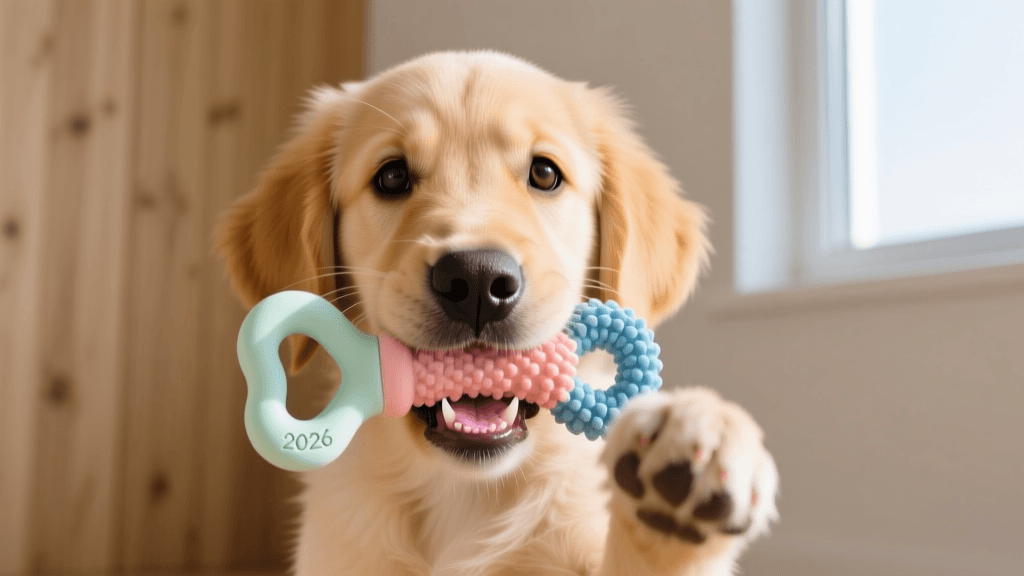
Why it Works: Puppies have a deep-seated instinct to gnaw on hard, textured surfaces. The Nylabone Puppy Rings feature multiple raised bristles and nubs that act like a toothbrush, mechanically cleaning the teeth while massaging the aching gum tissue. The varied textures satisfy the puppy's need for oral stimulation, redirecting them away from baseboards and furniture legs. It is vital to select the 'Puppy' specific line, as adult Nylabones are too dense and can fracture fragile baby teeth.
3. Petstages Cool Teething Stick
Behavioral Match: Temperature-seeking behavior for pain mitigation.
Why it Works: Just as humans apply ice packs to injuries, puppies instinctively seek out cool surfaces to reduce oral inflammation. The Petstages Cool Teething Stick is designed to be soaked in water and frozen. The frozen mesh exterior provides immediate, numbing relief to hot, swollen gums. The crinkly interior adds an auditory reward that reinforces the chewing behavior, keeping the puppy engaged long enough for the cold therapy to take effect.
Behavioral Redirection: Training Your Puppy to Chew Appropriately
Providing the best teething toys is only half the equation; the other half is behavioral redirection. Punishing a puppy for chewing an inappropriate item is counterproductive and can lead to fear-based behavioral issues. Because chewing is a biological imperative, the puppy will simply learn to hide from you when they chew, rather than learning what is acceptable to chew.
Instead, utilize the 'Trade-Up' technique. When you catch your puppy chewing a forbidden item, do not yell or snatch the item away, as this can trigger resource guarding. Instead, approach calmly with a high-value teething toy, such as a frozen KONG. Offer the toy enthusiastically. The moment the puppy drops the shoe to investigate the toy, praise them warmly and reward them with a small treat. This teaches the puppy that relinquishing inappropriate items results in a positive psychological and physical reward.
Additionally, environmental management is critical during the 12-to-16-week peak teething window. Keep shoes in closed closets, use bitter apple spray on baseboards, and restrict access to carpeted areas using baby gates. By controlling the environment, you set your puppy up for behavioral success.
When to Consult a Veterinarian
While teething is a natural process, complications can arise. The Humane Society of the United States advises owners to monitor their puppy's mouth closely. If you notice that baby teeth are not falling out as the adult teeth emerge (a condition known as retained deciduous teeth), consult your veterinarian immediately. Retained teeth can cause severe misalignment of the adult bite, leading to chronic pain, difficulty eating, and long-term periodontal disease. Furthermore, if your puppy exhibits signs of extreme lethargy, refuses to eat for more than 24 hours, or has excessive bleeding from the gums, seek professional veterinary care to rule out underlying infections.
Conclusion
Surviving the puppy teething phase requires empathy, patience, and a solid understanding of canine psychology. By recognizing that chewing is a vital coping mechanism for pain and stress, you can better support your dog through this developmental milestone. Equipping your home with the best teething toys of 2026, utilizing positive behavioral redirection, and managing your environment will not only protect your belongings but will also foster a trusting, secure bond between you and your growing puppy.
anouk-beaumont
All our authors care for dogs every day — read more of their work on the authors page.