Dog Opposition Reflex: Why No-Pull Harnesses Work in 2026
Discover the canine opposition reflex and why front-clip no-pull harnesses biomechanically and psychologically stop leash pulling in 2026.
The Canine Opposition Reflex: Why Your Dog Pulls
To truly understand why your dog pulls on the leash, we must first look past the idea of 'stubbornness' and examine canine evolutionary biology. The primary driver behind leash pulling is a deeply ingrained neurological response known as the opposition reflex (scientifically referred to as thigmotaxis). When a dog feels physical pressure against its chest, neck, or shoulders, its instinctual reaction is to push forward against that pressure. This is not a sign of disobedience; it is a survival mechanism. In the wild, if a predator grabbed a canine by the neck or chest, or if the animal became tangled in dense brush, pushing forward and thrashing against the restraint was the most effective way to break free.
When you attach a standard flat collar or a back-clip harness to your dog and apply backward tension on the leash, you are inadvertently triggering this exact survival reflex. The harder you pull back, the harder your dog's brain tells them to pull forward. According to the American Kennel Club, understanding this physical trigger is the first step in addressing leash reactivity and pulling behaviors. By recognizing that your dog is reacting to physical pressure rather than actively trying to defy you, you can shift your training approach from frustration-based corrections to biomechanical and psychological support.
The Biomechanics of the Pull: Center of Gravity
A dog's anatomy is specifically designed for forward momentum and pulling power. Unlike humans, who carry their center of gravity high in the pelvis, a dog's center of gravity is located low and far forward, right behind the thoracic sling (the muscular structure supporting the chest and front legs). This anatomical setup allows them to engage their powerful hindquarters and drive their weight forward, much like a sled dog harnessed to a cart.
When you use a traditional back-clip harness, the leash attaches directly over this center of gravity. This setup provides the dog with maximum mechanical advantage. They can lean their entire body weight into the chest strap, brace their front legs, and drive with their hind legs, effectively turning themselves into a freight train. In fact, back-clip harnesses are the exact equipment used in competitive dog sledding and weight-pulling sports specifically because they encourage and facilitate pulling.
A front-clip no-pull harness, however, completely alters this biomechanical equation. By moving the leash attachment point to the dog's sternum (the front of the chest), the mechanical advantage is neutralized. When the dog surges forward and the leash becomes taut, the tension is applied to the front of the center of gravity. Instead of allowing the dog to drive forward, the physics of the front-clip design gently pivots the dog's shoulders and chest back toward the handler. The dog literally cannot continue moving in a straight line without turning themselves around, effectively bypassing the opposition reflex without the need for painful corrections or choke chains.
2026 Harness Design Standards: Protecting Canine Biomechanics
As veterinary sports medicine and canine biomechanics have advanced, the design standards for no-pull harnesses have evolved significantly. In 2026, veterinary behaviorists and physical therapists strongly advise against restrictive 'T-shaped' or horizontal chest-strap harnesses that cross directly over the dog's shoulder joints. These outdated designs impede natural shoulder extension, alter the dog's gait, and can lead to long-term joint degradation or soft tissue injuries.
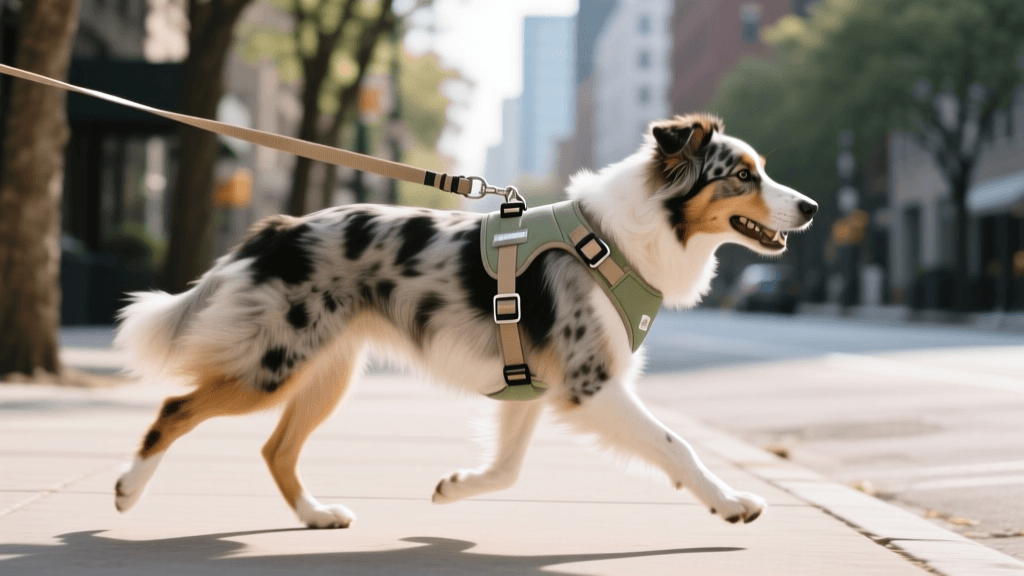
Modern, biomechanically sound no-pull harnesses utilize a Y-shaped front design that rests safely on the sternum and routes around the shoulder blades, allowing for full, unrestricted range of motion. The ASPCA recommends front-clip harnesses for dogs that pull, provided they are properly fitted to avoid chafing and joint restriction.
| Design Feature | Outdated Designs (Pre-2020) | 2026 Biomechanical Standards |
|---|---|---|
| Chest Strap Shape | Horizontal 'T-Strap' crossing the shoulders | Anatomical 'Y-Strap' clearing the shoulder joints |
| Leash Attachment | Single back-clip or flimsy front O-ring | Dual-clip (Front V-ring + Back handle) for transition training |
| Padding Material | Thin neoprene that traps heat and causes chafing | Breathable, memory-foam lined aeromesh for pressure distribution |
| Adjustability | Single neck adjustment | 4-point micro-adjustments (neck, chest, girth) for custom sternum fit |
The Psychological Shift: Breaking the Frustration Loop
Understanding your dog also requires understanding their neurochemistry during a walk. When a dog pulls and the owner responds by yanking the leash back, a psychological 'frustration loop' begins. The physical pressure triggers the opposition reflex, the dog pulls harder, the owner pulls back, and the dog's brain releases cortisol (the stress hormone). Over time, the dog's amygdala (the brain's threat-detection center) begins to associate the leash, the harness, and even the front door with stress, conflict, and physical discomfort. This is a primary reason why many dogs exhibit 'leash reactivity' or aggression toward other dogs while on walks; they are already in a heightened state of fight-or-flight before they even see a trigger.
A properly fitted front-clip no-pull harness breaks this psychological loop. Because the harness gently redirects the dog's momentum without applying painful pressure to the trachea or triggering the opposition reflex, the dog's cortisol levels remain lower. The walk transforms from a physical tug-of-war into a cooperative dance. As noted by the Humane Society of the United States, proper, humane equipment is foundational to reducing canine stress and building a positive bond during walks. When the physical struggle is removed, the dog's brain is in a receptive, parasympathetic state, making them far more capable of learning, focusing on their handler, and responding to positive reinforcement.
Step-by-Step: Transitioning to a Front-Clip Harness
Simply putting a no-pull harness on your dog will not instantly teach them loose-leash walking; it is a management tool that creates the opportunity for training. Here is how to properly transition your dog to a front-clip harness in 2026:
1. The Desensitization Phase
Do not simply force the harness over your dog's head, as this can trigger claustrophobia and resistance. Lay the harness flat on the floor and reward your dog with high-value treats (like freeze-dried liver or boiled chicken) for sniffing it. Progress to holding the harness open like a hoop and luring your dog's head through it with a treat, immediately rewarding and removing it. Repeat this until your dog eagerly pushes their head through the opening.
2. The Two-Finger Fitting Rule
Once the harness is on, check the fit. You should be able to slide exactly two fingers flat under any strap on the dog's body. If you can fit more, it is too loose and the front ring will sag, rendering the no-pull mechanics useless. If you can fit fewer than two fingers, it will cause chafing and restrict breathing. Ensure the Y-shaped chest plate rests flat against the sternum and does not press into the soft tissue of the throat.
3. Redirection and Reward Placement
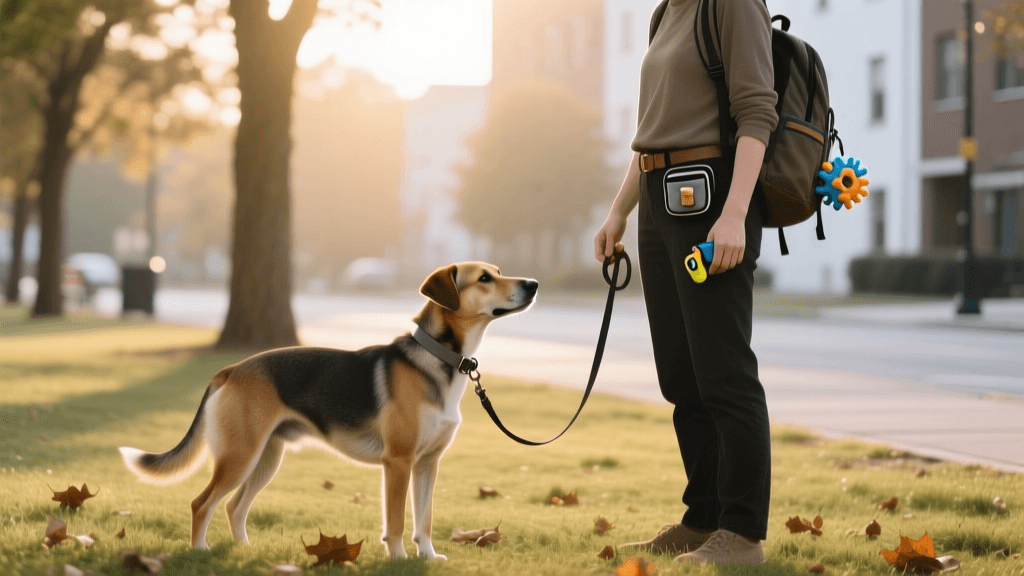
When you begin walking, keep the leash short but loose. The moment your dog surges forward and the front-clip gently turns them toward you, do not scold them. Instead, use the redirection as a training cue. The second they make eye contact with you after being turned around, mark the behavior with a 'Yes!' or a clicker, and deliver the treat at your hip or behind your leg. Rewarding at your leg teaches the dog that the 'sweet spot' for receiving dopamine and treats is right next to you, not five feet ahead at the end of the leash.
4. The Dual-Clip Transition
Many premium 2026 harness models feature dual-clip functionality (a front ring and a back ring). As your dog's loose-leash walking improves and their psychological reliance on the opposition reflex fades, you can begin using a double-ended leash clipped to both the front and back rings. This provides a gentle steering effect while slowly transitioning the dog to the back-clip, eventually allowing you to phase out the front-clip entirely once the behavioral habit of pulling has been extinguished.
By combining an understanding of canine biomechanics with modern, joint-safe harness technology, you can eliminate the physical struggle of leash walking. You are not just stopping a bad habit; you are fundamentally changing how your dog perceives the leash, transforming a source of stress into a cue for connection, exploration, and mutual trust.
jonas-cole
All our authors care for dogs every day — read more of their work on the authors page.