The Science of Puppy Socialization and Fear Periods
Discover the science behind puppy socialization windows and fear periods. Learn actionable, vet-backed strategies to build a confident, well-adjusted dog.

The Neurological Window: Why Early Socialization Matters
The first year of a puppy's life is a whirlwind of physical growth, but the most critical development occurs invisibly within their brain. In the field of veterinary behavioral medicine, the 'critical socialization period' is recognized as a finite neurological window—typically spanning from 3 to 14 weeks of age—during which a puppy's brain is uniquely primed to accept novel stimuli without triggering a fear response. Foundational research by John Paul Scott and John Fuller in the 1960s established that experiences during this window permanently wire the canine brain for future emotional regulation.
During these early weeks, the amygdala (the brain's fear-processing center) is highly plastic, and the neural pathways that inhibit fear are more active than those that promote it. This evolutionary mechanism allows wild canids to rapidly learn what is safe in their specific environment. For domestic dogs, this means that positive exposures to various surfaces, sounds, species, and human demographics during this window create a baseline of 'safety' that protects them against anxiety and reactivity later in life.
Mapping the Puppy Fear Periods
While the socialization window is characterized by a general acceptance of novelty, it is punctuated by distinct 'fear periods.' These are evolutionary survival mechanisms designed to keep young canids close to the safety of their den and littermates as they begin to explore the world. Understanding the timing and neurobiology of these periods is essential for preventing long-term behavioral trauma.
| Age Range | Developmental Stage | Fear Period Status | Science-Backed Action Plan |
|---|---|---|---|
| 3 to 8 Weeks | Canine Socialization | Low Fear Response | Focus on littermate interaction, gentle human handling, and exposure to household textures and sounds. |
| 8 to 11 Weeks | First Fear Impact Period | High Vulnerability | Avoid traumatic events (e.g., elective surgeries, harsh discipline). Keep introductions to new environments highly positive and heavily reinforced with high-value food. |
| 12 to 16 Weeks | Environmental Awareness | Decreasing Fear | Maximize safe socialization outings. Introduce structured puppy kindergarten classes to build canine communication skills. |
| 6 to 14 Months | Adolescence / Second Fear Period | Variable / Unpredictable | Revert to foundational desensitization. Do not force interactions; allow the puppy to observe from a distance while feeding treats. |
The Vaccination vs. Socialization Paradox
For decades, new puppy owners were caught in a frustrating paradox: veterinarians advised keeping puppies indoors until they were fully vaccinated against parvovirus and distemper (usually around 16 weeks), while behaviorists warned that the critical socialization window closes by 14 weeks. This outdated advice resulted in thousands of dogs being under-socialized, leading to a massive influx of behavioral surrenders to shelters.
Today, the scientific consensus has shifted dramatically. The American Veterinary Society of Animal Behavior (AVSAB) released a landmark position statement clarifying that the risk of a puppy developing severe behavioral issues (and subsequent euthanasia) far outweighs the risk of infectious disease, provided that socialization is managed safely.
'The primary and most important time for puppy socialization is the first three months of life. During this time puppies should be exposed to as many new people, animals, stimuli and environments as can be achieved safely and without causing overstimulation manifested as excessive fear, withdrawal or avoidance behavior.' — AVSAB Position Statement on Puppy Socialization
Safe, pre-vaccination socialization does not mean letting your puppy walk through high-traffic dog parks. It involves controlled environments: carrying your puppy in a sling, using a pet stroller, hosting playdates with known, fully vaccinated adult dogs, and placing a blanket on a low-traffic sidewalk to let them observe the world while eating high-value treats.
Habituation vs. Sensitization: The Science of Exposure
A common myth in puppy care is that simply exposing a puppy to a stimulus will make them 'get used to it.' In behavioral science, this is known as habituation—a decrease in response to a repeated, neutral stimulus. However, if a stimulus is introduced too intensely or the puppy is trapped in the situation, the opposite occurs: sensitization. Sensitization is an amplified fear response that makes the puppy more reactive the next time they encounter the trigger.
For example, forcing a fearful puppy to be held and petted by a stranger does not teach them that strangers are safe; it triggers a flood of cortisol and adrenaline, sensitizing them to human hands. The American Kennel Club emphasizes that socialization must be entirely voluntary and positively reinforced to achieve true habituation.
Actionable Protocol: Desensitization and Counter-Conditioning (D/CC)
To scientifically wire a puppy's brain for positive associations, behaviorists utilize Desensitization and Counter-Conditioning (D/CC). This protocol changes the dog's underlying emotional response from fear to anticipation of a reward.
- Step 1: Find the Threshold. Identify the distance at which your puppy notices the trigger (e.g., a loud truck, a strange dog) but remains under threshold. Signs of being under threshold include a relaxed body posture, willingness to eat treats, and soft eyes.
- Step 2: Classical Conditioning. The moment the puppy looks at the trigger, begin feeding high-value treats (e.g., boiled chicken breast or freeze-dried liver, cut into 1/4-inch cubes). The trigger predicts the food.
- Step 3: The Treat and Retreat Game. Allow a stranger to toss a treat behind the puppy. This allows the puppy to approach the stranger on their own terms, eat the treat, and retreat to a safe distance without feeling trapped.
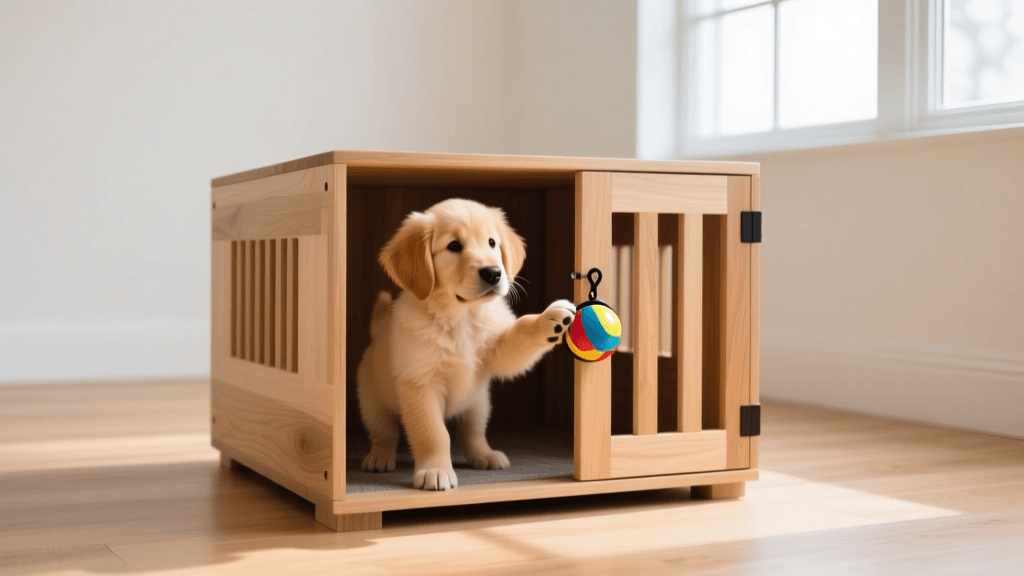
- Step 4: Keep Sessions Short. Prolonged exposure elevates cortisol levels, which can take up to 72 hours to metabolize. Keep socialization sessions to 10-15 minutes maximum, followed by a mandatory 'decompression' nap in a quiet crate.
Monitoring Cortisol: Reading Canine Stress Signals
Science-backed puppy care requires owners to become fluent in canine body language. A puppy may not bite or run away when overwhelmed, but their nervous system is still registering distress. Recognizing early 'calming signals' and stress indicators allows you to remove the puppy from the environment before sensitization occurs.
According to resources provided by the ASPCA, owners should watch for the following subtle signs of cortisol release and nervous system arousal:
- Displacement Behaviors: Sudden scratching, sniffing the ground intently, or shaking off (as if wet) when not actually wet.
- Appeasement Gestures: Excessive lip licking, yawning when not tired, or rolling over to expose the belly in a tense, stiff manner.
- Physical Tension: 'Whale eye' (showing the whites of the eyes), pinned ears, tucked tail, or a rigid, frozen posture.
If your puppy displays these signals, the scientific response is not to offer verbal comfort (which can inadvertently reinforce the fearful state), but to calmly increase the distance from the trigger and allow the puppy's parasympathetic nervous system to regain control.
Conclusion: Quality Over Quantity
The goal of the first year is not to check off a list of 100 strangers or 50 dogs. The goal is to curate a series of positive, controlled experiences that build neurological resilience. By respecting the biological timelines of the socialization window and fear periods, utilizing D/CC protocols, and prioritizing your puppy's emotional threshold over forced interactions, you lay a scientifically sound foundation for a confident, adaptable, and mentally healthy adult dog.
marcus-aldridge
All our authors care for dogs every day — read more of their work on the authors page.