Step-by-Step Puppy Potty Training: Crate and Bell Guide
Master puppy potty training with our step-by-step guide. Learn crate schedules, bell training methods, and accident cleanup tips for a stress-free home.
The Ultimate Step-by-Step Puppy Potty Training Guide
Welcome to Paws-Tales, your premier destination for expert puppy care advice. Bringing a new puppy into your home is an exhilarating milestone, but it quickly becomes apparent that teaching your furry friend where to relieve themselves is one of the most daunting challenges of the first year. Puppies do not inherently understand the concept of indoor versus outdoor bathroom habits; they simply relieve themselves when the urge strikes. According to ASPCA's House-Training Guidelines, the key to overcoming this hurdle is establishing a rigid routine, utilizing confinement, and employing positive reinforcement.
In this comprehensive, step-by-step training guide, we will walk you through the most effective, veterinarian-approved methods for potty training your puppy. By combining crate training with door bell training, you can communicate clearly with your dog, minimize indoor accidents, and build a foundation of trust that will last a lifetime.
Essential Supplies for Potty Training Success
Before you begin your training journey, you need to equip yourself with the right tools. Skimping on supplies often leads to frustration and prolonged training periods. Here is a detailed breakdown of the exact products you need, including estimated costs and specific recommendations:
- Wire Crate with Divider Panel: A wire crate allows your puppy to see out, reducing anxiety, while the divider panel lets you adjust the interior space as your dog grows. If the space is too large, your puppy may soil one corner and sleep in the other. Recommendation: MidWest Homes for Pets iCrate Double Door (Approx. $45 - $65 depending on size).
- Enzymatic Cleaner: Standard household cleaners and bleach do not break down the uric acid crystals found in dog urine. If your puppy can still smell their previous accident, they will return to the same spot. An enzymatic cleaner literally eats the organic matter causing the odor. Recommendation: Nature's Miracle Advanced Stain & Odor Eliminator (Approx. $12 - $15).
- Potty Training Bells: Hanging bells on your exit door gives your puppy a way to communicate their need to go outside without barking or scratching the paint. Recommendation: Mighty Paw Smart Bell or Potty Bells by Mighty Paw (Approx. $10 - $15).
- High-Value Training Treats: You need small, soft, and highly palatable treats that your puppy can consume quickly without losing focus. Recommendation: Zuke's Mini Naturals Training Treats (Approx. $8).
Step 1: Mastering Crate Training for Bladder Control
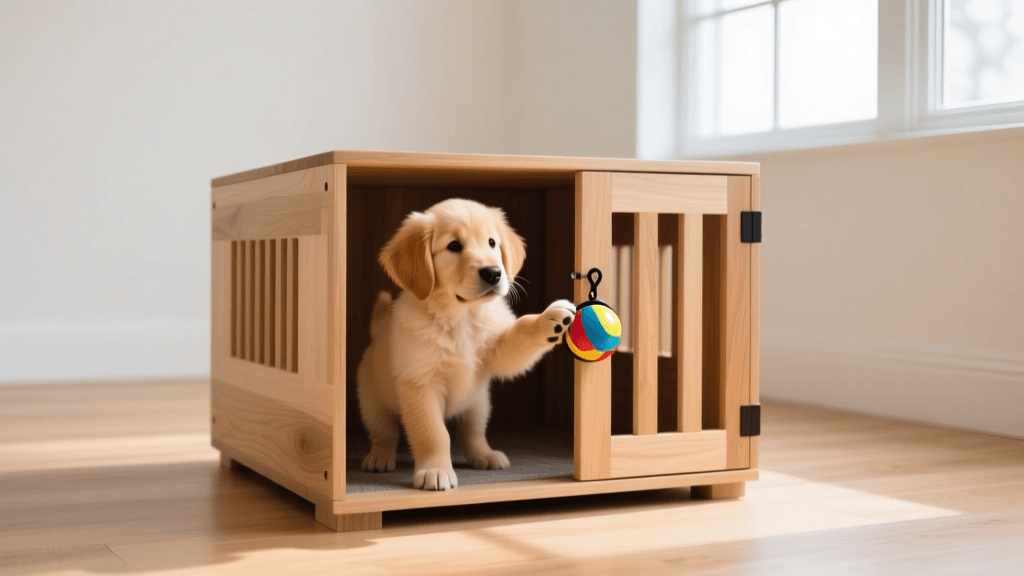
Dogs possess a natural denning instinct, meaning they inherently avoid soiling the area where they sleep. Crate training leverages this instinct to teach bladder and bowel control. However, the crate must be introduced as a safe haven, never as a punishment zone.
The Step-by-Step Crate Introduction:
- Make it Inviting: Place a soft bed, a safe chew toy (like a Kong stuffed with puppy-safe peanut butter), and an item of your worn clothing inside the crate.
- Feed Meals Inside: Start feeding your puppy their regular meals with the bowl placed just inside the crate door. Gradually move the bowl further back with each subsequent meal.
- Close the Door Briefly: Once your puppy is comfortably eating inside, close the door while they eat, and open it immediately when they finish. Gradually increase the time the door remains closed after meals.
Understanding Puppy Bladder Capacity
One of the most common mistakes new owners make is expecting a young puppy to hold their bladder for an eight-hour workday. A puppy's sphincter muscles are not fully developed. Below is a structured guide to maximum daytime crate durations based on age. Note: Puppies can usually hold it slightly longer at night when their metabolism slows down.
| Puppy Age | Maximum Daytime Crate Limit | Expected Potty Break Frequency |
|---|---|---|
| 8 - 10 Weeks | 1 to 1.5 Hours | Every 1 Hour |
| 11 - 14 Weeks | 2 to 3 Hours | Every 2 Hours |
| 15 - 16 Weeks | 3 to 4 Hours | Every 3 Hours |
| 4 - 6 Months | 4 to 5 Hours | Every 4 Hours |
| 6+ Months | 6 to 8 Hours | Every 6 Hours |
Step 2: Implementing a Strict Daily Potty Schedule
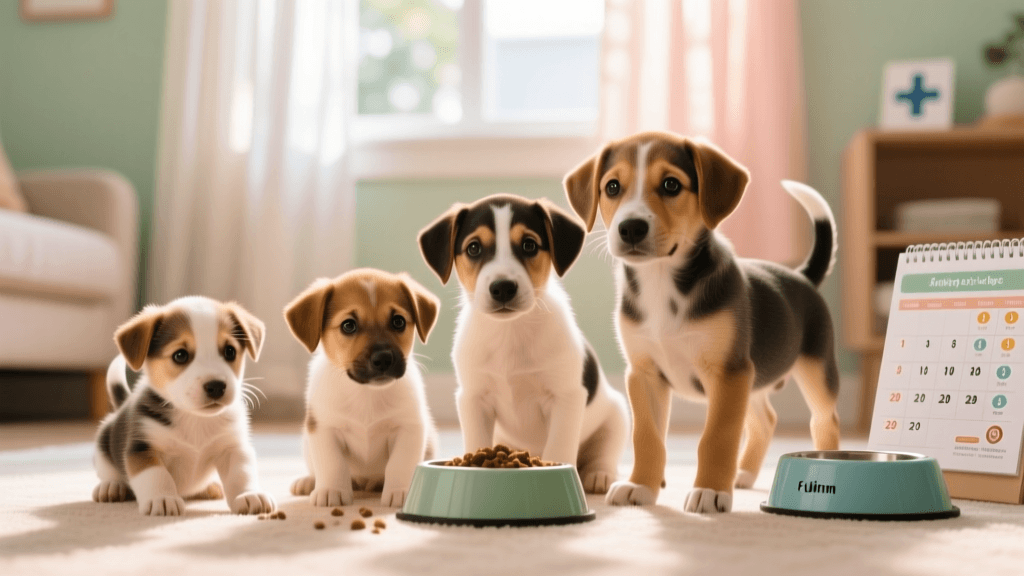
Puppies thrive on predictability. By controlling your puppy's intake (food and water) and output (potty breaks), you can virtually eliminate guessing games. According to the Humane Society House Training resources, taking your puppy out at the exact same intervals every day creates a biological rhythm.
Sample Daily Potty Schedule for an 8-Week-Old Puppy
| Time | Activity | Potty Break Required? |
|---|---|---|
| 7:00 AM | Wake up, immediate crate release | YES (Carry outside immediately) |
| 7:15 AM | Breakfast served (inside crate or pen) | Yes (15 mins after eating) |
| 8:00 AM | Supervised playtime / Training session | Yes (Every 30-45 mins during play) |
| 9:00 AM | Morning Nap (Inside Crate) | No (Sleeping) |
| 11:00 AM | Wake up from nap | YES (Immediate) |
| 12:00 PM | Lunch served | Yes (15 mins after eating) |
| 1:00 PM | Afternoon Nap (Inside Crate) | No (Sleeping) |
| 3:00 PM | Wake up, playtime, socialization | YES (Immediate, then every 45 mins) |
| 5:00 PM | Dinner served | Yes (15 mins after eating) |
| 7:00 PM | Water bowl removed for the night | N/A (Prep for bedtime) |
| 9:00 PM | Final potty break, then bedtime in crate | YES (Late night set alarm for 2 AM) |
Step 3: Teaching the Potty Bell Method
Once your puppy understands the routine, you need to give them a way to initiate the process when you aren't watching the clock. Bell training is a highly effective form of operant conditioning where the puppy learns that ringing the bell equals the door opening.
The Step-by-Step Bell Training Process:
- Mount the Bells: Hang the bells on the handle of the door you always use to take the puppy outside. Ensure they are at your puppy's nose level.
- Target the Bells: Smear a tiny amount of puppy-safe peanut butter or cream cheese on the bells. When your puppy sniffs and licks the bells, they will make a ringing sound. Praise them calmly.
- Pair the Sound with Action: The moment the bells ring, immediately say a cue word like "Touch" or "Ring," open the door, and take them straight outside to their designated potty spot.
- Fade the Lure: After a few days, stop using the treat on the bells. Instead, point to the bells before opening the door. If the puppy nudges them with their nose or paw, open the door immediately.
- Never Open the Door for Play on a Bell Ring: If your puppy rings the bell to go outside and play, but they don't need to potty, take them to the potty spot, wait 3 minutes, and if nothing happens, bring them right back inside. This prevents them from using the bells as a "let me out for fun" button.
Step 4: Handling Accidents Properly
No matter how diligent you are, accidents will happen. How you react to these accidents will dictate how quickly your puppy learns. Preventive Vet Potty Training experts emphasize that punishment is entirely counterproductive. Rubbing a puppy's nose in it or yelling will only teach them that you are a scary person who gets angry when they eliminate, which will lead to them hiding behind furniture to potty next time.
Golden Rule of Potty Training: If you do not catch your puppy in the act, the accident is your fault, not theirs. You missed the signs or waited too long between breaks.
The Correct Cleanup Protocol
- Interrupt (If caught in the act): Clap your hands loudly once and say a neutral interrupter word like "Oops!" or "Ah-ah!" This should startle them just enough to stop the flow of urine.
- Relocate Immediately: Scoop the puppy up (which naturally pauses their bladder muscles) and carry them directly outside to their potty spot. Praise them heavily if they finish outside.
- Enzymatic Cleanup: Blot up the mess with paper towels. Do not rub, as this pushes the urine deeper into the carpet pad. Saturate the area with your enzymatic cleaner (like Nature's Miracle). The cleaner needs to sit wet for at least 10-15 minutes to break down the uric acid crystals before blotting it dry.
Step 5: Conquering Nighttime Potty Training
Nighttime training requires a slightly different approach than daytime training. A puppy's metabolism slows down while they sleep, allowing them to hold their bladder slightly longer than their daytime crate limits. However, for an 8-week-old puppy, a 6-to-8-hour stretch of sleep is biologically impossible.
- The Water Cutoff: Pick up your puppy's water bowl exactly 2 to 2.5 hours before their scheduled bedtime. This ensures their bladder isn't full of excess water when they settle in for the night.
- The Midnight Alarm: Set an alarm for 4 hours after your puppy's final nighttime potty break. For example, if they go out at 10:00 PM, set an alarm for 2:00 AM. Wake up quietly, keep the lights dim, carry them outside, let them potty, and put them right back in the crate. Do not engage in play.
- Gradual Extension: As your puppy grows and successfully sleeps through your alarm, push the alarm back by 30 minutes every few nights until they can comfortably sleep from 10:00 PM to 6:00 AM.
Conclusion: Patience is Your Greatest Tool
Puppy potty training is not a sprint; it is a marathon that requires immense patience, consistency, and empathy. There will be days when it feels like you are taking two steps forward and three steps back. This is a normal part of the cognitive and physical development of your growing dog. By adhering strictly to a crate schedule, utilizing high-value rewards, implementing bell training, and cleaning accidents with the proper enzymatic solutions, you are setting your puppy up for lifelong success. Remember, every successful outdoor potty break is a chance to bond with your new best friend. Stay consistent, celebrate the small victories, and enjoy the beautiful journey of raising a well-adjusted, house-trained companion.
robin-maitland
All our authors care for dogs every day — read more of their work on the authors page.