Puppy Socialization Timeline: The Critical 8 to 16 Week Window
Master the critical 8 to 16-week puppy socialization window. Explore stage-by-stage milestones, safe exposure tips, and expert training advice.
Why the 8 to 16-Week Window is Critical
Welcoming a new puppy into your home is an exhilarating experience, but the first few months are undeniably crucial for their long-term behavioral health. The concept of puppy socialization is frequently misunderstood by new owners as simply letting their dog play with other dogs in a park. In reality, true socialization is about carefully and systematically exposing your young dog to the diverse sights, sounds, smells, textures, and experiences they will inevitably encounter throughout their entire life. According to leading veterinary behaviorists, the primary sensitive period for socialization occurs between 3 and 14 weeks of age. However, the 8 to 16-week window is when you, as the new primary caregiver, have the most direct and profound impact on their ongoing behavioral development and emotional resilience.
The Science Behind Canine Brain Development
During this critical developmental stage, a puppy's brain is exceptionally plastic and highly receptive to new experiences. The American Veterinary Society of Animal Behavior (AVSAB) emphasizes in their official position statements that the behavioral risk of under-socialization far outweighs the medical risk of disease transmission in controlled environments. Puppies that do not receive adequate, positive socialization during this narrow window are significantly more likely to develop fear-based behaviors, separation anxiety, and reactivity or aggression later in life. The neural pathways formed during these formative weeks essentially dictate how a dog processes novelty, handles stress, and recovers from startling events for the rest of their life.
The Week-by-Week Socialization Timeline
To help you navigate this busy period, we have broken down the timeline into actionable phases. Use the chart below as a roadmap for your puppy's developmental journey.
| Age Range | Developmental Focus | Key Activities | Estimated Costs |
|---|---|---|---|
| 8 to 10 Weeks | Home Foundation and Trust Building | Surface exploration, sound desensitization, gentle handling | $15 - $30 (High-value treats and textured mats) |
| 11 to 13 Weeks | Controlled Outdoor Exposure | Stroller walks, puppy kindergarten, observing traffic | $100 - $250 (Professional puppy socialization classes) |
| 14 to 16 Weeks | Confidence and Fear Management | Paced novel object introduction, veterinary clinic happy visits | $0 - $50 (Treats for positive clinic visits) |
Weeks 8 to 10: The Foundation Phase
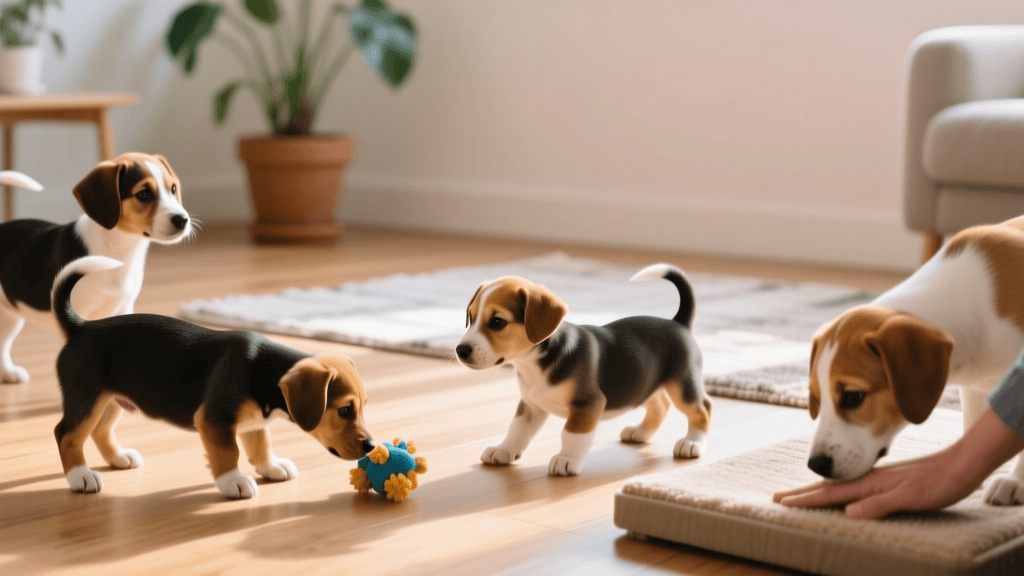
At eight weeks, your puppy has just left their littermates and mother, entering a period of immense environmental transition. Your primary goal is to build a foundation of trust and safety within your home environment. Introduce them to various household surfaces like tile, hardwood, carpet, and linoleum. Play recordings of common household noises—such as vacuum cleaners, doorbells, blenders, and thunderstorms—at a very low volume while feeding them high-value treats like boiled chicken or freeze-dried liver. This classical conditioning creates a positive emotional association with potentially startling sounds. Keep these training sessions short, no longer than five to ten minutes, to prevent overstimulation and mental fatigue.
Weeks 11 to 13: Expanding Horizons
As your puppy enters the 11 to 13-week stage, their confidence will naturally begin to expand, and they will show more curiosity about the world. This is the time to introduce controlled outdoor experiences. While they may not be fully vaccinated, you can safely carry them in a sling or a pet stroller to busy streets, outdoor cafes, and parks. Let them observe bicycles, skateboards, children playing, and people wearing hats or sunglasses. Enroll in a well-managed puppy kindergarten class that requires proof of initial vaccinations and mandates strict hygiene protocols. The American Kennel Club (AKC) strongly advocates for these structured classes to ensure safe, monitored interactions with other puppies under the guidance of a professional trainer.
Weeks 14 to 16: Solidifying Confidence
By weeks 14 to 16, the primary socialization window is beginning to close, and your puppy may naturally become more cautious or fearful of novel stimuli. This is a normal developmental fear period. Do not force interactions. If your puppy shows hesitation toward a new object, such as a garbage can, a statue, or a fluttering flag, allow them to approach it at their own pace while tossing treats nearby. Focus on solidifying positive experiences with handling exercises: gently touch their paws, look inside their ears, and examine their teeth. These handling exercises will make future veterinary visits and grooming sessions significantly less stressful and less expensive, as you will avoid the need for chemical sedation or specialized fear-free handling fees.
Navigating Vaccinations and Safe Exposure
Many owners mistakenly wait until their puppy has received their final round of vaccines at 16 weeks before taking them outside or introducing them to the world. This is a critical error that results in a missed socialization window and long-term behavioral deficits. The ASPCA and leading veterinary behaviorists universally agree that waiting until 16 weeks leaves a puppy highly vulnerable to behavioral euthanasia down the line due to severe, unmanageable fear and aggression. Instead, practice smart, safe socialization. Avoid high-risk areas like dog parks, pet store floors, and areas with unknown dog feces. Discuss your specific local disease risks, such as Parvovirus or Distemper prevalence, with your veterinarian. They can help you tailor a safe socialization map of your neighborhood, identifying low-risk green spaces and high-risk zones to avoid entirely. Stick to controlled environments, carry your puppy in public spaces, and arrange playdates only with fully vaccinated, temperament-tested adult dogs.
Reading Your Puppy's Body Language
Understanding canine body language is absolutely essential for effective socialization. You must be able to identify signs of stress before they escalate into fear or reactivity. Common signs of canine stress include lip licking, yawning when not tired, shaking off as if wet, tucking the tail, and showing the whites of their eyes (often called whale eye). If you observe any of these calming signals, immediately increase the distance between your puppy and the stressor. Reward your puppy for disengaging and looking back at you. This teaches them that they have a voice and that you will advocate for their comfort, which is the cornerstone of a secure attachment. Conversely, signs of a relaxed and engaged puppy include a loose, wiggly body, a softly wagging tail at mid-level, relaxed facial muscles, and a willingness to take treats gently. Furthermore, consider investing in a well-fitted harness rather than a collar for these early outings. A harness provides better control without putting pressure on the puppy's delicate trachea, especially if they become startled and pull backward.
The Ultimate Puppy Socialization Checklist
To ensure comprehensive exposure, aim to check off the following categories before your puppy turns 16 weeks old:
- Surfaces: Grass, gravel, sand, wet pavement, metal grates, and slippery floors.
- People: Men with beards, people in wheelchairs, children running, individuals wearing helmets or heavy coats.
- Sounds: Sirens, construction noise, clapping, dropping pots and pans, and fireworks audio tracks.
- Objects: Umbrellas opening, plastic bags blowing in the wind, brooms, and luggage.
- Handling: Nail trimming simulations, tooth brushing, ear cleaning, and gentle restraint.
Common Socialization Mistakes to Avoid
One of the most frequent errors new owners make is flooding their puppy. Flooding occurs when a puppy is forced into a terrifying situation until they stop reacting. For example, holding a puppy down while a stranger pets them when the puppy is clearly cowering. This does not build confidence; it builds learned helplessness and deep-seated fear. Always let your puppy dictate the pace of interactions. If they retreat behind your legs, respect their boundary and toss a treat to the stranger to toss back, creating distance and reducing pressure.
Remember, socialization is about the quality of the experience, not just the quantity. One profoundly positive interaction with a gentle child is worth far more than ten stressful encounters.
Setting the Stage for a Lifetime of Confidence
The effort you invest during the 8 to 16-week socialization window will pay dividends for the next decade or more of your dog's life. By following a structured, science-backed timeline and prioritizing positive, fear-free experiences, you are not just training a puppy; you are shaping a resilient, adaptable, and joyful adult dog. Stay patient, keep your treat pouch full, and celebrate every small victory along the way.
anouk-beaumont
All our authors care for dogs every day — read more of their work on the authors page.