8 to 12 Week Puppy Guide: Socialization and Vaccines
Navigate the crucial 8 to 12 week puppy stage. Learn essential socialization tips, vaccination schedules, and safety protocols for your growing pup.
The 8 to 12 Week Window: Why It Matters
The period between 8 and 12 weeks of age is widely considered the most critical developmental window in a dog's life. During this brief timeframe, your puppy's brain is exceptionally receptive to new experiences, forming the foundational neural pathways that will dictate their adult temperament, confidence, and behavioral health. According to the American Kennel Club (AKC), this stage is characterized by rapid cognitive growth and a natural curiosity that temporarily overrides the fear response.
However, this window of opportunity coincides with a period of immunological vulnerability. Your puppy has not yet completed their core vaccination series, leaving them susceptible to life-threatening pathogens like Canine Parvovirus and Distemper. Balancing the urgent need for early socialization with strict disease prevention protocols is the primary challenge for new puppy owners during this life stage. Failing to expose your puppy to the world during this time can result in lifelong fear, anxiety, and reactivity, which are the leading causes of behavioral euthanasia in young dogs.
Week-by-Week Vaccination Schedule and Costs
To protect your puppy while navigating the outside world, you must adhere to a strict veterinary schedule. The American Animal Hospital Association (AAHA) recommends a series of core vaccines administered every 2 to 4 weeks until the puppy is at least 16 weeks old. Maternal antibodies, passed down from the mother's colostrum, can interfere with early vaccines, which is why a series of boosters is absolutely necessary to ensure active immunity takes hold.
Below is a structured breakdown of what to expect at the vet during the 8 to 12 week period, including estimated costs which can vary by geographic location and clinic type.
| Age | Vaccine / Treatment | Estimated Cost | Immunity Status & Notes |
|---|---|---|---|
| 6-8 Weeks | DHPP (1st dose), Deworming | $75 - $100 | Often given by breeder/shelter. Maternal antibodies still active. |
| 8-10 Weeks | DHPP (2nd dose), Bordetella | $100 - $150 | Crucial for kennel cough prevention if attending puppy classes. |
| 10-12 Weeks | DHPP (3rd dose), Leptospirosis | $100 - $150 | Immunity is building, but puppy is still NOT fully protected against Parvo. |
Note: The DHPP vaccine protects against Distemper, Hepatitis (Adenovirus), Parainfluenza, and Parvovirus. Always budget an additional $40-$60 for a standard veterinary wellness exam fee per visit. Flea, tick, and heartworm preventatives (like NexGard or Heartgard) will also add $20-$40 per month to your budget.
Safe Socialization Before Full Immunity
A common and dangerous misconception is that puppies must be kept entirely isolated indoors until they receive their final vaccine at 16 weeks. The American Veterinary Society of Animal Behavior (AVSAB) explicitly warns against this, stating that the risk of developing irreversible behavioral issues due to lack of socialization far outweighs the risk of disease exposure, provided that controlled safety measures are taken.
The "Puppy Party" and Controlled Exposures
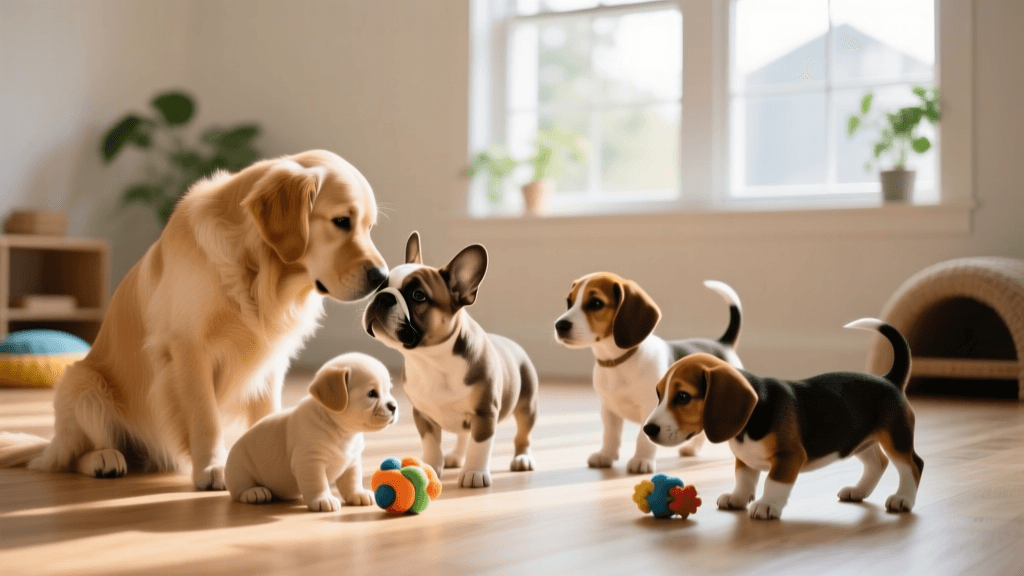
Since you cannot take your puppy to dog parks, pet stores, or high-traffic public sidewalks, you must bring the socialization to them. Host "puppy parties" in your home or backyard. Invite friends, neighbors, and children of various ages. Ask guests to remove their shoes before entering to prevent tracking in Parvovirus from contaminated public soil. You can also invite fully vaccinated, healthy adult dogs from friends' households to model calm behavior and teach your puppy appropriate canine play manners.
- Visual Exposure: Carry your puppy in a sling or backpack to outdoor cafes or hardware stores (where pets are allowed in carts). Let them observe traffic, bicycles, and strangers without forcing interactions. Reward calm observation with treats.
- Auditory Desensitization: Play recordings of thunderstorms, fireworks, and city traffic at a low volume during meal times, gradually increasing the volume over several weeks to build positive associations with loud noises.
- Tactile Experiences: Introduce your puppy to walking on different surfaces. Lay out tarps, grates, wobble boards, and bubble wrap in your living room and reward them with high-value treats (like boiled chicken or freeze-dried liver) for brave exploration.
Handling and Grooming Desensitization
Use this stage to normalize veterinary and grooming procedures. Spend five minutes daily touching your puppy's paws, looking inside their ears, and gently opening their mouth. Introduce a soft silicone finger toothbrush and canine-specific enzymatic toothpaste (such as Virbac C.E.T.) to establish a lifelong dental hygiene routine. Pair every handling exercise with a "lick mat" smeared with plain Greek yogurt or xylitol-free peanut butter to create a positive emotional association with being restrained and examined.
Nutrition, Potty Training, and Sleep Milestones
The 8 to 12 week stage requires immense physical energy, meaning your puppy will need frequent fuel and extensive rest. Puppies at this age sleep between 18 to 20 hours a day. Enforced nap times in a crate are often necessary to prevent overtiredness, which frequently manifests as hyperactive biting, zoomies, and excessive whining.
To create an optimal sleep environment, place the crate in a quiet, low-traffic area of your home. Many owners find success using a "Snuggle Puppy" or similar plush toy equipped with a mechanical heartbeat and a microwavable heat pad. This simulates the feeling of sleeping in a litter pile and can drastically reduce the first few nights of separation anxiety and crying. Additionally, running a white noise machine or a box fan near the crate helps drown out household sounds that might otherwise startle your sleeping puppy.
Feeding Frequencies and Portions
At 8 weeks, a puppy's stomach is roughly the size of a lemon, necessitating small, frequent meals to maintain stable blood glucose levels and support rapid bone growth. Avoid free-feeding, as it makes potty training unpredictable and can lead to rapid growth spikes in large breeds, increasing the risk of orthopedic issues.
- 8 to 12 Weeks: Feed 3 to 4 measured meals per day. For a medium-breed puppy (expected adult weight 30-50 lbs), this typically equates to 1/2 to 3/4 cup of high-quality puppy kibble per meal, depending on the caloric density of the food.
- Hydration: Provide constant access to fresh water during the day, but consider removing the water bowl 2 hours before bedtime to aid in overnight potty training and reduce middle-of-the-night wakeups.
Crate Training and Potty Breaks
Bladder control is directly tied to physical maturity. The general rule of thumb for puppy potty training is that a dog can hold their bladder for one hour per month of age, plus one. Therefore, an 8-week-old (2-month-old) puppy can only hold it for roughly 2 to 3 hours during the day, and perhaps 4 hours overnight due to slowed metabolism during sleep. Set an alarm to take them out at least once during the night to prevent accidents in the crate.
"Consistency is the cornerstone of house training. Take your puppy out immediately upon waking, after every meal, after vigorous play, and right before bed. Use a specific cue word like 'go potty' and reward with a high-value treat the exact second they finish eliminating outdoors."
Invest in an appropriately sized wire crate with a divider panel. The crate should be just large enough for the puppy to stand up, turn around, and lie down comfortably. If the space is too large, the puppy may designate one corner as a bathroom and another for sleeping, completely undermining the crate training process. When accidents happen indoors—and they will—clean the area immediately with an enzymatic cleaner like Nature's Miracle to break down the uric acid crystals and prevent the puppy from remarking the same spot.
Managing the First Fear Period
Around 8 to 10 weeks, puppies often enter their first "fear impact period." During this time, a previously confident puppy may suddenly become terrified of the garbage can, a hat, a shadow, or a sudden noise. It is vital not to force the puppy to confront the scary object, nor should you excessively coddle them with a panicked tone, which can inadvertently validate the fear response.
Instead, use classical conditioning. Toss high-value treats near the scary object, allowing the puppy to approach at their own pace. Keep your body language relaxed and cheerful. If the puppy is entirely overwhelmed, calmly increase the distance from the trigger until they are under their fear threshold and able to accept treats again. Socialization is not just about meeting new things; it is equally about teaching your puppy how to recover from mild stressors. If your puppy gets spooked by a loud truck passing by, do not immediately pick them up and flee. Instead, stop, let them observe from a safe distance, and reward them for looking at the truck and then looking back at you. This builds "bounce-back" resilience, teaching the puppy that novel or loud stimuli are not predictors of danger, but rather opportunities to earn a reward. Navigating this stage with patience and positive reinforcement will yield a resilient, well-adjusted adult dog capable of handling the complexities of the human world.
priya-sutaria
All our authors care for dogs every day — read more of their work on the authors page.