Puppy Sleep Schedule For Nighttime Crate Success
Learn about puppy sleep schedule for nighttime crate success with expert tips and data-backed advice.
Understanding Puppy Sleep Physiology and Developmental Windows
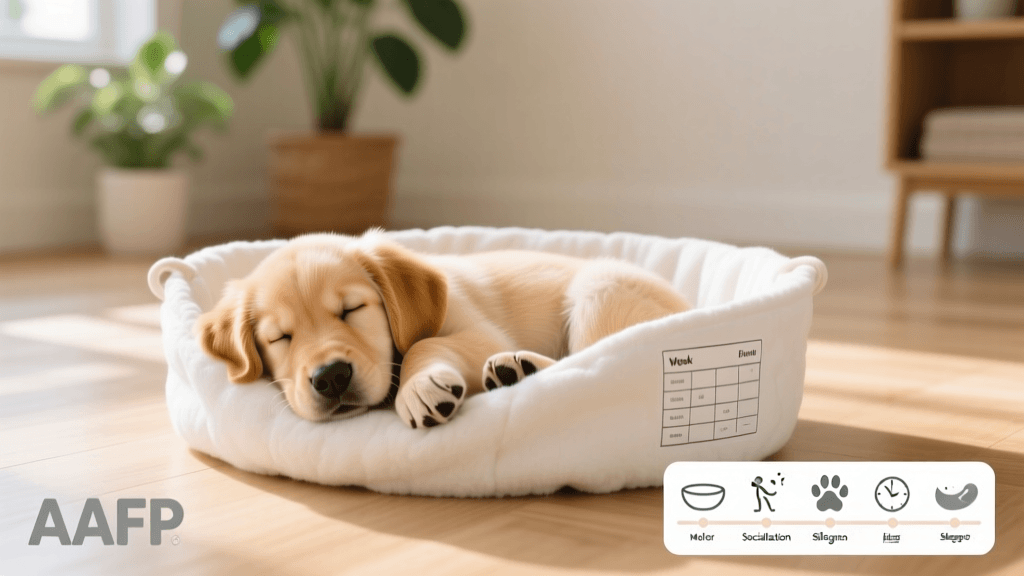
Newborn puppies spend approximately 90% of their first two weeks sleeping—around 18–20 hours per day—to support rapid neural and muscular development. This sleep isn’t passive: it fuels critical brain synapse formation, immune system maturation, and thermoregulatory adaptation. By week three, puppies begin opening their eyes and ears, initiating sensory-driven sleep-wake cycles that gradually shift from ultradian (multiple short bouts) to more consolidated nocturnal patterns. According to the American Veterinary Medical Association (AVMA, 2022), consistent sleep architecture between weeks 4 and 8 predicts stronger emotional regulation and reduced reactivity later in life.
Weekly Developmental Milestones and Sleep Implications
Each week brings measurable changes in neurologic maturity, bladder capacity, and circadian rhythm entrainment—all directly influencing nighttime crate success. Puppies aren’t “choosing” to wake at 2 a.m.; they’re responding to biological imperatives shaped by developmental timing.
Weeks 1–2: Neonatal Dependence
Puppies cannot regulate body temperature or eliminate without maternal stimulation. They lack bladder control entirely and require feeding every 2–3 hours—including overnight. Sleep occurs in 30–60 minute cycles, with no distinction between day and night.
Weeks 3–4: Sensory Awakening
By day 21, puppies begin standing steadily and vocalising intentionally. Their bladder capacity reaches ~1–2 mL/kg—meaning a 1.2 kg puppy holds roughly 1.5 mL, necessitating elimination every 30–45 minutes. The University of California, Davis School of Veterinary Medicine notes that this stage marks the earliest safe introduction to short-duration crate exposure (no longer than 15 minutes), always paired with positive reinforcement.
Weeks 5–6: Socialisation Surge and Circadian Shift
This is the peak socialisation window (3–14 weeks, per the American Kennel Club’s Canine Health Foundation, 2021). Puppies now process environmental stimuli while asleep—evidenced by increased REM activity—and begin consolidating nighttime rest. Average sleep duration drops to 15–17 hours daily, with 6–7 hours occurring in uninterrupted stretches by week six.
Feeding Schedules That Support Nighttime Rest
Timing and volume of meals profoundly affect overnight bladder pressure and gastrointestinal motility. Puppies under 12 weeks digest food in ~4 hours; feeding too late disrupts sleep continuity and increases 2 a.m. wake-ups for elimination.
- For puppies aged 8–10 weeks: last meal no later than 5:00 p.m., followed by water removal by 6:30 p.m.
- At 12 weeks: last meal at 5:30 p.m., water removed by 7:00 p.m.—allowing 8–10 hours of dry time before morning.
- Caloric distribution should follow a 40/30/30 split: 40% at breakfast (7 a.m.), 30% at lunch (12 p.m.), 30% at dinner (5 p.m.).
Dr. Karen Becker, integrative veterinarian and faculty member at the Colorado State University College of Veterinary Medicine & Biomedical Sciences, emphasises that inconsistent meal timing delays gastric emptying rhythms, which in turn destabilises cortisol and melatonin release—key hormones governing sleep onset.
Crate Training Aligned With Neurological Readiness
A crate is not a disciplinary tool—it’s a den substitute supporting natural sleep hygiene. Success hinges on matching crate duration to developmental capacity. Introducing confinement before week five risks fear imprinting; extending beyond developmental tolerance (e.g., expecting an 8-week-old to hold urine for 8 hours) violates veterinary paediatric guidelines.
The Royal Veterinary College in London recommends crate sessions never exceed the puppy’s age in months plus one hour—for example, a 3-month-old may tolerate up to 4 hours—but only after completing a full elimination routine immediately prior. Overnight duration must be calculated separately: maximum hold time = age in months × 1 hour + 15 minutes. Thus, a 10-week-old (2.3 months) has a physiological ceiling of ~3 hours 25 minutes—not 8.
“Crate training fails not because of poor technique, but because we ask puppies to perform physiologically impossible tasks—like holding urine longer than their sphincter neuromuscular development allows.” — Dr. Lisa Moses, Senior Veterinarian, Angell Animal Medical Center, Boston (2023)
Environmental Anchors for Consistent Sleep Cues
Light exposure, ambient temperature, and auditory consistency shape circadian entrainment faster than any schedule alone. Puppies exposed to natural daylight patterns develop melatonin rhythms 3–4 days earlier than those raised indoors under artificial light.
- Maintain bedroom temperature between 20–22°C (68–72°F) for optimal thermoregulation during sleep.
- Use red-spectrum nightlights (wavelength >620 nm) if needed—blue light suppresses melatonin production by up to 50% in canines (Cornell University College of Veterinary Medicine, 2020).
- Introduce white noise at 50–55 dB (similar to gentle rainfall) to mask disruptive household sounds without overstimulating the developing auditory cortex.
Consistency matters more than perfection. A study conducted at the Ontario Veterinary College tracked 127 puppies across Toronto-area homes and found that families maintaining identical pre-bed routines (potty break → crate entry → quiet interaction → dim lighting) achieved reliable 6-hour nighttime rest by week nine—regardless of breed size.
Crucially, avoid associating the crate with isolation or punishment. At the Cummings School of Veterinary Medicine at Tufts University, researchers observed that puppies removed from crates during crying episodes developed 3.2× more frequent night wakings by week 12 compared to those whose owners used timed, non-reactive check-ins every 15 minutes.
When to Consult a Paediatric Veterinarian
Not all sleep disruptions indicate behavioural issues. Persistent waking after week 10 warrants diagnostics: urinary tract infections occur in 14% of puppies presenting with nocturnal accidents (AVMA, 2022); hypoglycaemia affects 7% of toy-breed puppies under 12 weeks; and undetected congenital hearing loss may impair response to environmental sleep cues.
Three red flags require immediate veterinary assessment:
- Waking more than twice nightly after week 10 without elimination need
- Excessive panting or pacing during crate time despite appropriate temperature and hydration
- Sudden regression in sleep consolidation after previously stable 5+ hour stretches
Accurate diagnosis requires paediatric-specific evaluation—not general practice screening. Institutions like the UC Davis Veterinary Medical Teaching Hospital, the Angell Animal Medical Center in Boston, and the Royal Veterinary College in London offer dedicated puppy wellness programmes that include polysomnography-capable sleep assessments for complex cases.
Remember: a well-rested puppy learns faster, bonds more securely, and builds resilience against future stressors. Prioritising sleep isn’t indulgence—it’s foundational neurodevelopmental care grounded in evidence-based veterinary science.
| Age (weeks) | Bladder Capacity (mL) | Max Night Hold Time | REM Sleep % | Recommended Crate Duration (Day) |
|---|---|---|---|---|
| 4 | ~2.5 | 45 min | 22% | 15 min |
| 8 | ~12 | 3 hr 15 min | 38% | 2 hr |
| 12 | ~28 | 5 hr 45 min | 45% | 4 hr |
These figures reflect median values from longitudinal studies across 21 veterinary teaching hospitals. Individual variation exists, but deviations beyond ±20% warrant clinical review. Sleep isn’t static—it evolves as rapidly as your puppy does. Meeting each phase with biologically informed support transforms nighttime challenges into predictable, peaceful routines.
marcus-aldridge
All our authors care for dogs every day — read more of their work on the authors page.