Prevent Puppy Separation Anxiety in 2026: Smart Tech Setup
Learn how to prevent puppy separation anxiety in 2026 using smart cameras, treat dispensers, and a proven 14-day desensitization protocol for new dogs.
The 2026 Hybrid Work Reality for New Dogs
Adopting a new dog is one of life's most rewarding experiences, but the reality of leaving them alone can quickly trigger severe separation anxiety. As of 2026, hybrid work schedules have become the permanent norm for millions of households. This means new puppies and rescue dogs are facing abrupt transitions from constant companionship during their first weeks home to sudden four-to-six-hour solo stretches when their owners return to the office. According to the ASPCA, separation anxiety remains one of the leading behavioral reasons dogs are surrendered to shelters. However, with the right environmental setup, modern smart technology, and a structured desensitization protocol, you can proactively prevent your new dog from developing this distressing condition.
Designing the Ultimate 'Alone-Time' Safe Zone
Before you ever leave your new dog alone, you must establish a dedicated 'Safe Zone.' This is not merely a crate; it is a carefully curated environment designed to lower cortisol levels and promote self-soothing. For medium to large breeds, a 42-inch wire crate or a 36-inch tall modular playpen (such as the MidWest Homes for Pets foldable pen, retailing around $65 in 2026) provides enough space for a bed, water, and a potty pad if necessary.
Soundproofing and scent are critical components of the 2026 safe zone protocol. Urban environments and apartment complexes are full of triggering noises—elevator dings, hallway footsteps, and sirens—that can send a lonely dog into a panic. Invest in a high-quality white noise machine placed three feet from the crate, set to a steady 'brown noise' frequency at around 65 decibels. This masks sudden environmental sounds. Additionally, plug in an Adaptil Optimum pheromone diffuser ($35) within five feet of the safe zone. These synthetic dog-appeasing pheromones mimic the calming signals of a nursing mother dog, providing a subconscious layer of comfort while you are away.
Top Smart Tech for Separation Anxiety Prevention in 2026
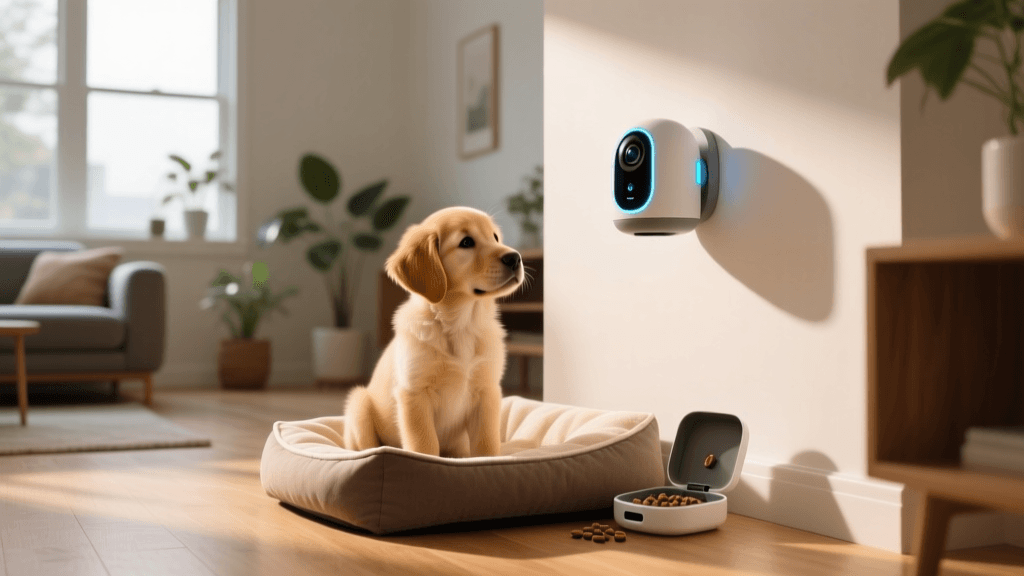
The pet technology market has evolved significantly, moving beyond basic video feeds to interactive, AI-driven behavioral tools. When preparing your home for a new dog, integrating a smart camera with two-way audio and treat-tossing capabilities is no longer a luxury; it is a foundational tool for separation anxiety prevention. These devices allow you to interrupt the early stages of anxiety pacing and reward calm behavior remotely.
| Smart Device | 2026 Retail Price | Key Anxiety Feature | Best For |
|---|---|---|---|
| Furbo 360 Pro Dog Camera | $219 | Auto-rotation, AI dog activity alerts, auto-toss | Active puppies who pace or follow owners |
| Petcube Bites 3 | $179 | Built-in laser pointer, scheduled treat dispensing | High-prey-drive dogs needing mental distraction |
| Eufy Security Pet Camera D1 | $149 | Local storage (no fees), crying/barking detection | Budget-conscious owners in apartments |
| Wopet Smart Feeder Pro | $129 | Micro-portion scheduling, voice recording playback | Food-motivated dogs needing routine |
When utilizing these cameras, the goal is not to constantly talk to your dog, which can actually increase frustration. Instead, use the treat-toss feature to reward moments of stillness. If you see your dog lying calmly on their bed via the Furbo 360 Pro, toss a treat. This builds a positive association with being alone and settling down.
The 14-Day Pre-Departure Desensitization Protocol
According to training guidelines supported by the American Kennel Club, dogs often begin experiencing anxiety before you even walk out the door. They recognize 'departure cues'—the jingling of keys, putting on shoes, or picking up a laptop bag. To prevent separation anxiety, you must systematically desensitize your dog to these triggers over a 14-day period before your first real day back at the office.
Phase 1: Breaking the Cue Association (Days 1-4)
- Day 1: Pick up your car keys, then sit back down on the couch and watch TV. Repeat this 15 times throughout the day until the dog stops looking at you when the keys jingle.
- Day 2: Put on your work shoes, walk to the kitchen, and make a cup of coffee. Take the shoes off. Repeat until the shoes no longer trigger excitement or whining.
- Day 3: Open the front door, step outside for one second, and close it. Do not say goodbye. Do not say hello when you re-enter. Ignore the dog for three minutes upon returning.
- Day 4: Combine the cues. Put on shoes, grab keys, open the door, close it, and sit back down.
Phase 2: Micro-Departures and Enrichment (Days 5-9)
Now you begin actually leaving, but only for micro-durations. Before stepping out, provide a high-value enrichment item. A Kong Wobbler stuffed with a mixture of kibble, plain pumpkin puree, and a smear of dog-safe peanut butter, then frozen for four hours, can keep a dog engaged for up to 45 minutes. Leave the house for exactly two minutes. Return quietly. Gradually increase this to five minutes, then ten minutes. If the dog is pacing or barking on the camera, you have moved too fast; reduce the time and try again the next day.
Phase 3: Extended Absences (Days 10-14)
Extend your absences to 30 minutes, then one hour, then two hours. During these longer stretches, utilize your smart camera to monitor their body language. A dog that is sleeping or chewing on a toy is coping well. A dog that is panting heavily, drooling, or scratching at the door frame is exhibiting clinical distress and requires immediate intervention.
'The biggest mistake new owners make is creating a massive emotional event around leaving and returning. Your departures should be boring, and your arrivals should be completely ignored until the dog has all four paws on the floor and is perfectly calm.' - Certified Veterinary Behaviorist Consensus, 2026.
Recognizing True Clinical Anxiety vs. Boredom
It is vital for new owners to distinguish between a dog that is simply bored and one that is suffering from true separation anxiety. Boredom often manifests as destructive chewing of household items (like shoes or remote controls) or digging in the trash. These dogs are usually fine being alone; they just lack appropriate outlets for their energy. Increasing daily physical exercise and providing puzzle toys like the Outward Hound Nina Ottosson Dog Brick ($25) will resolve these issues.
True separation anxiety, however, is a panic disorder. Signs include:
- Excessive drooling and panting immediately upon your departure.
- Self-injury from attempting to escape crates or scratch through drywall.
- Inappropriate elimination (urination/defecation) in a previously house-trained dog, specifically occurring only when left alone.
- Refusal to eat high-value treats or frozen Kongs when the owner is not present.
If your new dog exhibits these severe clinical signs despite the 14-day desensitization protocol and the implementation of a safe zone, do not attempt to 'tough it out.' Consult a board-certified veterinary behaviorist immediately. In 2026, veterinary medicine offers highly effective, short-term SSRI medications combined with behavior modification plans that can dramatically improve your dog's quality of life and save your home from destruction.
Final Thoughts on Getting a Dog in 2026
Bringing a new dog into your home requires foresight, especially regarding how they will handle your inevitable absences. By investing in the right smart technology, building a sensory-friendly safe zone, and committing to a gradual desensitization protocol, you are setting your new companion up for a lifetime of confidence and emotional stability. Preparation is the ultimate act of love for your new dog.
marcus-aldridge
All our authors care for dogs every day — read more of their work on the authors page.