Puppy Scent Bonding in 2026: Snuffle Mats and Trust Games
Discover how to build deep trust with your puppy in 2026 using scent games and snuffle mats. Expert bonding exercises for the critical socialization window.
The Science of Scent and Puppy Bonding
When you bring a new puppy home, the desire to cuddle and play is overwhelming. However, veterinary behaviorists in 2026 increasingly emphasize that true bonding goes beyond physical affection; it requires mental engagement and trust-building. One of the most profound ways to connect with your puppy during their critical first year is through olfactory enrichment. A dog's sense of smell is their primary way of interpreting the world. While humans have about six million olfactory receptors, dogs possess up to 300 million, depending on the breed. Engaging this powerful sense not only tires them out mentally but also builds a deep, cooperative relationship between you and your puppy.
According to recent canine cognitive studies, scent-based activities lower a puppy's heart rate and reduce anxiety-inducing behaviors like destructive chewing or excessive barking. When you guide your puppy through scent games, you transition from being just a provider of food to a partner in exploration. This is especially crucial during the critical socialization window, which typically closes around 16 weeks of age. For comprehensive guidelines on early development, the ASPCA Puppy Care resources highlight that positive, engaging experiences during this window form the foundation of a confident adult dog.
Why 2026 is the Year of Olfactory Enrichment
In the past, puppy care heavily focused on physical exercise and basic obedience. Today, the 2026 consensus among certified professional dog trainers and veterinary behaviorists is that mental stimulation via scent work is just as vital. Modern puppy care recognizes that sniffing is a self-reinforcing behavior. When a puppy successfully locates a hidden treat, their brain releases dopamine, creating a positive feedback loop associated with you, the handler.
Furthermore, scent bonding is incredibly accessible. It does not require a large backyard or perfect weather. Whether you live in a high-rise apartment or a sprawling suburban home, you can utilize interactive tools like snuffle mats and puzzle feeders to simulate natural foraging behaviors. This approach aligns perfectly with the AKC Scent Work framework, which has seen a massive surge in popularity as owners realize that foundational scent games can start as early as eight weeks of age.
Top Snuffle Mats and Scent Toys for Puppies in 2026
Choosing the right equipment is essential for safety and engagement. Puppies are notorious chewers, especially during the teething phase (typically between 12 and 24 weeks). Therefore, any scent toy must be durable, non-toxic, and easy to clean. Below is a comparison of the top-rated olfactory enrichment tools recommended by trainers this year.
| Product Name | Best For | Material Safety | Estimated 2026 Price |
|---|---|---|---|
| Paw5 Wooly Snuffle Mat | Beginners and gentle foragers | Machine-washable, non-toxic fleece | $45 - $55 |
| Outward Hound Hide N Slide | Puppies needing puzzle progression | BPA-free, phthalate-free composite | $15 - $22 |
| SnuffleMat Brand Original | Heavy chewers and deep sniffers | Heavy-duty, reinforced polar fleece | $60 - $75 |
| Kong Classic (Puppy Rubber) | Teething puppies and solo scent work | Veterinary-recommended soft rubber | $12 - $18 |
When introducing these tools, always supervise your puppy to ensure they are sniffing for the food rather than attempting to ingest the fabric or plastic. Once your puppy understands the game, you can gradually increase the difficulty by hiding the mat or using smaller kibble pieces.
Step-by-Step Scent Bonding Exercises
Building trust through scent requires patience and a structured approach. Here are three foundational exercises designed specifically for puppies under one year old.
Exercise 1: The 'Find It' Foundation
This is the simplest way to introduce scent work and can be done in any room. Start with your puppy on a leash or in a confined space to prevent them from wandering off. Hold a high-value, strongly scented treat (like a small piece of freeze-dried liver or boiled chicken) in your closed fist. Let your puppy sniff your hand. Once they are focused, toss the treat onto the floor just a few inches away and say the cue phrase, 'Find it.' As your puppy eats the treat, praise them enthusiastically. Gradually increase the distance you toss the treat. This game builds recall, focus, and a positive association with your voice and cues.
Exercise 2: The Snuffle Mat Meal Replacement
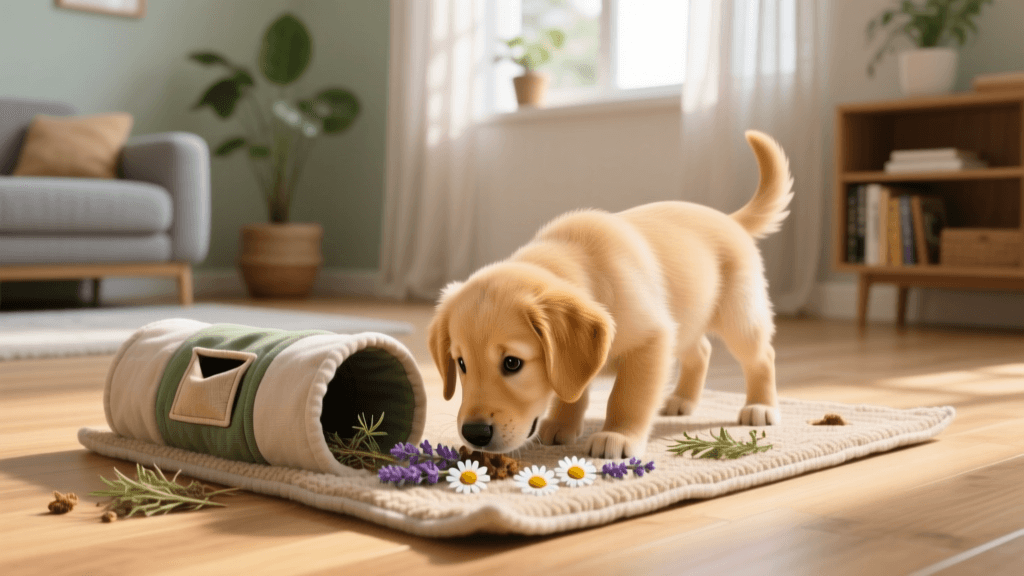
Instead of feeding your puppy from a stainless steel bowl, use a snuffle mat for their daily kibble allowance. Scatter the kibble deeply into the fleece strands. This slows down fast eaters, prevents bloat, and turns a mundane daily routine into a 15-minute bonding and brain-game session. Sit near the mat while they forage. Your calm presence while they engage in a natural, satisfying behavior reinforces your role as a secure base. Over time, they will associate your presence with the rewarding experience of foraging.
Exercise 3: Hide-and-Seek with High-Value Treats
Once your puppy has mastered the 'Find it' cue on the floor, elevate the game by hiding treats in slightly more challenging locations. Have a family member gently hold your puppy in one room while you hide three to five treats in another room (e.g., under the edge of a rug, behind a table leg, or on a low, stable chair). Bring your puppy into the room and give the 'Find it' cue. Walk with them, pointing and encouraging them without giving away the exact location. When they locate a treat, celebrate with a 'jackpot' reward—an extra treat from your hand. This cooperative hunting simulation deeply strengthens the human-canine bond.
Troubleshooting Common Puppy Scent Issues
My puppy just bites the snuffle mat instead of sniffing.
This is common during the teething phase. If your puppy starts chewing the fleece, calmly interrupt the behavior by offering a dedicated teething toy, like a frozen Kong stuffed with puppy-safe peanut butter. Remove the snuffle mat and try again later with larger, easier-to-find treats to encourage quick success before chewing begins.
My puppy gives up too quickly.
If your puppy abandons the scent game, the difficulty level is likely too high. Go back to the basics. Make the treats more visible and use stronger-smelling rewards. Ensure the environment is free from loud noises or distractions that might overwhelm their developing senses.
My puppy gets overly excited and frustrated.
Scent work should be calming, not arousing. If your puppy is frantically scratching or barking at a puzzle toy, the toy is too difficult. Switch to an easier puzzle or scatter treats on the floor to lower their frustration threshold. The goal is cognitive engagement, not frantic destruction.
Conclusion
Bonding with your puppy in 2026 means embracing their natural instincts and providing outlets for their incredible olfactory abilities. By integrating snuffle mats, scent games, and cooperative foraging into your daily routine, you are doing much more than just tiring them out. You are building a language of trust, cooperation, and mutual understanding that will last a lifetime. Start small, celebrate every success, and watch as your puppy blossoms into a confident, deeply connected companion.
jonas-cole
All our authors care for dogs every day — read more of their work on the authors page.