Puppy-Proofing Your Home: The Complete Beginner's Handbook
Discover how to puppy-proof your home with our complete beginner's handbook. Learn room-by-room safety tips, essential gear, and setup costs.

Why Puppy-Proofing is Non-Negotiable
Bringing a new puppy home is one of the most exciting milestones in life, but it also marks the beginning of a massive responsibility. Puppies are naturally curious, highly energetic, and explore the world primarily through their mouths. This combination makes an unprepared home a minefield of potential hazards, ranging from toxic substances to choking risks and electrical dangers.
According to the American Kennel Club, thousands of puppies visit emergency veterinary clinics every year due to foreign body ingestion and accidental poisoning. Veterinary bills for removing a swallowed sock or treating toxic ingestion can easily exceed $2,000 to $5,000. Puppy-proofing is not just about protecting your belongings; it is a critical, non-negotiable step in protecting your new dog's life. This complete beginner's handbook will walk you through the exact steps, measurements, and products you need to secure your home before your puppy's paws ever touch your floors.
The Essential Puppy-Proofing Shopping List
Before your puppy arrives, you need to gather the right tools. Below is a structured breakdown of the essential puppy-proofing gear, estimated costs, and their specific purposes. Investing in these items upfront will save you immense stress and money down the line.
| Product Category | Recommended Brand/Type | Estimated Cost | Primary Purpose |
|---|---|---|---|
| Heavy-Duty Baby Gates | Regalo Easy Step Walk Thru (Metal) | $40 - $60 | Restrict access to stairs, kitchens, and unsafe rooms |
| Cord Concealers | JOTO Cable Management Sleeves | $15 - $25 | Prevent electrocution and destructive wire chewing |
| Bitter Deterrent Spray | Grannick's Bitter Apple or Foo Dog | $10 - $15 | Discourage chewing on furniture legs and baseboards |
| Locking Trash Cans | simplehuman Step Trash Can (Locking) | $80 - $150 | Prevent dietary indiscretion and toxic food ingestion |
| Cabinet Child Locks | Safety 1st Magnetic Locking System | $20 - $30 | Secure cleaning chemicals and medications under sinks |
| Indoor Exercise Pen | MidWest Homes for Pets Foldable Pen | $50 - $80 | Create a safe, confined play area when unsupervised |
Room-by-Room Puppy-Proofing Guide
Approaching your home from a puppy's perspective requires getting down on your hands and knees. What looks safe from a standing height can be a deadly hazard at six inches off the ground. Here is your room-by-room handbook.
The Living Room: Managing Cords, Plants, and Small Objects
The living room is usually where the puppy will spend the most time, making it the most critical area to secure. Start with electrical cords. Use split-loom tubing or fabric cable sleeves to bundle and hide TV, lamp, and router wires. If a cord must be exposed, apply a generous coating of bitter apple spray, though physical barriers are always more reliable.
Next, evaluate your houseplants. Many common decorative plants are highly toxic to dogs. Sago Palms, Aloe Vera, Peace Lilies, and Pothos can cause severe gastrointestinal distress, liver failure, or even death if chewed. Relocate all toxic plants to high shelves or hanging planters that are completely out of reach, or rehome them entirely. You can verify the safety of your specific plants by consulting the ASPCA Animal Poison Control database.
Finally, clear the floor and low coffee tables of small objects. Coins, children's toys, rubber bands, and remote controls are prime targets. A good rule of thumb: if it can fit inside a toilet paper tube, it is a choking hazard and must be put away.
The Kitchen: Securing Food and Chemicals
The kitchen presents two major threats: toxic human foods and hazardous cleaning supplies. Puppies have an incredible sense of smell and will go to great lengths to investigate food odors. Invest in a heavy-duty, locking trash can. Puppies can easily knock over standard bins, leading to the ingestion of cooked bones (which can splinter and puncture the intestines), grape skins, onion scraps, or avocado pits.
Pay special attention to products containing Xylitol (sometimes listed as birch sugar). This artificial sweetener is found in many sugar-free peanut butters, baked goods, and gums. Even a tiny amount can cause rapid, fatal hypoglycemia and liver failure in dogs. Always check peanut butter labels before offering it as a treat, and keep all sugar-free products in high, closed pantries.
Under the sink is another danger zone. Transfer harsh chemicals like bleach, oven cleaners, and dishwashing pods to high shelves, or install magnetic child-proof locks on the lower cabinet doors. Remember that puppies can easily chew through thin plastic spray bottles, so never leave cleaning supplies on the floor, even for a minute.
The Bathroom and Bedroom: Medications and Linear Foreign Bodies
Bathrooms are full of hidden dangers. Keep the toilet lid closed at all times; puppies can easily fall in and drown, or drink water contaminated with toxic bowl cleaners. Store all medications, vitamins, and supplements in high cabinets. Never leave pill bottles on the counter, as puppies can easily chew through the plastic child-proof caps.
In the bedroom, the primary culprits are clothing and shoes. Socks, underwear, and shoelaces are particularly dangerous because they can act as 'linear foreign bodies.' When swallowed, these string-like items can bunch up the intestines, requiring complex and expensive emergency surgery. Keep all laundry in closed hampers and store shoes in closets with doors that latch securely. Check under the bed for forgotten items, dust bunnies, and hidden hazards like stray pills or hair ties.
Outdoor and Yard Safety Checklist
If you have a yard, it must be just as secure as your living room. Walk the entire perimeter of your fence. Look for gaps wider than two inches, loose boards, or areas where a determined puppy could dig underneath. Bury chicken wire at the base of the fence or place heavy landscaping rocks along the perimeter to deter digging.
Review your landscaping materials. Cocoa bean mulch, while smelling delicious to dogs, contains theobromine (the same toxic compound found in chocolate) and can be fatal if ingested. Replace it with pet-safe alternatives like cedar or pine mulch. Ensure that garden tools, fertilizers, pesticides, and compost bins are locked away in a shed. Compost piles can harbor tremorgenic mycotoxins, which cause severe neurological symptoms and seizures in dogs. For more information on outdoor toxins, the Pet Poison Helpline offers extensive resources on yard hazards.
Setting Up Your Dog's Safe Zone
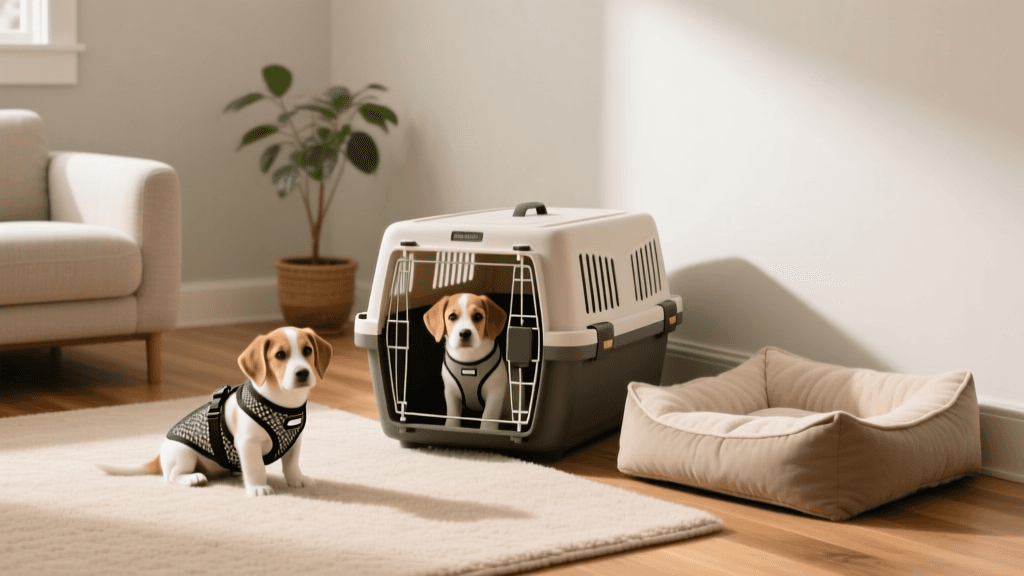
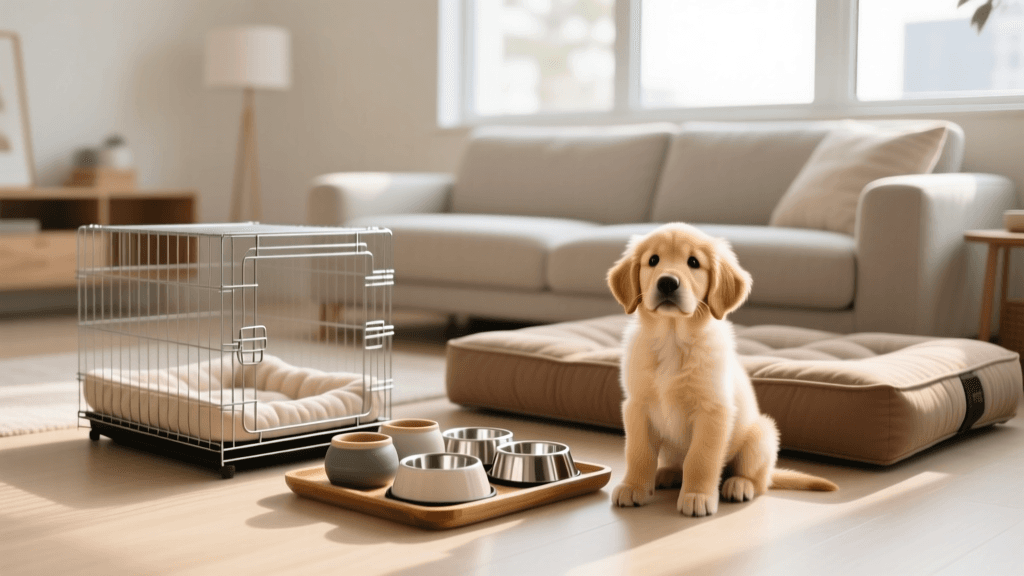
Even in a fully puppy-proofed home, a new dog needs a designated 'safe zone' where they can relax and be contained when you cannot actively supervise them. This is typically a crate or an indoor exercise pen.
Crate Sizing: A crate should be large enough for the puppy to stand up, turn around, and lie down comfortably, but not so large that they can use one end as a bathroom. For growing puppies, buy a crate sized for their estimated adult weight and use the included adjustable divider panel. A good measurement formula is to add 2 to 4 inches to your puppy's current height and length.
Playpen Dimensions: For times when the puppy is awake and playful but you need to cook or take a call, an exercise pen is ideal. A standard 8-panel pen (each panel 24 inches wide and 30 inches high) provides 16 square feet of safe play space. Place the pen on an easy-to-clean surface like tile or hardwood, and line the bottom with washable potty pads or a durable rubber mat.
The First 72 Hours: Monitoring and Adjusting
Puppy-proofing is not a one-time event; it is an ongoing process. During the first 72 hours, closely monitor how your puppy interacts with their environment. You may find that they are surprisingly agile and can reach the kitchen counter, or that they have a specific obsession with chewing the wooden legs of your dining chairs.
Keep a notebook handy during the first week. Write down any near-misses or new hazards you discover. Adjust your baby gates, apply more bitter spray, or relocate items as your puppy grows and becomes more coordinated. Remember that a tired puppy is a safe puppy; ensure you are providing adequate physical exercise and mental enrichment through puzzle toys and training sessions to reduce destructive boredom chewing.
Final Thoughts
Preparing your home for a new dog requires time, effort, and a small financial investment, but the peace of mind it provides is invaluable. By following this beginner's handbook, you are setting the stage for a safe, happy, and stress-free transition. Take the time to secure your space before your puppy arrives, and you will be able to focus entirely on bonding with your new best friend rather than worrying about what they might be chewing on in the next room.
marcus-aldridge
All our authors care for dogs every day — read more of their work on the authors page.