Top Puppy-Proofing Mistakes New Dog Owners Must Avoid
Discover the top puppy-proofing mistakes new dog owners make. Learn how to safely prepare your home, avoid toxic hazards, and save money on day one.
The Excitement and the Reality of Bringing a Dog Home
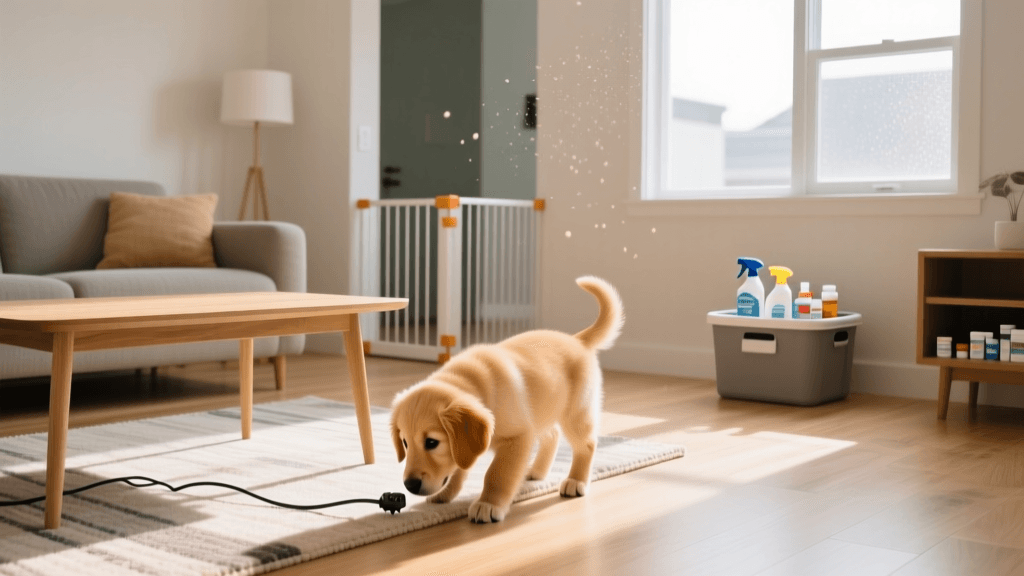
Bringing a new dog or puppy into your home is one of the most exciting milestones in life. You have likely spent weeks picking out the perfect collar, researching the best kibble, and imagining the long walks you will take together. However, the transition from a shelter or breeder to your living room can be chaotic if your home is not properly prepared. Many first-time dog owners operate under the assumption that their home is inherently safe, only to discover that a curious canine sees the world as an all-you-can-eat buffet and a destructive playground. According to the American Kennel Club (AKC), failing to puppy-proof your home is one of the leading causes of preventable emergency vet visits and property damage in the first six months of dog ownership.
Avoiding common setup mistakes is not just about protecting your favorite pair of shoes; it is about ensuring the physical safety and psychological well-being of your new companion. Below, we detail the most frequent puppy-proofing and home-preparation mistakes new owners make, complete with actionable advice, specific product recommendations, and exact measurements to help you get it right the first time.
Mistake 1: Underestimating Vertical Reach and Climbing Ability
One of the most pervasive myths among new dog owners is that puppies and small breeds cannot reach high surfaces. In reality, dogs are incredibly resourceful. A medium-sized puppy can easily use a nearby chair, dog bed, or even a pile of laundry as a stepping stone to access kitchen counters or coffee tables. This 'staircase effect' leads to the ingestion of dangerous items left on high surfaces.
The Fix: Strategic Gate Placement and Surface Clearing
Do not rely on standard 24-inch pet gates. For kitchen and living room perimeters, invest in hardware-mounted baby gates that are at least 30 to 36 inches tall, such as the Regalo Easy Step Walk Thru Gate or the Carlson Pet Products Super Wide Gate. Pressure-mounted gates are sufficient for flat doorways but are a severe safety hazard at the top of stairs, as a determined dog can push them down. Furthermore, adopt the 'sweep and clear' rule: all counters and tables must be completely devoid of food, medications, and small objects before you leave the house.
Mistake 2: Overlooking Hidden Toxic Hazards and Houseplants
Many new owners remember to put away chocolate and cleaning supplies but completely forget about houseplants, essential oils, and sugar-free gums. The ASPCA's Toxic and Non-Toxic Plants list highlights that common household plants like Sago Palms, Lilies, and Pothos are highly toxic to dogs and can cause fatal liver failure or severe gastrointestinal distress. Similarly, essential oil diffusers and liquid potpourri can cause respiratory distress and chemical burns.
The Fix: Audit Your Greenery and Pantry
Before your dog arrives, walk through every room with the ASPCA toxic plant database open on your phone. Relocate all toxic plants to a high-hanging basket or a closed sunroom. Check your pantry and bathroom for products containing Xylitol (birch sugar), an artificial sweetener found in peanut butter, sugar-free gum, and some baked goods that is rapidly fatal to dogs even in minute quantities. Store all human medications in locked cabinets, as child-proof caps are easily crushed by canine molars.
Mistake 3: Buying the Wrong Sized Crate (Or Skipping the Divider)
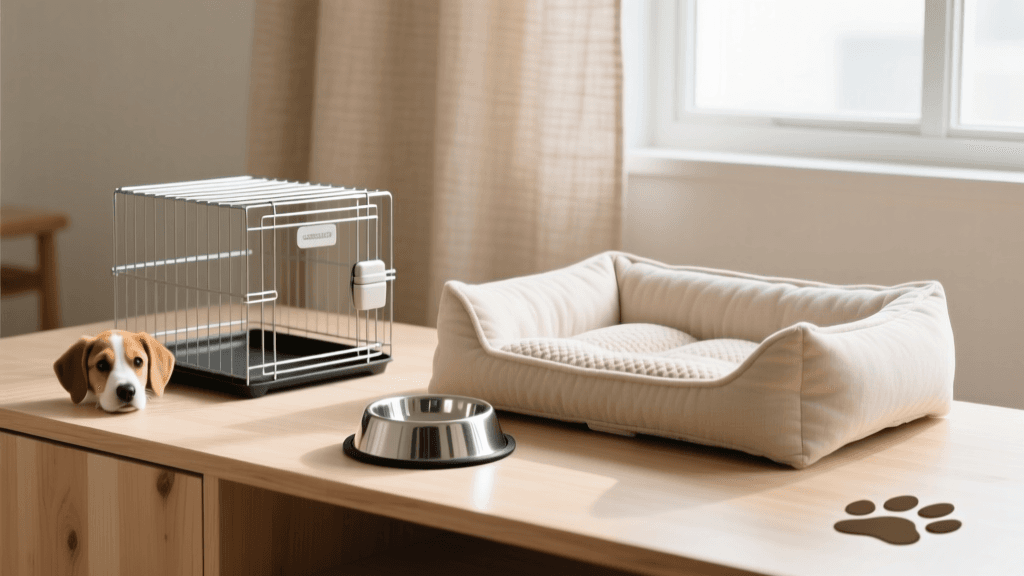
Crate training is essential for housebreaking and providing a safe den for your dog. A massive mistake new owners make is buying a large, adult-sized crate for a puppy, thinking it will 'save money in the long run.' If a crate is too large, the puppy will designate one corner for sleeping and the opposite corner for eliminating, completely undermining your potty training efforts.
The Fix: Use an Adjustable Crate with a Divider
Purchase a wire crate that includes an adjustable divider panel, such as the MidWest Homes for Pets iCrate. The crate should be sized so that your dog can stand up, turn around, and lie down comfortably, but not so large that they can pace or soil one end. As your puppy grows, move the divider back an inch at a time. Expect to spend between $50 and $90 for a high-quality, double-door wire crate that will last through adulthood.
Mistake 4: Granting Full House Access on Day One
It is incredibly tempting to open every door and let your new dog explore the entire house on their first day. However, this leads to severe overstimulation, anxiety, and a higher likelihood of destructive chewing. A dog that has not yet learned the rules of the house should not be given the freedom to roam unsupervised.
The Fix: Establish a 'Safe Room' or Pen
Set up a dedicated 'safe room' (like a laundry room, kitchen, or gated-off section of the living room) or use a heavy-duty exercise pen (such as the Midwest Foldable Metal Exercise Pen). This area should contain their crate, water bowl, chew toys, and a potty pad if applicable. Gradually expand their access to the rest of the house only after they have demonstrated reliable house manners and chewing habits over a period of 4 to 8 weeks.
Mistake 5: Ignoring the 'String' Hazards
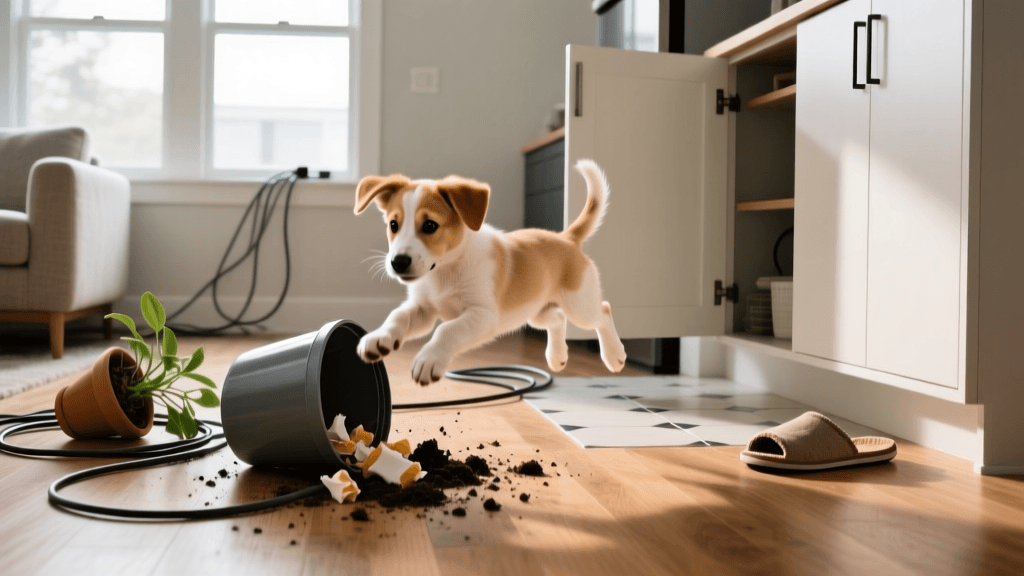
Dogs, especially teething puppies, are fascinated by strings, cords, and tassels. Window blind cords pose a severe strangulation risk, while dangling electrical cords can result in fatal electrocution or severe burns to the mouth. Furthermore, swallowing long strings, ribbons, or threads can cause a linear foreign body obstruction in the intestines, a life-threatening surgical emergency.
The Fix: Secure and Conceal All Cords
Replace looped blind cords with cordless window treatments, or use a cord cleat to wrap them tightly out of reach. For electrical cords, use split-loom tubing or PVC cord concealers attached to the baseboards. You can also apply a bitter-tasting deterrent, like Grannick's Bitter Apple Spray, to any cords that cannot be fully concealed. Reapply the spray every few days, as the taste can fade and some dogs simply do not mind the bitterness.
Mistake 6: Relying on Standard Trash Cans
A standard step-on or open-top trash can is an invitation for a canine scavenger hunt. Dogs can easily pop the lids off with their paws or noses, gaining access to toxic food scraps (like onions, grapes, and cooked bones) and dangerous packaging. Cooked bones, in particular, can splinter and puncture the digestive tract.
The Fix: Invest in Locking or Heavy-Duty Bins
Replace your kitchen and bathroom trash cans with secure alternatives. The Simplehuman Lock-Top Trash Can is a popular choice among dog owners because it requires a specific sliding motion to open, which dogs cannot replicate. Alternatively, store your trash can inside a latched lower cabinet. Budget around $60 to $120 for a high-quality, dog-proof waste bin.
Mistake 7: Neglecting the Yard Perimeter and Digging Zones
If you have a fenced yard, you might assume it is automatically secure. However, many new owners fail to check the perimeter at ground level. Dogs can easily squeeze through gaps wider than 3 inches, dig under wooden fences, or slip out the gate before you have fully closed it. The Humane Society notes that secure perimeters are vital not just for keeping dogs in, but for keeping toxic wildlife and hazardous debris out.
The Fix: The Perimeter Crawl and Dig-Proofing
Before bringing your dog home, get down on your hands and knees and crawl the entire fence line. Look for gaps, loose boards, and protruding nails. If your dog is a known digger (like a Terrier or Husky), bury galvanized chicken wire or hardware cloth 12 to 18 inches deep along the base of the fence, bending it outward in an L-shape to deter digging. Ensure all gate latches are carabiner-secured, as smart dogs can learn to nudge simple gravity latches open.
The True Financial Cost of Puppy-Proofing Mistakes
Failing to properly prepare your home does not just result in a chewed-up rug; it can lead to devastating financial and emotional costs. Emergency veterinary care for foreign body ingestion or toxic exposure is incredibly expensive. Below is a comparison chart illustrating the cost of doing it right versus the cost of common mistakes.
| Category | Proactive Setup (Recommended) | Approximate Cost | Common Mistake Consequence | Potential Vet/Repair Bill |
|---|---|---|---|---|
| Trash Security | Simplehuman Lock-Top Bin | $80 - $120 | Cooked bone ingestion | $1,500 - $4,000 (Surgery) |
| Toxin Management | Remove Sago Palm / Xylitol | $0 (Free) | Liver failure from toxins | $2,000 - $6,000+ (ICU Care) |
| Electrical Safety | Split-loom cord concealers | $15 - $30 | Electrocution / Burns | $800 - $2,500 (Treatment) |
| Stair Safety | Hardware-mounted 36' gate | $50 - $90 | Falling down stairs | $500 - $3,000 (Orthopedic) |
Final Thoughts on Home Preparation
Preparing your home for a new dog requires a shift in perspective. You must look at your living space through the eyes of a curious, teething, and highly intelligent toddler. By avoiding these seven common puppy-proofing mistakes, investing in the right containment products, and thoroughly auditing your home for hidden hazards, you set the stage for a smooth, safe, and joyful transition. Remember, the time and money you spend on preparation today will save you from heartbreak and massive veterinary bills tomorrow. Welcome your new dog into a home that is truly ready for them.
aaron-whyte
All our authors care for dogs every day — read more of their work on the authors page.