Puppy-Proofing Your Home: The Ultimate Safety Guide
Prepare your home for a new dog with our emergency and safety guide. Learn essential puppy-proofing tips, toxic hazards, and must-have safety products.
Why Puppy-Proofing is an Emergency Preparedness Step
Bringing a new dog or puppy into your home is a joyous occasion, but it also introduces a host of hidden dangers that can quickly turn into veterinary emergencies. As a new dog owner, you must shift your perspective from simple home organization to proactive emergency preparedness. Puppies and newly adopted adult dogs explore their new environments primarily through scent and taste. This natural curiosity, combined with a lack of awareness regarding household hazards, makes puppy-proofing an essential safety measure rather than a mere chore. According to veterinary toxicologists, thousands of pets are treated annually for preventable household poisonings and foreign body obstructions. By treating puppy-proofing as an emergency prevention strategy, you can save yourself thousands of dollars in emergency veterinary bills and, more importantly, protect your new companion from life-threatening injuries.
Room-by-Room Safety Audit and Hazard Removal
To effectively puppy-proof your home, you must conduct a thorough, room-by-room safety audit. Get down on your hands and knees to view your home from a dog's eye level. This perspective shift will immediately reveal hazards you might otherwise overlook.
The Kitchen: Ground Zero for Toxins and Obstructions
The kitchen poses the highest risk for dietary indiscretion and toxic ingestion. Dogs are notorious counter-surfers, and a momentary lapse in attention can lead to disaster. Ensure all human foods are stored in sealed containers or inside secure pantries. Pay special attention to foods that are highly toxic to dogs, including chocolate, grapes, raisins, onions, garlic, and macadamia nuts. Furthermore, secure your trash cans. A dog rummaging through the garbage can ingest cooked bones (which can splinter and perforate the intestines), corn cobs (a leading cause of intestinal blockages requiring surgery), or spoiled food containing dangerous bacteria. Invest in a heavy, locking trash can or store it inside a latched cabinet. Do not forget to check under the sink; household cleaners, bleach, and dishwasher pods must be secured behind child-proof or magnetic cabinet locks.
The Living Room: Electrical and Strangulation Hazards
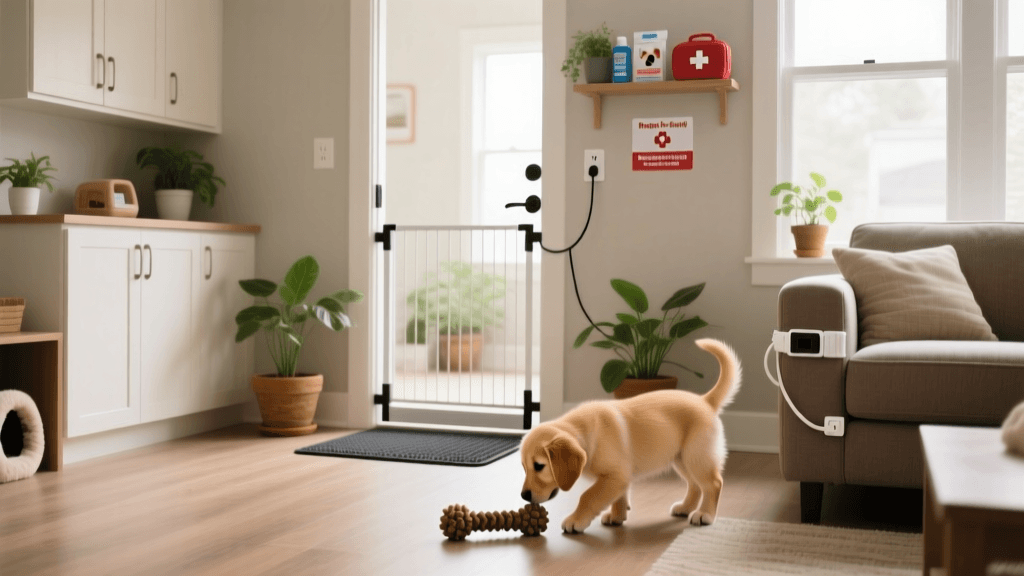
Living rooms are filled with electrical cords, small decorative items, and fabrics that can pose severe risks. Puppies going through the teething phase will instinctively chew on anything they can find, including electrical wires. Chewing a live wire can result in severe oral burns, pulmonary edema, or fatal electrocution. Use split-loom tubing or heavy-duty cord concealers to protect all accessible wiring. Additionally, tie up or remove curtain cords and blind pulls, which present a severe strangulation hazard. Small items like coins, buttons, children's toys, and rubber bands should be kept in closed bins, as swallowing these can lead to costly and dangerous gastrointestinal obstructions.
The Bathroom: Medications and Drowning Risks
Bathrooms contain a concentrated array of hazards. Human medications, including over-the-counter pain relievers like ibuprofen and acetaminophen, are highly toxic to dogs and can cause acute liver or kidney failure even in small doses. Never store medications on the edge of a sink or counter; always keep them in closed cabinets. Additionally, keep the toilet lid closed at all times. Puppies can easily fall into an open toilet bowl and drown, or they may drink water containing toxic blue cleaning tablets. Ensure all razors, cotton swabs, and dental floss are disposed of in a secure, lidded trash receptacle, as dental floss is a linear foreign body that can saw through a dog's intestines if swallowed.
The Garage and Outdoors: Chemicals and Toxic Flora
Garages and yards are often overlooked during the puppy-proofing process. Antifreeze (ethylene glycol) has a sweet taste that attracts dogs, but even a few licks can cause irreversible kidney failure and death. Always clean up spills immediately and consider switching to a pet-safe propylene glycol-based antifreeze. Store pesticides, fertilizers, rodenticides, and automotive chemicals on high shelves or in locked cabinets. Outdoors, audit your landscaping. Many common ornamental plants are highly toxic to dogs. The Sago Palm, Oleander, Azalea, and certain types of lilies can be fatal if ingested. Consult the ASPCA toxic plant database to identify and remove dangerous flora from your yard or indoor planters.
Essential Puppy-Proofing Products and Costs
Investing in the right safety products upfront is significantly cheaper than paying for an emergency veterinary visit. Below is a structured comparison chart of essential puppy-proofing products, their specific purposes, and estimated costs to help you budget for your new arrival.
| Product Category | Specific Item Recommendation | Primary Safety Purpose | Estimated Cost |
|---|---|---|---|
| Cord Management | JOTO Cable Protector Sleeve (10ft) | Prevents electrocution and oral burns from wire chewing | $15 - $22 |
| Cabinet Security | Safety 1st Magnetic Locking System | Blocks access to under-sink cleaning chemicals and medications | $25 - $35 |
| Trash Security | Simplehuman Locking Step Can | Prevents dietary indiscretion, bone ingestion, and blockages | $80 - $130 |
| Room Barriers | Carlson Pet Products Walk-Through Gate | Restricts access to unsafe rooms, stairs, or hazardous zones | $45 - $65 |
| Furniture Protection | Sofa Shield Patent Pending Reversible Cover | Protects upholstery from destructive scratching and chewing | $30 - $50 |
The Emergency Toxicology Cheat Sheet
Even with meticulous puppy-proofing, accidental exposures can occur. It is vital to memorize or keep a printed list of the most common and dangerous household toxins. The ASPCA Animal Poison Control Center handles hundreds of thousands of cases annually, with the following culprits appearing most frequently in emergency triage:
- Xylitol (Birch Sugar): Found in sugar-free gum, peanut butter, and baked goods. Xylitol causes a rapid, massive release of insulin in dogs, leading to severe hypoglycemia (low blood sugar), seizures, and acute liver failure within hours.
- Grapes and Raisins: The exact toxic mechanism remains unknown, but ingestion can cause sudden and irreversible acute kidney failure in dogs of any size or breed.
- Rodenticides (Rat Poison): Depending on the active ingredient (e.g., brodifacoum, bromethalin, or cholecalciferol), these can cause internal bleeding, brain swelling, or fatal hypercalcemia.
- Human NSAIDs: Ibuprofen (Advil) and Naproxen (Aleve) are highly toxic to dogs, causing severe gastric ulceration and acute renal failure.
Emergency Note: Never attempt to induce vomiting using hydrogen peroxide or any other method unless explicitly instructed to do so by a licensed veterinarian or a certified poison control operator. Inducing vomiting incorrectly can cause aspiration pneumonia or severe esophageal damage, particularly if the dog has ingested a caustic substance.
Creating a Canine First-Aid and Emergency Kit
Before your dog's paws ever touch your floors, you should have a fully stocked canine first-aid kit assembled and easily accessible. The American Red Cross Pet First Aid guidelines emphasize the importance of having specialized tools on hand to stabilize your pet during the critical minutes before you can reach a veterinary clinic. Your kit should include:
- Digital Rectal Thermometer: A dog's normal temperature ranges from 101.0 to 102.5 degrees Fahrenheit. A dedicated pet thermometer is essential for identifying hyperthermia or fever.
- Styptic Powder (e.g., Kwik Stop): Crucial for stopping bleeding if you accidentally trim a nail too short and hit the quick.
- Self-Adhering Bandage Wrap (Vetrap): Used to apply pressure to lacerations or protect wounds. Unlike human bandages, Vetrap sticks to itself and not to the dog's fur.
- Blunt-Tipped Scissors: For safely cutting bandages or removing tangled debris from your dog's coat without risking a puncture wound.
- Sterile Saline Eye Wash: For flushing out dust, dirt, or minor chemical irritants from the eyes.
- Tweezers and Hemostats: For the careful removal of ticks, splinters, or foxtails embedded in the skin or ears.
- Muzzle (Soft Mesh or Basket): Even the sweetest dog may bite when in severe pain or shock. A muzzle protects you and the veterinary staff during emergency transport.
Establishing an Emergency Action Plan
Preparation extends beyond physical products; it requires a documented emergency action plan. When a crisis strikes, panic can impair your decision-making. Write down the following information and post it on your refrigerator or save it in your phone's emergency contacts:
- Primary Veterinarian: Name, address, and direct phone number.
- 24/7 Emergency Veterinary Hospital: Identify the closest after-hours emergency clinic. Note their location and average drive time from your home.
- Poison Control Hotlines: Program the ASPCA Animal Poison Control Center (888-426-4435) and the Pet Poison Helpline (855-764-7661) into your phone. Be aware that consultation fees may apply, but the expert guidance can be life-saving.
- Transport Logistics: Keep a heavy-duty, waterproof tarp or a specialized pet stretcher in your vehicle. If a large dog suffers a spinal injury or severe trauma, lifting them incorrectly can worsen the damage. A rigid board or stretcher is vital for safe transport.
Final Thoughts on Proactive Pet Safety
Getting a dog is a profound commitment that requires vigilance, foresight, and a dedication to their physical well-being. By approaching puppy-proofing through the lens of emergency preparedness, you are not just protecting your furniture or your shoes; you are actively safeguarding your dog's life. Take the time to audit your home, invest in the proper safety barriers, assemble your first-aid kit, and establish your emergency contacts. This proactive approach ensures that your new dog's transition into your home is as safe, secure, and joyful as possible, laying the foundation for a long, healthy, and happy life together.
beth-carrasco
All our authors care for dogs every day — read more of their work on the authors page.