First-Week Crate and Potty Training: A Step-by-Step Guide
Master your new dog's first week with our step-by-step crate and potty training guide. Practical tips, schedules, and essentials for a smooth transition.
Welcome Home: The 3-3-3 Rule and Setting the Stage
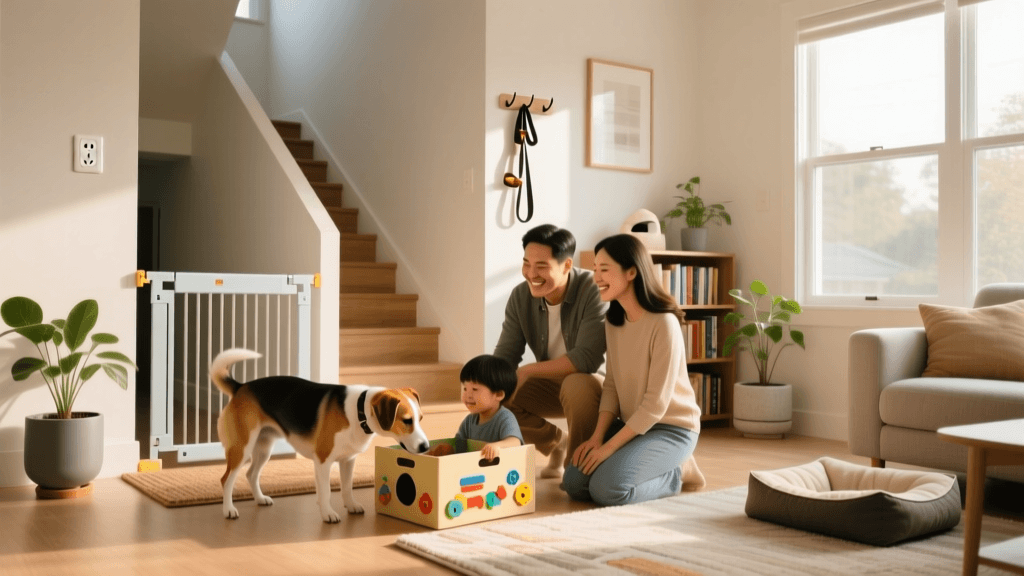
Bringing a new dog or puppy into your home is a monumental occasion filled with joy, tail wags, and inevitably, a few chaotic moments. When navigating the "Getting a Dog" phase, it is crucial to understand the 3-3-3 rule of decompression: three days to decompress from the shelter or breeder environment, three weeks to learn your routine, and three months to truly feel at home. During those critical first three days, establishing boundaries and a safe space is your primary objective. Viewed through the lens of step-by-step training, two paramount skills immediately take center stage: crate training and potty training. These are not just about keeping your furniture safe; they are about providing your new dog with a sense of security and a predictable routine. According to the Humane Society of the United States, a crate taps into a dog's natural denning instinct, offering a safe haven rather than a place of punishment. Coupled with a structured house-training regimen, you can drastically reduce the stress of the transition period.
Step 1: Selecting and Preparing the Safe Zone (The Crate)
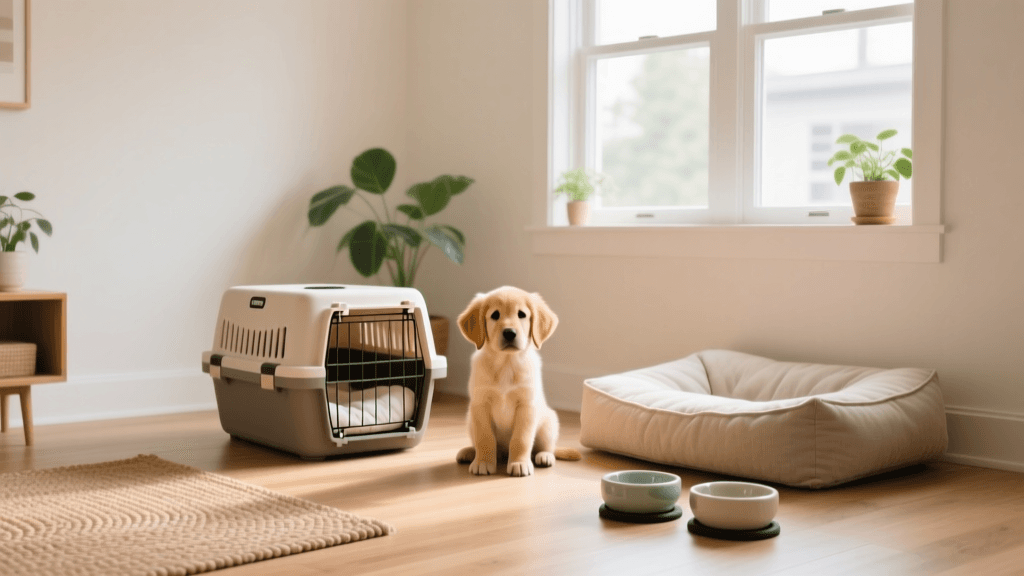
Before your dog's paws touch your living room floor, the crate must be fully prepared. The market offers three primary types of crates: wire, plastic (airline-style), and soft-sided. For a new dog or puppy, a heavy-duty wire crate with a divider panel is universally recommended by professional trainers. It allows for visibility, proper ventilation, and the ability to adjust the interior space as your dog grows. The golden rule of crate sizing is that your dog should be able to stand up without hitting their head, turn around comfortably, and lie down stretched out. If the crate is too large, a puppy may designate one corner for sleeping and the opposite corner for eliminating, which completely undermines potty training efforts.
| Dog Weight (lbs) | Crate Length (inches) | Breed Examples |
|---|---|---|
| 11 - 25 lbs | 24" L x 18" W x 21" H | Pug, French Bulldog, Corgi |
| 26 - 40 lbs | 30" L x 21" W x 24" H | Beagle, Cocker Spaniel |
| 41 - 70 lbs | 36" L x 24" W x 27" H | Border Collie, Bulldog |
| 71 - 90 lbs | 42" L x 28" W x 31" H | Labrador Retriever, Boxer |
| 90+ lbs | 48" L x 30" W x 33" H | Great Dane, Mastiff |
Line the bottom of the crate with a washable fleece blanket or a durable dog bed. Avoid plush, easily shredded beds during the first week, as nervous puppies may chew and ingest the stuffing, leading to dangerous intestinal blockages.
Step 2: The Step-by-Step Crate Introduction Protocol
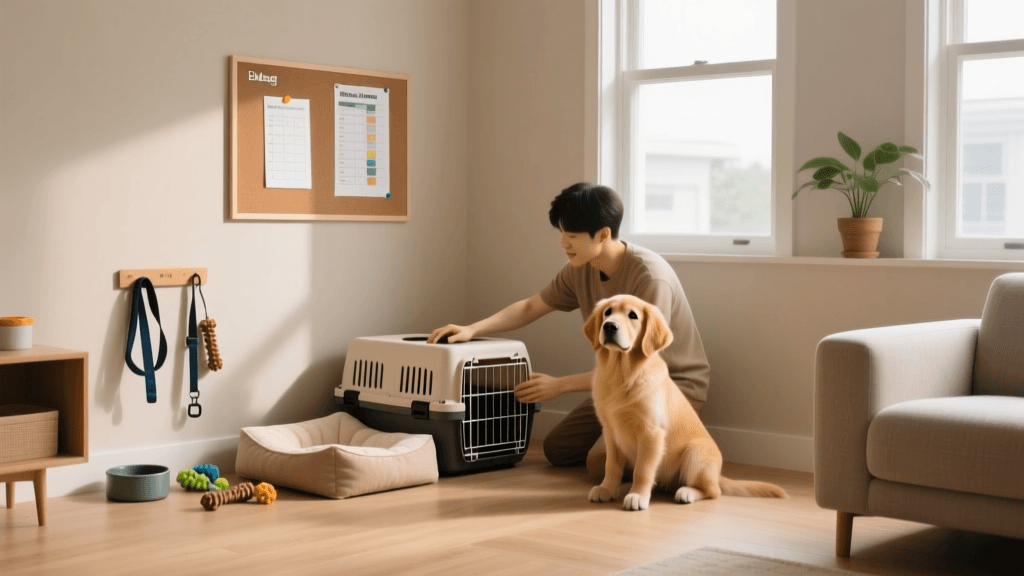
Never force your new dog into the crate on day one. This creates immediate negative associations and can lead to long-term confinement anxiety. Instead, use a progressive three-day shaping protocol utilizing high-value, low-calorie treats like Zuke's Mini Naturals (under 3 calories each).
- Day 1: The Open Door Policy. Leave the crate door open and secured. Toss treats inside randomly throughout the day. Feed all meals near the crate, eventually placing the food bowl all the way in the back so the dog must fully enter to eat.
- Day 2: Positive Confinement. Introduce a durable chew toy, such as a classic rubber KONG stuffed with dog-safe peanut butter and frozen. Give it to the dog only when they enter the crate. Begin closing the door for 10-second intervals while you sit right next to them, offering verbal praise.
- Day 3: Building Duration. Close the door, step away for one minute, and return before the dog whines or paws at the door. Gradually increase your absence to 5, then 10 minutes. Always release the dog when they are quiet and calm, never while they are barking.
Step 3: Implementing a Bulletproof Potty Training Schedule
Potty training is fundamentally about management, supervision, and timing. The ASPCA's House Training Guide emphasizes that dogs thrive on routine, and taking them out at the exact same times every day prevents accidents before they happen. A general veterinary rule of thumb for puppies is that they can hold their bladder for one hour per month of age, plus one. Therefore, a two-month-old puppy can hold it for roughly three hours maximum. However, during active play, drinking water, or immediately after eating, this window shrinks dramatically to mere minutes.
| Time | Activity | Potty Break? |
|---|---|---|
| 6:30 AM | Wake up, immediate outdoor potty trip | Yes (Leashed) |
| 7:00 AM | Breakfast in the crate | No |
| 7:30 AM | Outdoor potty trip, followed by 20 mins play | Yes |
| 8:00 AM | Morning nap in the crate | No |
| 10:30 AM | Wake up, immediate outdoor potty trip | Yes |
| 12:30 PM | Lunch, followed by outdoor potty trip | Yes |
| 1:00 PM | Afternoon crate nap | No |
During every potty break, use a consistent verbal cue such as "Go Potty" or "Do your business." The moment the dog finishes, reward them immediately with a high-value treat and enthusiastic praise. Do not wait until you are back inside the house to reward them, or they will associate the reward with coming inside, not the act of eliminating outdoors.
Step 4: Managing Inevitable Accidents and Setbacks
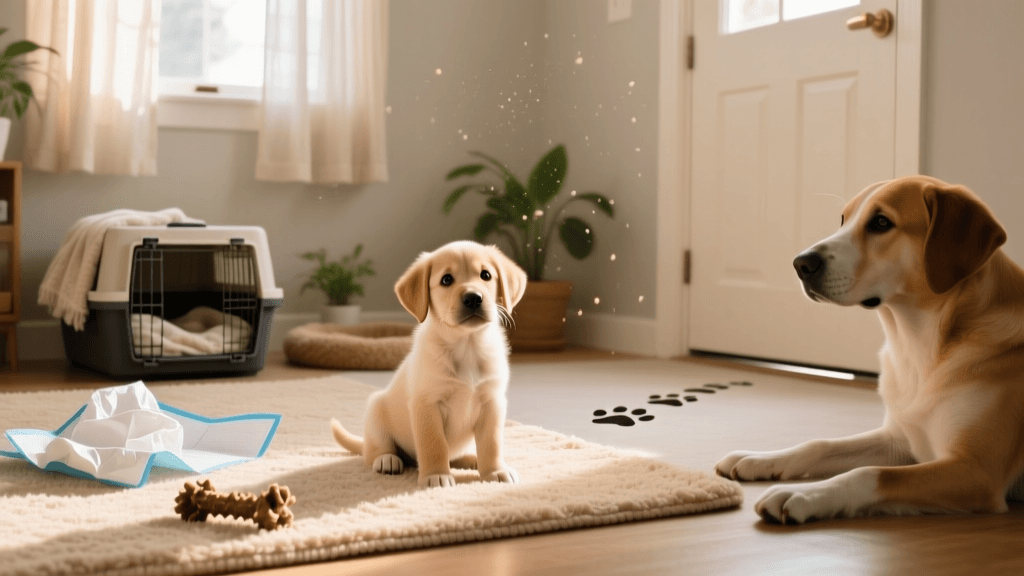
Even with a flawless schedule, accidents will happen during the first week. How you react dictates the speed of your dog's learning. Never rub a dog's nose in it, yell, or use physical punishment. Dogs do not connect past actions with present punishment; they will simply learn to hide from you when they need to eliminate, leading to them sneaking behind sofas or into guest rooms. If you catch them in the act, clap loudly to interrupt the behavior, immediately scoop or leash them, and carry them outside to finish. Praise lavishly when they finish outdoors.
Crucially, you must clean indoor accidents with a high-quality enzymatic cleaner like Nature's Miracle or Rocco & Roxie. Standard household cleaners, especially those containing ammonia or bleach, leave behind uric acid crystals. These crystals are invisible to humans but act as a biological beacon to a dog's highly sensitive olfactory system, practically inviting them to soil the exact same spot again. Enzymatic cleaners use natural bacteria to literally eat the uric acid molecules, permanently removing the scent marker.
Essential First-Week Training Supplies and Costs
To execute this step-by-step guide effectively, you need the right tools on hand before arrival day. Budget approximately $150 to $250 for these first-week essentials:
- Wire Crate with Divider Panel: $50 - $90 (Depending on size)
- Classic Rubber KONG Toy: $15 - $20
- Enzymatic Stain & Odor Remover (32oz): $12 - $18
- High-Value Training Treats (e.g., Freeze-dried liver): $15 - $25
- 6-Foot Biothane or Nylon Training Leash: $15 - $30
- Washable Fleece Crate Liner: $20 - $35
Expert Insights on Nighttime Training
Nighttime is often the most challenging period for new dog owners. Puppies have tiny bladders and cannot physically hold it through an eight-hour sleep cycle. The American Kennel Club (AKC) recommends setting an alarm for a midnight potty break for puppies under four months of age. Keep this midnight trip incredibly boring: no play, no talking, and minimal lighting. Simply leash the dog, carry them outside, wait for them to eliminate, and immediately return them to the crate.
"Patience and consistency are the bedrock of house training. Your dog is learning a completely new language and a new way of living. Celebrate the small victories, manage the environment to prevent mistakes, and remember that the effort you put in during the first week will yield a lifetime of good habits."
By treating the "Getting a Dog" phase not just as an adoption, but as an active, step-by-step training bootcamp, you set the foundation for a harmonious, stress-free relationship. Stick to the schedule, manage the environment, and give your new companion the grace and time they need to adjust to their wonderful new home.
tom-renshaw
All our authors care for dogs every day — read more of their work on the authors page.