The Ultimate Puppy-Proofing Guide For First-Time Owners
Prepare your home for a new puppy with our room-by-room puppy-proofing guide. Discover safety tips, costs, and must-have products for first-time owners.
Why Puppy-Proofing is Non-Negotiable for First-Time Owners
Bringing home a new puppy is one of the most exciting milestones in life, but it also marks the beginning of a major transition for your household. Puppies are naturally curious, relentlessly energetic, and explore the world primarily through their mouths. Between the ages of three and six months, puppies go through an intense teething phase that drives them to chew on virtually anything within reach. Without proper preparation, this natural behavior can lead to destroyed property, expensive veterinary emergencies, and tragic accidents.
According to the American Kennel Club (AKC), thousands of puppies are treated in emergency vet clinics every year for ingesting foreign objects or toxic household substances. Puppy-proofing is not just about protecting your favorite pair of shoes; it is a critical step in ensuring your new dog's survival and well-being. This comprehensive, room-by-room guide will walk you through the exact steps, products, and costs associated with creating a safe haven for your new furry family member.
The Puppy Perspective: Get Down on Their Level
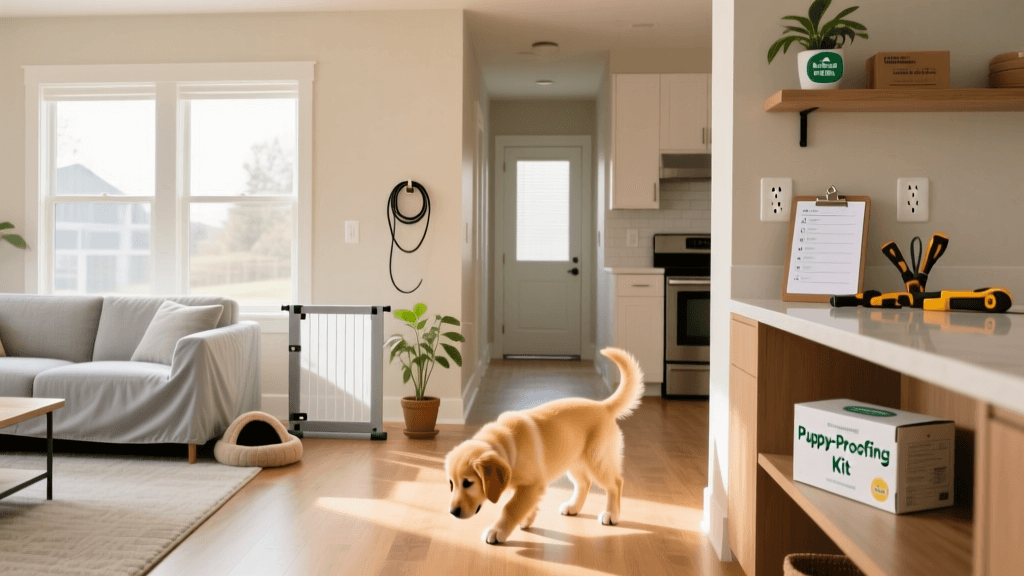
Before you start moving furniture or buying supplies, you need to see your home from your puppy's point of view. Literally get down on your hands and knees and crawl through each room. Notice what is at eye level. Are there dangling electrical cords? Are there small items like coins, paperclips, or children's toys hiding under the sofa? Are the legs of your antique coffee table looking like a perfect chew toy? Identifying these hazards from a low vantage point is the most effective way to start your puppy-proofing journey.
Room-by-Room Puppy-Proofing Checklist
The Living Room
The living room is where your family spends the most time, and it will likely be your puppy's primary play area. However, it is also filled with hidden dangers.
- Electrical Cords and Outlets: Puppies can easily chew through the rubber casing of a lamp cord, leading to severe oral burns or fatal electrocution. Use split loom tubing or hard plastic cord concealers (like the Flexzion Cable Management Kit, roughly $20) to encase all accessible wires. Additionally, install child-proof outlet covers on all unused receptacles.
- Toxic Houseplants: Many common indoor plants, including pothos, snake plants, and peace lilies, are highly toxic to dogs if ingested. Consult the ASPCA's comprehensive plant list and relocate any toxic greenery to high shelves or hang them from the ceiling where a jumping puppy cannot reach them.
- Furniture and Baseboards: To protect your woodwork, apply a pet-safe deterrent like Grannick's Bitter Apple Spray ($12 for an 8oz bottle). The extremely bitter taste discourages chewing. Reapply every few days until the teething phase subsides.
The Kitchen and Dining Area
The kitchen poses some of the most severe risks to a foraging puppy. From toxic human foods to dangerous cleaning chemicals, this room requires strict boundaries.
- Trash Cans: A standard step-on trash can is no match for a determined Labrador or Golden Retriever puppy. Invest in a locking trash can, such as the simplehuman Locking Can ($80 to $150), or keep your bin securely latched inside a lower cabinet with a child-proof magnetic lock.
- Toxic Foods: Foods like grapes, raisins, onions, garlic, macadamia nuts, and anything containing xylitol (a common artificial sweetener in peanut butter and sugar-free gum) can be lethal. Never leave grocery bags unattended on the floor or countertops.
- Cleaning Supplies: Move all bleach, detergents, and floor cleaners to the highest shelves in your pantry or install heavy-duty safety latches on all lower cabinet doors.
Bathrooms and Laundry Rooms
Bathrooms and laundry rooms are full of hidden hazards that first-time owners often overlook.
- Medications and Supplements: Never leave pill bottles on the edge of the sink or counter. A puppy can easily knock them down, chew through the plastic, and ingest a fatal dose of human medication. Store all medications in closed medicine cabinets or high drawers.
- Toilet Water: Puppies are notoriously fascinated by toilet water, which can harbor bacteria or residual cleaning chemicals. Make it a strict household rule to keep the toilet lid closed at all times, or use a toilet lid lock.
- Laundry Detergent Pods: The Humane Society of the United States frequently warns against the dangers of laundry pods, which look like chew toys to a puppy but cause severe chemical burns and respiratory distress if punctured. Store all laundry supplies in locked containers.
The Home Office and Bedrooms
These rooms are usually quieter, but they contain small, easily swallowable items that can cause fatal intestinal blockages.
- Small Swallowables: Pens, pencils, paperclips, thumbtacks, and sewing needles must be kept in closed drawers. An intestinal blockage caused by swallowing a foreign object can result in emergency surgery costing between $2,000 and $5,000.
- Shoes and Clothing: Puppies love the scent of their owners, making your favorite sneakers or a pair of discarded socks highly attractive. Keep all footwear in closed closets and ensure laundry hampers have secure lids. Swallowed socks are a leading cause of surgical bowel obstructions in young dogs.
Securing Your Outdoor Spaces
If you have a yard or a balcony, it must be just as secure as the inside of your home. Walk the perimeter of your fence and look for gaps, loose boards, or areas where a small puppy could squeeze through or dig under. Bury chicken wire at the base of the fence or place heavy paving stones along the perimeter to deter digging. If you have a swimming pool, install a secure fence around it or use a rigid, weight-bearing pool cover; puppies can easily fall in and struggle to find the steps to get out. Finally, review your garden landscaping. Plants like sago palm, oleander, and azaleas are incredibly toxic and must be removed or fenced off entirely.
Essential Puppy-Proofing Shopping List and Costs
Budgeting for puppy-proofing is an essential part of preparing for your new dog's arrival. Below is a structured breakdown of the most common supplies you will need, along with estimated costs to help you plan your first-month expenses.
| Item | Purpose | Estimated Cost |
|---|---|---|
| Pressure-Mounted Baby Gates (e.g., Regalo Easy Step) | Restrict access to kitchens, stairs, and off-limit rooms | $40 - $60 each |
| Cable Management / Split Loom Tubing | Protect electrical cords from teething puppies | $15 - $25 |
| Child-Proof Cabinet Latches (Magnetic or Adhesive) | Secure lower kitchen and bathroom cabinets | $15 - $30 (multi-pack) |
| Pet-Safe Deterrent Spray (e.g., Bitter Apple) | Discourage chewing on furniture and baseboards | $10 - $15 |
| Locking Trash Can (e.g., simplehuman) | Prevent scavenging of toxic foods and dangerous bones | $80 - $150 |
| Heavy-Duty Exercise Playpen (Metal, 30+ inches tall) | Create a safe, enclosed play area when unsupervised | $50 - $90 |
| Child-Proof Outlet Covers | Prevent electrocution from chewing on prongs | $10 - $15 |
Note: Total initial puppy-proofing costs generally range from $220 to $385, depending on the size of your home and the specific brands you choose. This is a fraction of the cost of a single emergency veterinary visit.
Managing the Un-Proofable: Crates and Playpens
No matter how thoroughly you puppy-proof your home, you cannot eliminate every single hazard. This is why management tools like crates and exercise pens are absolutely vital. When you cannot actively supervise your puppy with your eyes on them, they should be safely confined. A properly sized wire or plastic crate serves as their den, keeping them safe from household dangers while also accelerating the house-training process. For longer periods of supervised but restricted freedom, a metal exercise playpen placed in the living room allows your puppy to play safely without access to the entire house.
Final Thoughts on Ongoing Vigilance
Puppy-proofing is not a one-time chore; it is an ongoing habit. As your puppy grows, their reach will expand, and their problem-solving skills will sharpen. A gate that contained an eight-week-old Corgi will easily be vaulted by a six-month-old Border Collie. Regularly reassess your home's safety as your dog matures, and remember that the best defense against household hazards is a combination of a secure environment, proper confinement, and consistent, positive reinforcement training. By taking these proactive steps today, you are setting the foundation for a long, healthy, and happy life with your new best friend.
tom-renshaw
All our authors care for dogs every day — read more of their work on the authors page.