Puppy-Proofing Your Home for Families with Toddlers
Learn how to puppy-proof your home for families with toddlers. Discover safe zones, essential baby gates, and a timeline to prepare kids for a new dog.
The Intersection of Puppy Chaos and Toddler Life
Bringing a new puppy into a household with a toddler is one of the most rewarding, yet inherently chaotic, transitions a family can experience. Both puppies and toddlers are in critical developmental stages characterized by a profound lack of impulse control, an insatiable curiosity, and a tendency to explore the world using their mouths and hands. While the ultimate goal is a lifelong bond between your child and their new canine sibling, the immediate reality requires meticulous environmental management and proactive preparation.
According to the American Academy of Pediatrics (AAP), introducing pets to young children requires constant, active supervision and the establishment of strict boundaries to ensure the safety and well-being of both the child and the animal. A toddler does not inherently understand that a puppy is a living creature capable of feeling pain or fear, just as a puppy does not understand that a toddler's flailing arms are not an invitation to play-bite. To bridge this gap, parents must act as environmental architects and behavioral translators. This comprehensive guide will walk you through creating physical safe zones, selecting the right gear, and executing a four-week preparation timeline to set your growing family up for success.
Creating Parallel Safe Zones
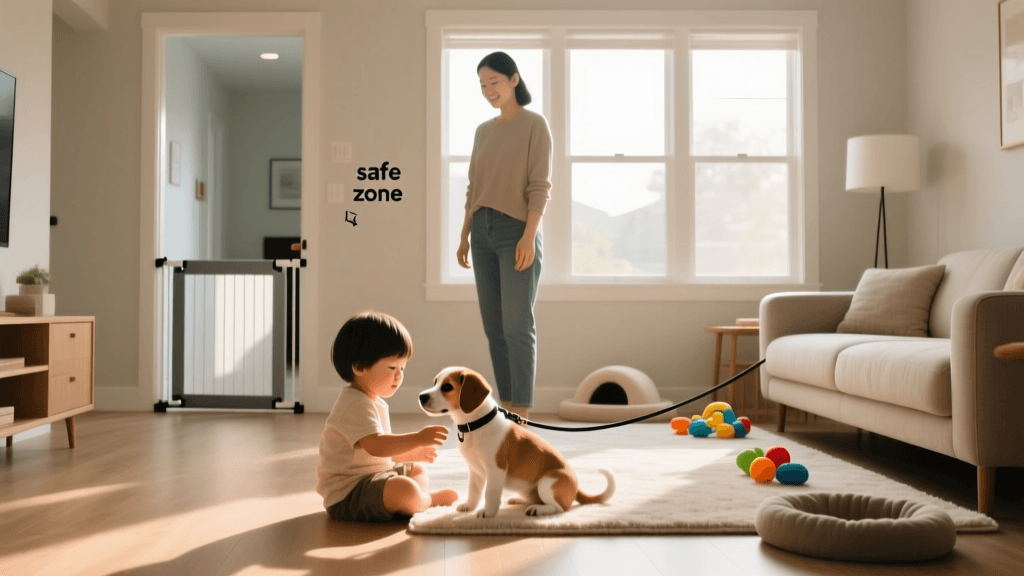
The cornerstone of managing a home with both a toddler and a new puppy is the concept of 'parallel safe zones.' These are designated areas where each family member can exist, observe the other, and decompress without the risk of unwanted physical contact. Relying solely on verbal commands like 'be gentle' is a recipe for disaster; physical barriers are your most reliable parenting and pet-parenting tools.
The Puppy Sanctuary
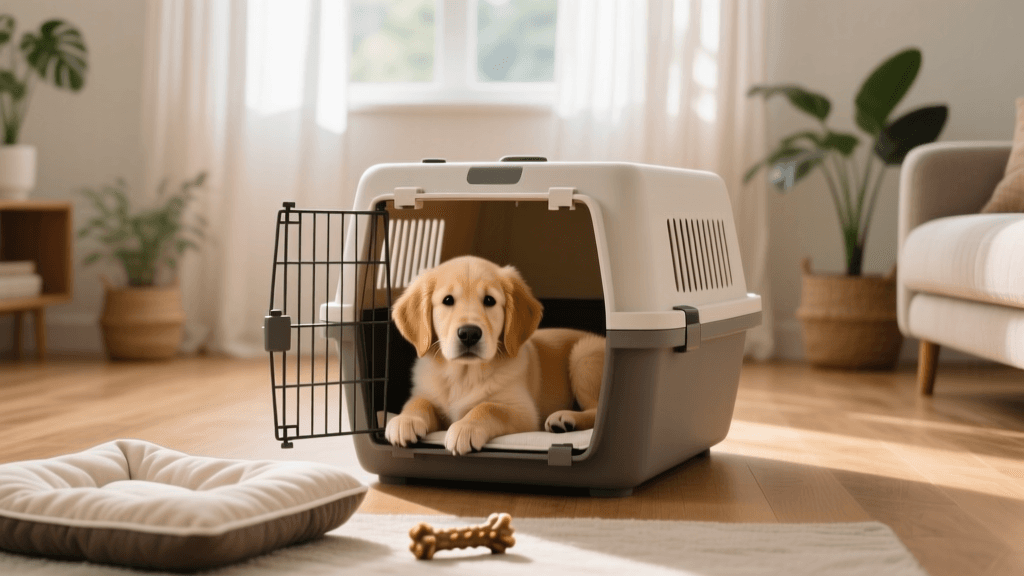
Your puppy needs a designated sanctuary that is 100% off-limits to your toddler. This space serves as the puppy's bedroom and primary decompression zone. A standard 36-inch by 23-inch wire crate (such as the MidWest Homes for Pets iCrate) placed inside a larger exercise pen creates a secure footprint. Position this sanctuary in a low-traffic corner of your main living area so the puppy can observe family life without being touched. Teach your toddler early on that the crate is the 'puppy's bedroom' and that we never knock on the door or reach inside when the puppy is sleeping.
The Toddler Retreat
Conversely, your toddler needs spaces where they can play with their toys, build block towers, and enjoy snacks without a teething puppy stealing their belongings or knocking them over. Use hardware-mounted gates to create a 'toddler-only' playroom or a gated-off section of the kitchen. This allows your child to have a predictable, safe environment where they do not have to constantly guard their possessions from a curious canine.
Essential Gear: Gates, Pens, and Management Tools
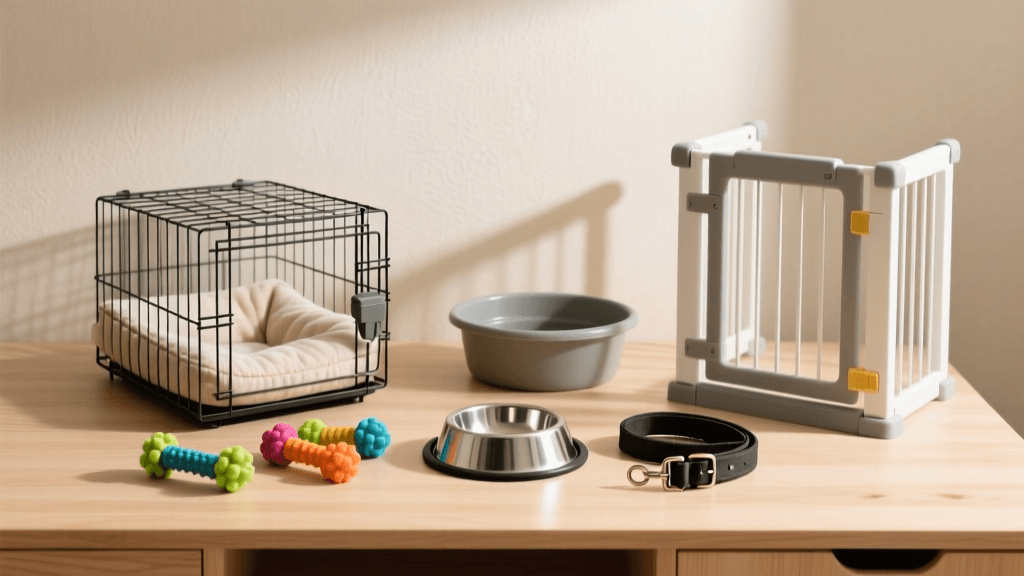
Investing in high-quality management gear is non-negotiable for families with young children. Pressure-mounted gates are often insufficient for determined puppies or climbing toddlers, so hardware-mounted options are highly recommended for critical thresholds. Below is a comparison of essential gear to help you budget and plan your home setup.
| Product Name | Primary Purpose | Approx. Cost | Key Measurement / Feature |
|---|---|---|---|
| Carlson Pet Products Super Wide Gate | Sectioning off open living rooms | $130 - $150 | Expands up to 108 inches wide; features a built-in small pet door so cats can escape the puppy. |
| Regalo Easy Step Walk Thru Gate | Blocking narrow hallways and stairs | $40 - $50 | Fits openings 29 to 39 inches wide; pressure-mounted with a wall-cup option for stair tops. |
| MidWest iCrate Double Door Crate | Puppy sleeping and time-outs | $60 - $75 | 36L x 23W x 25H inches; includes a divider panel to adjust space as the puppy grows. |
| IRIS USA Exercise Pet Playpen | Creating a larger puppy pen area | $70 - $90 | Modular 8-panel design; 24 or 34 inches tall, allowing you to customize the footprint. |
| Outward Hound TailTeaser Flirt Pole | Safe interactive play | $15 - $25 | 36-inch wand; keeps puppy teeth safely away from toddler hands during play sessions. |
Preparing Your Toddler: A 4-Week Countdown
Do not wait until the puppy arrives to start preparing your child. A four-week countdown allows you to introduce new concepts gradually, preventing your toddler from feeling overwhelmed by sudden changes to their environment and routine.
Week 4: Introducing the Concept and Stuffed Dog Protocol
Four weeks out, introduce a realistic plush dog toy, such as the Melissa & Doug Mine to Love Jordan plush dog. Use this toy to practice 'gentle hands.' Show your toddler how to stroke the toy from the back of the neck down to the tail using only two fingers. Explain that we never touch the face, ears, or tail. Praise your toddler enthusiastically every time they use their 'gentle two fingers.' Additionally, begin reading age-appropriate books about puppies, such as 'Biscuit' or 'Spot the Dog,' to build positive associations.
Week 3: Audio Desensitization and Scent Introduction
Puppies are noisy. They whine, bark, yip, and cry, especially during the first few nights. To prevent your toddler from becoming frightened or losing sleep, play audio tracks of puppy sounds on Spotify or YouTube during meals and playtime. Start at a very low volume and gradually increase it over the week. If you are adopting or buying from a breeder, ask for a blanket that has the puppy's or the mother's scent on it. Let your toddler smell the blanket and keep it in their room to familiarize them with the new family scent.
Week 2: The 'Be a Tree' Game
Puppies jump. Toddlers run and scream, which triggers a puppy's prey drive and encourages more jumping and nipping. Teach your toddler the 'Be a Tree' game. When you say 'Tree!', your toddler must stop moving, cross their arms over their chest, look up at the ceiling, and remain completely silent. Practice this game daily with high-value rewards. When the puppy arrives, this game will be your primary defense against a jumping, nipping puppy overwhelming your child.
Week 1: Environmental Changes and Roleplay
In the final week, set up the crate, the gates, and the puppy pens. Allow your toddler to help you pick out the puppy's water bowl or arrange the toys in the pen. Roleplay the arrival day: practice walking through the front door calmly, pretending to hold a leash, and sitting on the couch. Establish the rule that we use 'inside voices' when the puppy is sleeping to ensure the puppy gets the 18 to 20 hours of sleep they require daily.
Establishing House Rules and Recognizing Stress
Once the puppy is home, consistency is your greatest ally. The American Veterinary Medical Association (AVMA) emphasizes that the majority of dog bites to children occur during everyday, seemingly benign activities, often because the child misinterprets the dog's body language or invades the dog's critical space.
The Golden Rules for Kids and Dogs
- Never approach a sleeping or eating dog: Teach your toddler that a sleeping puppy is 'invisible.' We do not wake them, and we do not touch them. Similarly, the puppy's food bowl and chew toys are strictly off-limits.
- No hugging or kissing: While humans show affection through hugging, dogs often perceive being wrapped in arms as a threat or a restraint. Teach your child to blow the puppy a kiss from a distance instead.
- Let the dog come to you: Teach your toddler to sit on the floor with their legs crossed and wait for the puppy to approach for pets, rather than chasing the puppy across the room.
Recognizing Canine Stress Signals
As a parent, you must become an expert in reading subtle canine stress signals long before a growl or a nip occurs. Puppies exhibit 'calming signals' when they are overwhelmed. If you see the puppy exhibiting lip licking (when no food is present), yawning (when not tired), showing the whites of their eyes ('whale eye'), or actively turning their head away from your child, these are polite requests for space. It is your immediate responsibility to intervene, separate the puppy, and guide them to their safe zone.
Active supervision means your eyes are on the child and the dog, and you are close enough to physically intervene within a single second. Looking at your phone while the child and puppy are in the same room is passive supervision, and it is never sufficient for toddlers and new dogs.
Conclusion
Integrating a new puppy into a home with a toddler is a marathon, not a sprint. By investing time in environmental management, purchasing the right physical barriers, and proactively teaching your child how to interact safely, you are laying the foundation for a beautiful, lifelong friendship. Remember that both your toddler and your puppy are learning the rules of the world. Patience, consistency, and vigilant supervision will ensure that your home remains a safe, joyful place for every member of your growing family.
beth-carrasco
All our authors care for dogs every day — read more of their work on the authors page.