The Step-by-Step Crate Training Guide for New Dogs
Master crate training your new dog with our step-by-step guide. Learn daily schedules, sizing tips, and positive reinforcement techniques.
Why Crate Training is Essential for Your New Dog
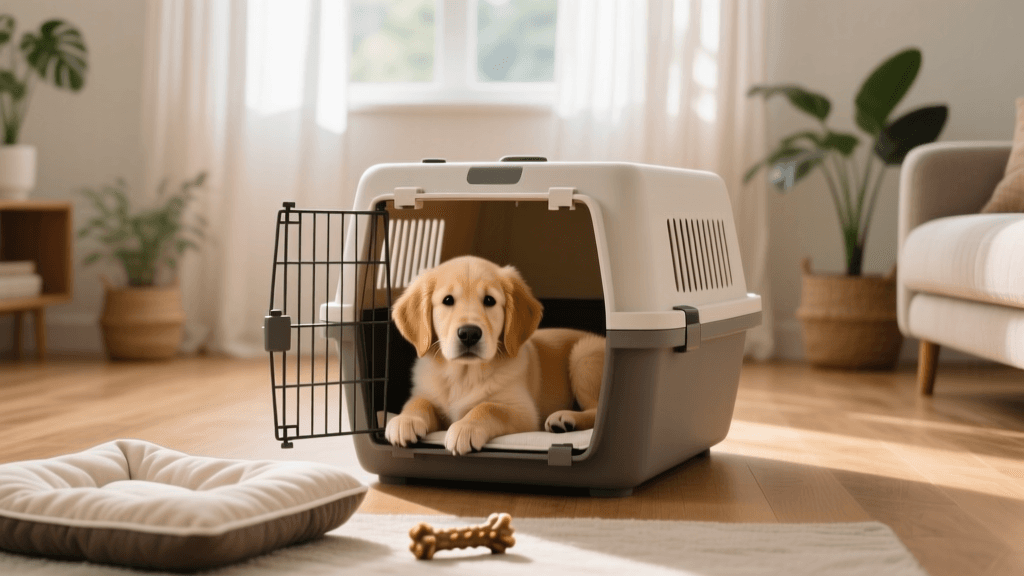
Bringing a new dog home is an incredibly exciting milestone, but the first few weeks can be overwhelming for both you and your new furry companion. Among the myriad of first-day essentials, crate training stands out as one of the most critical skills you can teach. According to the ASPCA, a crate provides a safe, secure den-like environment that taps into a dog's natural instinct to seek out a small, enclosed space for rest and protection. When introduced correctly, the crate becomes your dog's personal sanctuary, significantly reducing separation anxiety, preventing destructive behaviors, and accelerating the potty training process.
However, simply placing a dog inside a wire box and closing the door is a recipe for stress and whining. Successful crate training requires patience, positive reinforcement, and a structured approach. In this comprehensive, step-by-step guide, we will walk you through a proven 7-day training protocol to help your new dog associate their crate with comfort, safety, and relaxation.
Step 1: Selecting the Perfect Crate
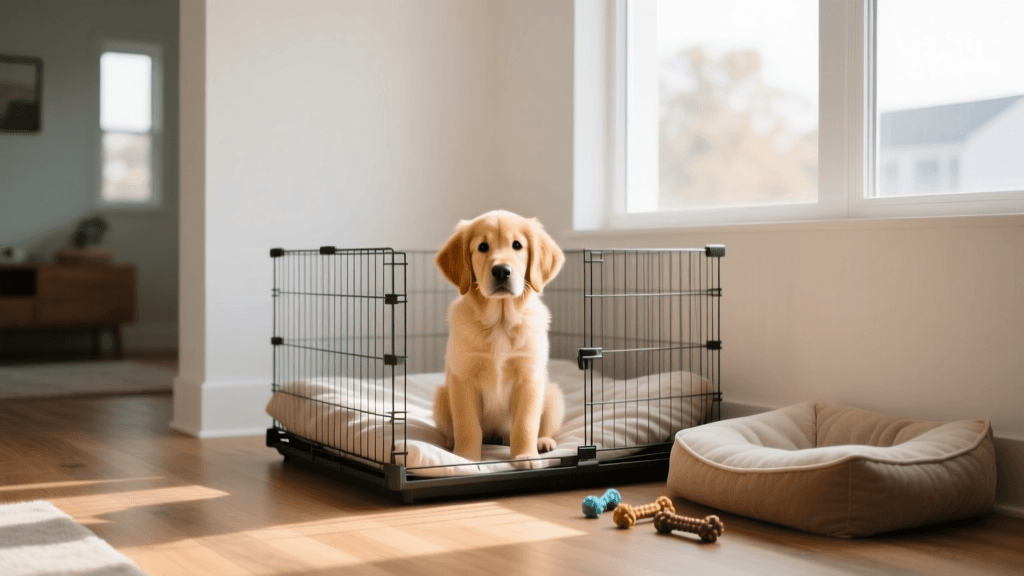
Before you begin training, you must invest in the right equipment. Crates generally come in three main styles: wire, plastic (airline-style), and soft-sided. For a new dog or puppy, a wire crate (such as the MidWest Homes for Pets iCrate) is highly recommended. Wire crates offer excellent ventilation, allow the dog to see their surroundings (which reduces isolation anxiety), and are easy to clean. They also typically come with a divider panel, which is crucial for growing puppies.
Sizing is the most important factor. The crate should be large enough for your dog to stand up without crouching, turn around comfortably, and lie down stretched out. If the crate is too large, your dog may designate one corner as a bathroom, defeating the purpose of the crate's natural den instinct. If you have a puppy, use the divider panel to restrict the space to their current size, expanding it as they grow.
Crate Sizing Chart
| Dog Weight | Crate Size | Approximate Dimensions (L x W x H) | Example Breeds |
|---|---|---|---|
| 1 - 10 lbs | Small | 18" x 12" x 14" | Chihuahua, Pomeranian |
| 11 - 25 lbs | Medium | 24" x 18" x 21" | Beagle, French Bulldog |
| 26 - 40 lbs | Intermediate | 30" x 21" x 24" | Cocker Spaniel, Border Collie |
| 41 - 70 lbs | Large | 36" x 24" x 27" | Labrador Retriever, Boxer |
| 71 - 90 lbs | Extra Large | 42" x 28" x 31" | German Shepherd, Golden Retriever |
| 90+ lbs | XXL | 48" x 30" x 33" | Great Dane, Mastiff |
Step 2: Setting Up the Crate Environment
Location dictates how your dog perceives the crate. During the day, place the crate in a high-traffic area like the living room or kitchen so your dog feels included in the family's activities. At night, move the crate to your bedroom. Hearing and smelling you will reassure your new dog that they are not abandoned.
Outfit the interior with a comfortable, washable bed or crate mat. Avoid thick, plush bedding if you have a teething puppy who might chew and ingest the stuffing; instead, opt for a durable, chew-resistant mat or a simple folded towel. Include a safe, interactive toy like a KONG Classic stuffed with frozen peanut butter to keep them occupied and build positive associations.
Step 3: The 7-Day Step-by-Step Training Guide
The Humane Society of the United States emphasizes that crate training should never be rushed. Follow this gradual 7-day schedule to build a lifelong positive relationship with the crate.
Day 1: The Open-Door Policy
On the first day, remove the crate door or tie it securely open. Toss high-value treats (like small pieces of boiled chicken or cheese) near the crate, then just inside the entrance, and finally all the way to the back. Let your dog enter and exit freely at their own pace. Feed them their dinner near the crate. The goal is simply to make the crate an interesting, rewarding place to explore.
Day 2: Mealtime Associations
Begin feeding all meals inside the crate. Place the food bowl at the very back of the crate. If your dog is hesitant, place it near the front and gradually move it back over the course of the day. Once they are comfortably eating inside, gently close the door while they eat, and open it immediately when they finish. This teaches them that great things happen inside the crate.
Day 3: Closing the Door and Relaxing
After your dog finishes a meal in the crate, close the door and sit quietly nearby for 5 to 10 minutes. Read a book or look at your phone, ignoring them. If they whine, wait for a brief moment of silence before opening the door. This prevents them from learning that whining equals freedom. Gradually increase this post-meal relaxation time to 20 minutes.
Day 4: Short Departures
Today, you will start leaving the room. Give your dog a stuffed KONG, place them in the crate, and close the door. Leave the room for just 2 to 5 minutes. Return calmly, wait for them to settle, and then let them out. Repeat this 5 to 6 times throughout the day, slowly increasing your absence to 10 or 15 minutes.
Day 5: Increasing Duration
Extend your absences to 30 minutes. Practice your actual departure routine: put on your shoes, grab your keys, and leave the house for a short errand. Keep your departures and arrivals incredibly low-key. Do not make a fuss when leaving or returning, as this can trigger separation anxiety.
Day 6: Overnight Training
Move the crate to your bedroom for the night. Puppies have small bladders and will likely need a potty break in the middle of the night. The general rule of thumb for bladder control is the dog's age in months plus one (e.g., a 3-month-old puppy can hold it for about 4 hours). Set an alarm for 3:00 AM, take them outside on a leash for a boring, business-only potty break, and return them immediately to the crate. A product like the Snuggle Puppy (which includes a simulated heartbeat and heat pack) can work wonders for soothing a lonely puppy on their first nights.
Day 7: Real-World Departures
By day seven, your dog should be comfortable spending 1 to 2 hours in the crate while you are out of the house. Continue to provide mental stimulation via puzzle toys. Remember that adult dogs should not be crated for more than 4 to 6 hours at a time during the day, and puppies require even more frequent breaks.
Integrating Crate Training with Potty Schedules
The crate is your most powerful tool for housebreaking. Dogs naturally avoid soiling their sleeping area. By utilizing a strict schedule, you can prevent indoor accidents entirely.
Sample Daily Potty & Crate Schedule (for a 3-Month-Old Puppy)
| Time | Activity | Crate Status |
|---|---|---|
| 7:00 AM | Wake up, immediate potty break outside | Out of Crate |
| 7:30 AM | Breakfast inside the crate | Inside (Door Closed) |
| 8:00 AM | Potty break outside, followed by playtime | Out of Crate |
| 9:00 AM | Nap time | Inside (Door Closed) |
| 11:00 AM | Potty break outside, training session | Out of Crate |
| 12:00 PM | Lunch inside the crate, followed by nap | Inside (Door Closed) |
| 2:00 PM | Potty break outside, free roam with supervision | Out of Crate |
| 3:30 PM | Nap time | Inside (Door Closed) |
Common Crate Training Mistakes to Avoid
Even with the best intentions, new owners often make missteps that can set training back by weeks. The American Kennel Club (AKC) warns against the following common errors:
- Using the Crate as Punishment: The crate must always be a positive space. Never send your dog to the crate when they misbehave, or they will associate it with fear and isolation.
- Letting Them Out While Whining: If you know your dog has been fed, watered, and recently pottied, they are likely whining out of boredom or frustration. Wait for a 10-second pause in the whining before opening the door.
- Leaving Them Crated Too Long: Crating a dog for an 8-hour workday without a midday break is cruel and will lead to physical discomfort and behavioral issues. Hire a dog walker or use a doggy daycare if you work long hours.
- Making a Fuss at Departures and Arrivals: Keep comings and goings completely boring. A simple, quiet 'see you later' is all that is needed.
Final Thoughts
Crate training is a marathon, not a sprint. Some dogs will take to the crate in a matter of days, while others—especially rescue dogs with past trauma—may require weeks of gentle desensitization. Stay consistent, rely on high-value treats, and always prioritize your dog's emotional comfort. By following this step-by-step guide, you are not just teaching your new dog to stay in a box; you are giving them a lifelong safe haven where they can truly feel at home.
priya-sutaria
All our authors care for dogs every day — read more of their work on the authors page.