Puppy-Proofing: Diagnosing and Fixing Hidden Home Hazards
Discover how to diagnose hidden home hazards before bringing a puppy home. Get actionable solutions, product picks, and a room-by-room safety checklist.
The 'Puppy-Proofing' Illusion: Why Standard Prep Fails
Bringing a new puppy home is an exhilarating milestone, but it often comes with a harsh reality check for unprepared owners. Many first-time dog owners believe they have adequately 'puppy-proofed' their homes by simply putting away shoes and hiding the trash can. However, puppies are essentially teething toddlers with a predatory drive and zero sense of self-preservation. They explore the world primarily through their mouths, and their low vantage point reveals a completely different landscape of hazards than what adults see. When standard preparation fails, the result is often destroyed property, emergency veterinary bills, or severe anxiety for the new owner. To truly prepare your home, you must adopt a 'Problem Diagnosis & Solutions' framework. This means getting down on your hands and knees, identifying the specific behavioral triggers that lead to dangerous situations, and implementing targeted, physical barriers to mitigate those risks before your puppy ever crosses the threshold.
Problem 1: The Floor-Level Hazard Zone (Cords and Choking)
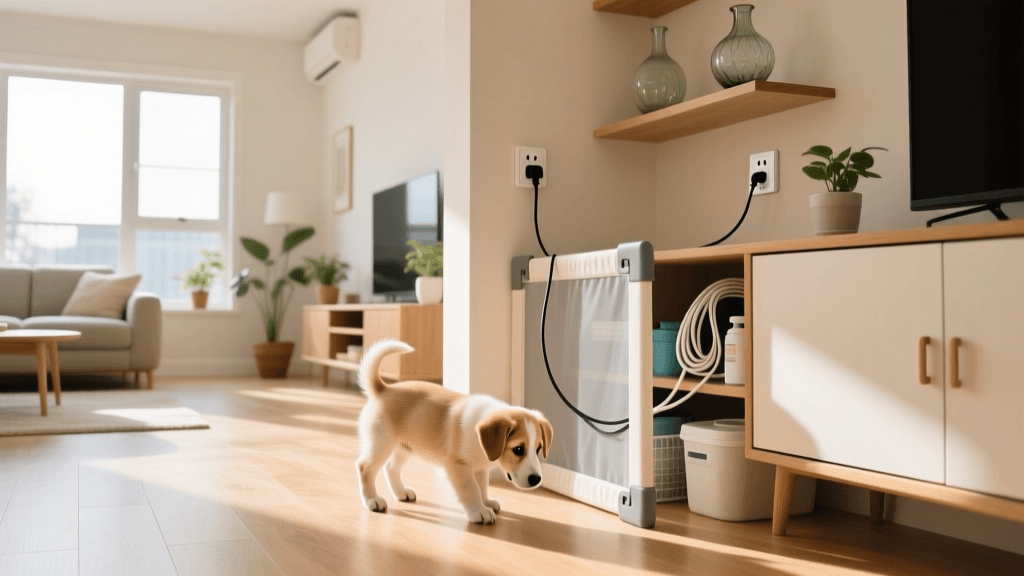
The Diagnosis: The most common mistake new owners make is underestimating a puppy's ability to reach and destroy electrical cords, shoelaces, and small household items. Puppies go through an intense teething phase between 3 and 6 months of age, and the rubbery texture of electrical cords is highly appealing to their sore gums. Chewing a live wire can result in severe oral burns, pulmonary edema, or fatal electrocution. Furthermore, small items like coins, children's toys, and dropped medication pills pose a massive intestinal blockage risk.
The Solutions:
- The Toilet Paper Roll Test: A standard toilet paper tube has an inner diameter of about 1.7 inches. If an object can fit completely inside the tube, it is a choking or blockage hazard for a puppy. Sweep every room and remove all items that pass this test from floor level and low coffee tables.
- Cord Concealment: Do not rely on bitter sprays alone to stop cord chewing; the taste often wears off, and determined puppies will chew through it. Instead, use physical barriers. The D-Line Cable Raceway (approx. $20-$30) is a heavy-duty, adhesive PVC channel that mounts to baseboards and completely encases wires. For loose cords near the TV or computer desk, use the JOTO Cord Protector (approx. $15), a flexible, chew-resistant spiral wrap that makes the cord too thick and unpalatable for a puppy to get their teeth around.
- Rug Stabilization: Puppies love to dig at the corners of area rugs, which can lead to them ingesting synthetic fibers. Use heavy-duty, pet-safe rug tape (like XFasten Rug Tape, $12) to secure all edges firmly to the floor.
Problem 2: Silent Toxins in Plain Sight
The Diagnosis: Many homes are filled with silent, lethal hazards that owners don't realize are toxic to dogs. The ASPCA's Toxic and Non-Toxic Plants list highlights common household plants like Sago Palms, Lilies, and Pothos as highly dangerous. Ingestion of Sago Palm seeds can cause acute liver failure within 24 hours. Additionally, sugar-free gums and peanut butters containing Xylitol (birch sugar) are incredibly toxic; even a small amount can cause a rapid, life-threatening drop in blood sugar and severe liver damage. According to the Pet Poison Helpline, Xylitol ingestion is one of the top emergency calls they receive year-round.
The Solutions:
- Botanical Audit: Cross-reference every houseplant in your home with the ASPCA database. If you have toxic plants, rehome them or move them to a completely sealed room that the puppy will never access. Remember that fallen leaves are just as toxic as the living plant.
- Cabinet Securing: Puppies can easily nudge open low cabinets containing cleaning supplies or medications. Install Safety 1st Magnetic Locks (approx. $25 for a multi-pack). Unlike traditional sliding latches, magnetic locks are completely hidden from the outside and require a magnetic key to open, completely neutralizing a puppy's ability to paw the door open.
- The Pantry Sweep: Move all baking supplies, especially those containing Xylitol, chocolate, or macadamia nuts, to the highest shelves. Never store dog treats in the same low cabinets as toxic human foods to prevent accidental cross-contamination or confusion.
Problem 3: The Great Outdoors (Escape Routes and Yard Toxins)
The Diagnosis: A fenced yard does not equal a safe yard. Puppies are natural escape artists driven by scent and curiosity. The American Kennel Club (AKC) emphasizes that standard privacy fences often have gaps at the bottom due to soil erosion, allowing small puppies to squeeze through. Furthermore, common landscaping materials like cocoa bean mulch contain theobromine (the same toxic compound in chocolate) and can be fatal if ingested.
The Solutions:
- The 3-Inch Rule: Walk the entire perimeter of your fence. Any gap wider than 3 inches between the fence and the ground is an escape risk for a small to medium puppy. Fill these gaps with heavy landscaping rocks or install a physical barrier.
- Dig-Proofing: If your puppy begins to dig under the fence, do not just fill the hole with dirt. Install Dig Defence (approx. $40-$60 per section), a steel, pitchfork-like barrier that pushes into the ground beneath the fence line, creating an impenetrable underground wall without the need to pour concrete or bury chicken wire.
- Mulch Replacement: Immediately replace any cocoa bean mulch with pet-safe alternatives like cedar or pine bark, or switch to rubber mulch (ensure it is large enough not to be swallowed).
Diagnostic Comparison Chart: Hazards and Solutions
| Identified Hazard | Diagnostic Test | Recommended Solution | Estimated Cost |
|---|---|---|---|
| Exposed Electrical Cords | Can the puppy reach it while standing on hind legs? | D-Line PVC Cable Raceway | $20 - $30 |
| Small Choking Hazards | Does it fit inside a toilet paper tube? | Relocate to high shelves / closed bins | $0 (Time) |
| Low Cabinet Toxins | Can the cabinet be nudged open with a paw? | Safety 1st Magnetic Locks | $25 |
| Fence Line Gaps | Is the gap wider than 3 inches? | Dig Defence Steel Barriers | $40 - $60 |
| Open Staircases | Can the puppy slip through the banister spindles? | Carlson Walk-Thru Pet Gate | $45 - $55 |
Problem 4: Vertical Hazards and Fall Risks
The Diagnosis: Puppies have developing joints and poor spatial awareness. Open staircases, balconies with wide spindle gaps, and high furniture present severe fall risks. A fall from just a few feet can result in a fractured growth plate, which can permanently alter the development of the puppy's leg.
The Solutions:
- Stair Gates: Install a hardware-mounted gate at the top of the stairs and a pressure-mounted gate at the bottom. The Carlson Pet Products Walk-Thru Gate (approx. $50) features a small pet door, which is useful if you have an older cat in the home, but ensure the puppy cannot fit through it. If your banister spindles are wider than 3 inches, use zip-ties and heavy-duty mesh netting to close the gaps.
- Furniture Ramps: If you allow your puppy on the couch or bed, you must provide a way down. Jumping down from a bed can cause severe orthopedic injuries in breeds prone to IVDD (Intervertebral Disc Disease), like Dachshunds and French Bulldogs. Invest in a high-density foam pet ramp, such as the PetSafe CozyUp Folding Ramp ($40), and train your puppy to use it with high-value treats.
Creating a 'Safe Zone' for the First 72 Hours
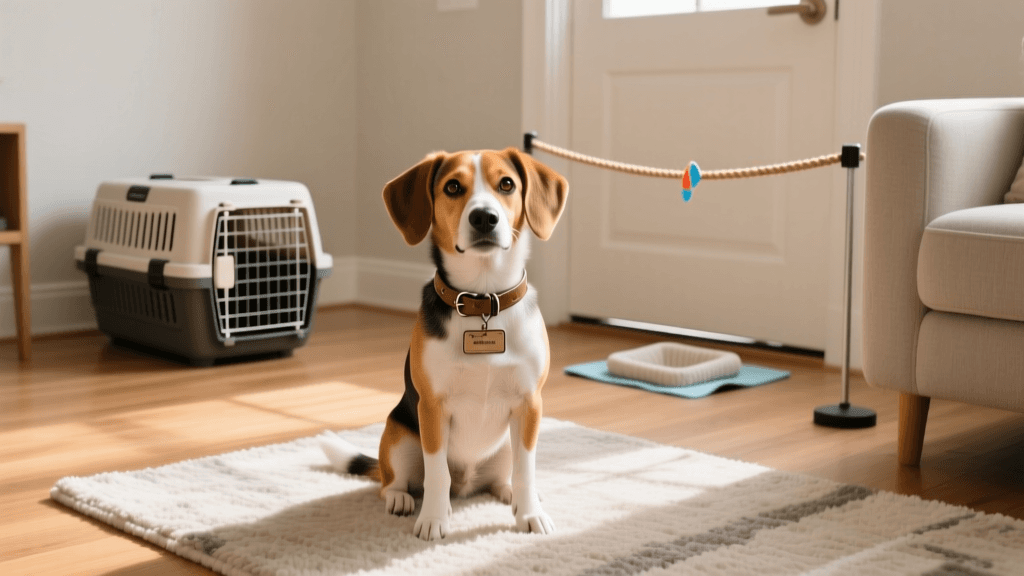
Even with a perfectly puppy-proofed home, a new puppy will become overstimulated and make poor decisions if given free roam of the house immediately. The solution to behavioral destruction is environmental management. For the first 72 hours, and whenever you cannot actively supervise the puppy, they should be confined to a designated 'Safe Zone'.
This zone should be created using a metal exercise pen, such as the Midwest Foldable Metal Exercise Pen. Choose the height carefully based on your breed's projected adult size: a 30-inch height is sufficient for small breeds, but large breeds like Golden Retrievers will quickly learn to climb a 30-inch pen by 12 weeks of age, requiring a 42-inch or 48-inch pen from day one. Place the pen in a low-traffic, easily cleaned area (like a kitchen or utility room with tile flooring). Inside the pen, provide a crate with the door tied open, a water bowl that attaches to the wire to prevent spilling, and a single, safe chew toy like a Kong stuffed with frozen puppy-safe yogurt. This setup eliminates the possibility of the puppy encountering hidden hazards while giving them a structured, secure environment to decompress from the stress of relocating.
Final Thoughts on Proactive Diagnosis
Puppy-proofing is not a one-time chore; it is an ongoing diagnostic process. As your puppy grows, their physical capabilities change dramatically. An 8-week-old puppy may not be able to reach the kitchen counter, but a 5-month-old puppy can easily jump up and pull down a loaf of bread or a toxic houseplant. By adopting a mindset of continuous problem diagnosis—regularly getting down on the floor, observing your dog's new skills, and upgrading your physical barriers accordingly—you can prevent emergencies and build a foundation of trust and safety in your new life together.
jonas-cole
All our authors care for dogs every day — read more of their work on the authors page.