The Complete Beginner's Guide to Puppy-Proofing and First-Day Gear
Discover essential puppy-proofing steps and first-day gear for your new dog. This beginner's handbook ensures a safe, smooth transition for your pet.

Welcome to the Complete Beginner's Handbook: Preparing for Your Dog
Bringing a new dog into your home is one of the most rewarding decisions you will ever make. However, the transition from a shelter or breeder environment to your living room can be overwhelming for both you and your new canine companion. As a beginner, it is easy to get swept up in the excitement of buying toys and picking out cute collars, but true preparation requires a strategic approach. This comprehensive handbook is designed to walk you through the critical phases of puppy-proofing your home, acquiring the right first-day gear, and navigating the crucial first 24 hours with your new pet.
Phase 1: Establishing House Rules Before Arrival
Before your dog's paws ever touch your floors, your household must be on the same page. Inconsistency is the enemy of dog training. If one family member allows the dog on the couch while another scolds them for it, you are setting your dog up for confusion and anxiety. Sit down with everyone in the home and decide on the following:
- Furniture Privileges: Are dogs allowed on the sofa or beds? If yes, is it by invitation only?
- Feeding Schedules: Who is responsible for morning and evening meals? Where will the food bowls live?
- Command Vocabulary: Choose specific words for commands and stick to them. Will you use 'down' or 'off' for getting off the furniture? Will you use 'potty' or 'outside'?
- Boundaries: Which rooms are strictly off-limits (e.g., home office, baby's nursery)?
Phase 2: Master-Level Puppy-Proofing
Dogs, especially puppies, explore the world with their mouths and noses. What looks like a harmless living room to you is an obstacle course of hazards to them. Get down on your hands and knees to view your home from a dog's eye level.
The Kitchen and Bathrooms
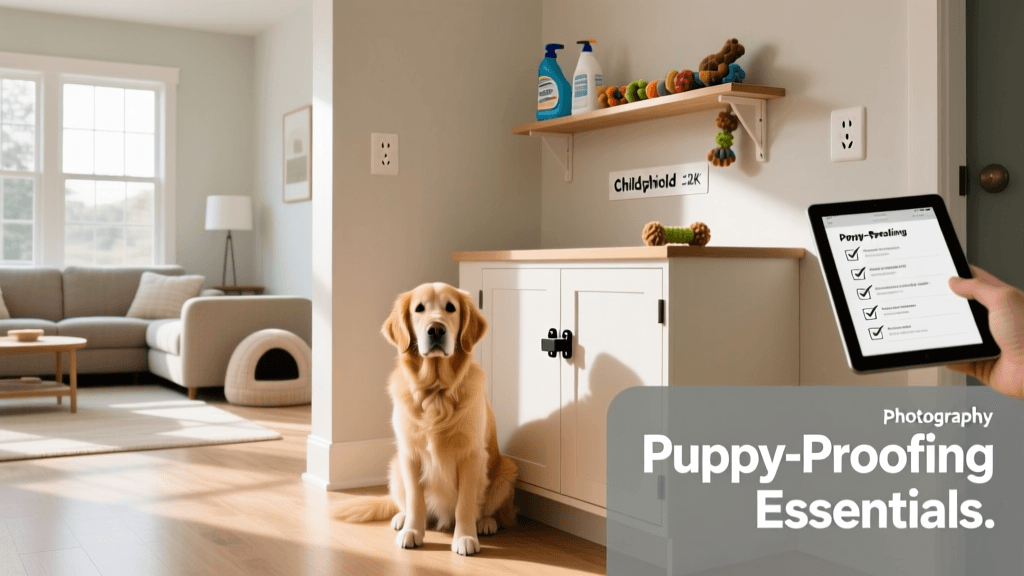
These rooms contain the highest concentration of household dangers. Secure all cleaning supplies, laundry pods, and medications in high cabinets or behind child-proof locks. Pay special attention to sugar-free gum, peanut butter, and baked goods containing xylitol, an artificial sweetener that is highly toxic to dogs even in microscopic amounts. Ensure that trash cans have secure, locking lids or are kept inside latched pantry doors.
Living Areas and Bedrooms
Electrical cords are a major chewing hazard that can lead to severe burns or electrocution. Use cord concealers or bitter apple spray to deter chewing. Pick up small items from the floor and low coffee tables, including coins, hair ties, children's toys, and remote controls. Anything smaller than a golf ball is a potential choking hazard or intestinal blockage waiting to happen.
Yard and Toxic Plants
Inspect your fencing for gaps, loose boards, or areas where a determined digger could escape. Ensure your garden is free of dangerous flora. According to the ASPCA's Toxic and Non-Toxic Plants list, common household and garden plants like sago palms, lilies, azaleas, and oleander can be fatal if ingested. Cross-reference your indoor and outdoor greenery with their database and remove any toxic hazards immediately.
Phase 3: The First-Day Gear Checklist
Walking into a pet supply store can be paralyzing. To avoid wasting money on gimmicks, focus on functional, high-quality essentials. The American Kennel Club recommends prioritizing safety and comfort over novelty items. Below is your essential first-day shopping matrix.
| Item | Purpose | Est. Cost | Priority | Beginner Pro-Tip |
|---|---|---|---|---|
| Wire or Plastic Crate | Safe space and potty training aid | $60 - $120 | Critical | Buy a crate with a divider panel so it can grow with your puppy. |
| Martingale Collar | Secure walking without choking | $15 - $25 | Critical | Ensure you can fit exactly two fingers between the collar and neck. |
| 6-Foot Leather/Biothane Leash | Controlled outdoor exploration | $20 - $40 | Critical | Avoid retractable leashes; they teach dogs to pull and offer poor control. |
| Enzymatic Cleaner | Eliminating organic odors/stains | $15 - $20 | Critical | Standard household cleaners do not break down uric acid crystals. |
| Kong Classic (Red/Black) | Mental stimulation and teething | $12 - $18 | High | Freeze it with dog-safe peanut butter to soothe teething gums. |
| Stainless Steel Food Bowls | Hygienic feeding and watering | $10 - $20 | High | Plastic bowls harbor bacteria that cause canine acne on the chin. |
| Digestible Treats | Positive reinforcement training | $10 - $15 | Medium | Use pea-sized soft treats for rapid consumption during training. |
Phase 4: Creating the Ultimate Safe Zone
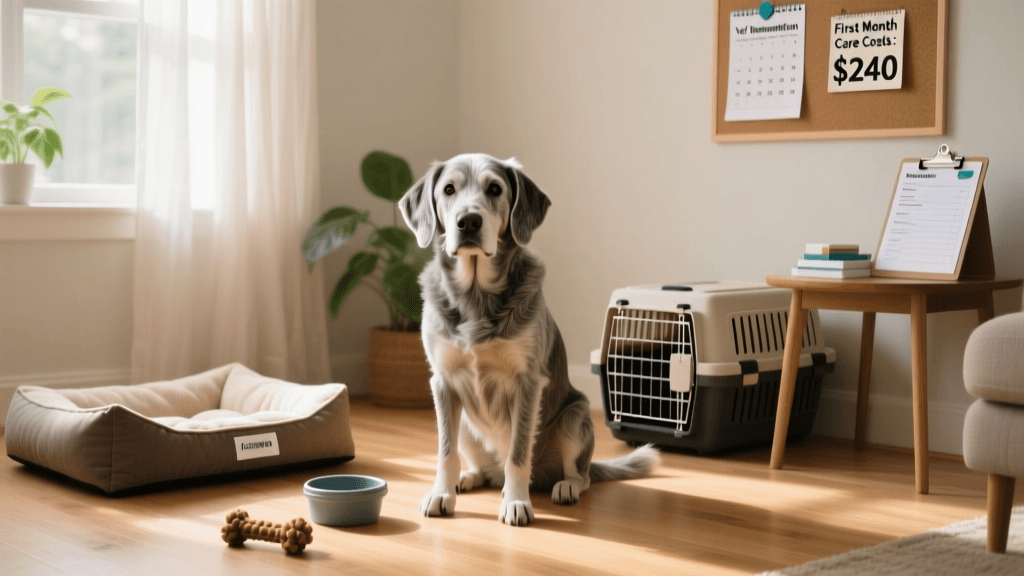
Your dog needs a sanctuary—a place where they can retreat when the sensory input of a new home becomes too much. This is where the crate comes in. Never use the crate as a punishment; it should be associated exclusively with rest, safety, and high-value rewards.
Set the crate up in a quiet but socially integrated area of the home, such as a corner of the living room or the master bedroom. Dogs are pack animals and want to feel near their family, but they also need a break from household chaos. Line the crate with a washable, chew-resistant bed. Avoid using fluffy towels or old blankets initially, as puppies may chew and ingest the fabric, leading to a veterinary emergency. Place a piece of clothing with your scent on it inside the crate to provide comfort during the first few nights.
Phase 5: Navigating the First 24 Hours
The Humane Society of the United States emphasizes that a dog's first day should be calm, structured, and heavily focused on routine. Resist the urge to invite friends and family over for a 'welcome party.' Your dog is processing an entirely new environment, and overstimulation can lead to stress-induced behavioral issues.
Hour-by-Hour Arrival Timeline
- Hour 0 (Arrival): Bring your dog directly to their designated outdoor potty spot. Wait quietly until they eliminate, then reward with a small treat and calm praise. This immediately establishes where 'business' is done.
- Hour 1 (Exploration): Allow the dog to explore their 'Safe Zone' and one adjacent room on a leash. Keep the energy low. Do not force interaction; let them sniff and process.
- Hour 2 (Hydration and Rest): Offer a small bowl of water and a light meal. Afterward, guide them into their crate with a stuffed Kong for a mandatory 90-minute decompression nap.
- Hour 4 (Potty and Play): Take them back to the potty spot. Follow this with 15 minutes of gentle play or basic bond-building exercises like hand-feeding their kibble.
- Evening (Wind Down): Keep evening activities minimal. Dim the lights, speak in soft tones, and avoid roughhousing, which can lead to hyperactive behavior right before bed.
- Nighttime Strategy: Place the crate next to your bed. Puppies and newly adopted dogs often whine at night due to loneliness or a full bladder. Set an alarm to take them out for a boring, strictly business potty break at 2:00 AM and 5:00 AM.
Phase 6: Common Beginner Mistakes to Avoid
Even with the best preparation, beginners often fall into predictable traps. Avoid these common errors to ensure a smooth transition:
- Free-Roaming Too Early: Giving a new dog full access to the house before they are potty trained and understand boundaries is a recipe for destroyed shoes and carpet stains. Use baby gates to restrict access to one or two rooms at a time.
- Inconsistent Potty Trips: Waiting for the dog to 'tell you' they need to go outside is a mistake. Beginners must proactively take the dog out every 2 hours, after every meal, and after every play session.
- Using Bleach or Ammonia Cleaners: If your dog has an accident indoors, never clean it with ammonia-based products. Urine contains ammonia, and cleaning with it will actually attract the dog back to the same spot to mark again. Always use a dedicated enzymatic cleaner.
Expert Insight: 'Patience is your most valuable piece of dog training equipment. Your new dog has no concept of your house rules, your schedule, or your language. Celebrate the micro-victories, forgive the inevitable accidents, and remember that trust is built in the quiet, consistent moments.'
Conclusion: Setting the Stage for Success
Preparing for a new dog is a marathon, not a sprint. By thoroughly puppy-proofing your home, investing in the correct functional gear, and structuring the first 24 hours with empathy and routine, you are laying an unbreakable foundation for your relationship. The effort you put in during this initial 'Complete Beginner's Handbook' phase will pay dividends for the next decade or more of your dog's life. Take a deep breath, trust your preparation, and get ready to welcome your new best friend home.
aaron-whyte
All our authors care for dogs every day — read more of their work on the authors page.