Adopting a Senior Dog: Home Prep and First Month Guide
Discover how to prepare your home, budget, and routine for adopting a senior dog. Get actionable tips on mobility aids, vet care, and first-day essentials.
The Appeal of the Senior Life Stage
Bringing a senior dog into your home is one of the most rewarding decisions a pet parent can make. While puppies demand endless hours of potty training, socialization, and teething management, older dogs typically arrive with established manners, a calmer demeanor, and a deep capacity for gratitude. The American Society for the Prevention of Cruelty to Animals (ASPCA) notes that senior dogs—generally defined as those over the age of seven, though this varies by breed size—often face longer shelter wait times. By choosing to adopt an older companion, you are not only gaining a devoted friend but also providing a crucial soft landing for a dog in their golden years.
However, transitioning a senior dog into a new environment requires a specialized approach. The life stage care guide for aging dogs focuses heavily on managing chronic conditions, accommodating declining senses, and ensuring their environment is optimized for comfort. This comprehensive guide will walk you through preparing your home, budgeting for first-month essentials, and establishing a veterinary baseline to ensure your new senior dog thrives.
Home Modifications for Mobility and Comfort
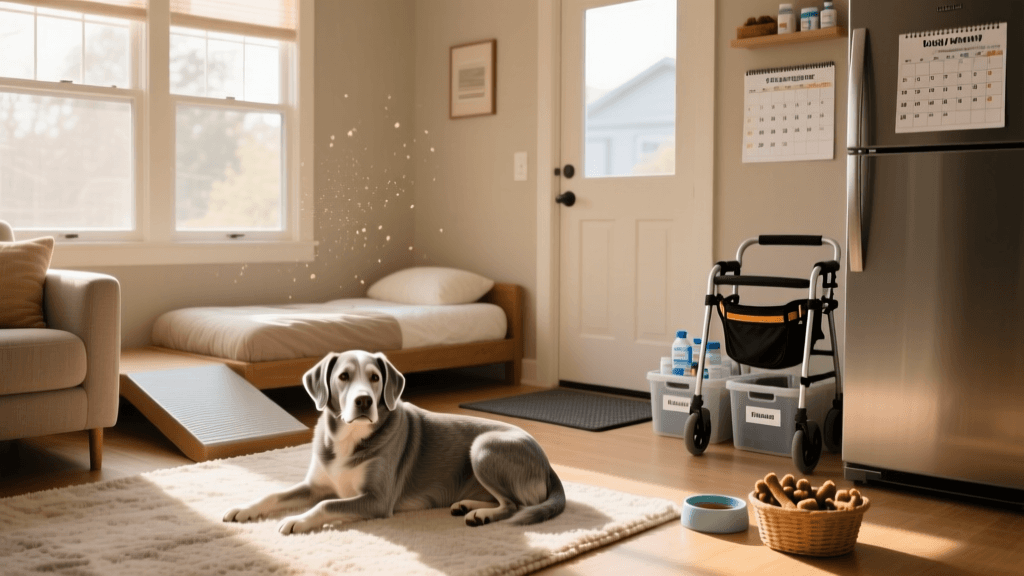
As dogs age, they frequently develop osteoarthritis, muscle atrophy, and sensory deficits like cataracts or hearing loss. Preparing your home before their first day is critical to preventing injuries and reducing anxiety.
Flooring and Traction
Hardwood, tile, and laminate floors are notoriously slippery for aging paws. A lack of traction can lead to splaying, hip strain, and catastrophic falls. Before bringing your dog home, cover primary walkways and resting areas with non-slip rugs or interlocking foam mats. Look for rugs with a natural rubber backing rather than synthetic glues, which can slide on smooth surfaces. Brands like Ruggable or Gorilla Grip offer excellent low-profile, non-slip options that are easy to clean in case of accidents.
Ramps and Stairs
If your senior dog is accustomed to sleeping on the couch or bed, jumping up and down can cause severe joint trauma or spinal injuries, particularly in long-backed breeds like Dachshunds. Invest in a pet ramp or pet stairs. When selecting a ramp, the incline is crucial. For small dogs, the ramp angle should not exceed 18 to 20 degrees, while larger dogs can manage up to 25 degrees. The American Kennel Club (AKC) recommends ramps with a minimum width of 16 inches for small dogs and 20 inches for large breeds, featuring a high-traction surface like sandpaper or ribbed carpet.
Lighting and Night Navigation
Canine cognitive dysfunction and failing eyesight can make nighttime navigation terrifying for a senior dog in a new home. Install motion-sensor nightlights in hallways, near the dog bed, and along the path to the outdoor potty area. This simple, low-cost modification drastically reduces nighttime anxiety and prevents bumps into furniture.
Essential Gear and First-Month Budget
Outfitting your home for a senior dog requires specific investments that differ from puppy essentials. Below is a structured breakdown of the first-month budget and the specific gear required to support an aging canine body.
| Item | Estimated Cost | Purpose | Recommended Brand/Type |
|---|---|---|---|
| Orthopedic Bed | $150 - $300 | Joint support and pressure relief | Big Barker or Furhaven (Min. 4-inch memory foam) |
| Pet Ramp or Stairs | $40 - $150 | Safe access to furniture and vehicles | PetSafe Happy Ride or Gen7Pets |
| Non-Slip Area Rugs | $50 - $200 | Prevent slipping and splaying on hard floors | Ruggable or Gorilla Grip Mats |
| Raised Food Bowls | $25 - $60 | Reduce neck strain and aid digestion | Neater Feeder (Adjustable height) |
| Joint Supplement | $30 - $60/mo | Support cartilage and reduce inflammation | Dasuquin or Nutramax Cosequin |
| Harness with Handle | $40 - $80 | Assist with stairs, cars, and balance | Ruffwear Web Master or Help Em Up |
When selecting an orthopedic bed, avoid beds labeled simply as orthopedic if they use egg-crate foam, which compresses quickly and offers little support for heavy or arthritic dogs. Instead, opt for high-density, human-grade memory foam that is at least four inches thick. Additionally, a harness with a sturdy dorsal handle is an invaluable tool. It allows you to gently support your dog's hindquarters when they struggle to stand, navigate stairs, or exit a vehicle, without causing pain or relying on their collar.
Veterinary Baselines and Preventative Care
Within the first two weeks of adoption, schedule a comprehensive senior wellness exam. According to the ASPCA, senior dogs should visit the veterinarian at least twice a year, as their health status can change rapidly. During this initial visit, request a comprehensive senior blood panel, which should include a complete blood count (CBC), chemistry panel, thyroid (T4) screening, and a urinalysis.
These baselines are critical. A urinalysis can detect early-stage kidney disease or hidden urinary tract infections, which are common in older dogs and can manifest as sudden house-soiling—a behavior often mistaken for a lack of training. Furthermore, discuss dental health with your veterinarian. Periodontal disease is rampant in senior dogs and can lead to systemic infections affecting the heart and liver. If your dog requires a dental cleaning, your vet will use the pre-anesthetic bloodwork to ensure their liver and kidneys can safely process anesthesia.
Nutrition, Supplements, and Cognitive Health
As dogs enter their senior years, their metabolic rate slows down, and their ability to digest and absorb certain nutrients changes. Many senior dogs require a diet lower in calories to prevent obesity, which exacerbates joint pain, but higher in highly digestible proteins to prevent muscle wasting. Consult your veterinarian about transitioning to a senior-specific formula or a joint-support diet rich in Omega-3 fatty acids (EPA and DHA), which have proven anti-inflammatory properties.
Beyond physical health, cognitive decline is a significant factor in senior dog care. Canine Cognitive Dysfunction (CCD) is akin to Alzheimer's disease in humans. The Cornell University College of Veterinary Medicine reports that signs of CCD include disorientation, altered interactions with family members, changes in sleep-wake cycles, and house-soiling. To support brain health, incorporate mental enrichment into their daily routine. Snuffle mats, lick mats, and gentle scent-work games provide vital mental stimulation without demanding rigorous physical exertion. Supplements containing medium-chain triglycerides (MCTs) and antioxidants can also support aging brain tissue; discuss options like Purina Pro Plan Bright Mind or specific veterinary supplements with your vet.
Establishing a Gentle Routine
Senior dogs thrive on predictability. The stress of a new home can trigger gastrointestinal upset or anxiety in an older dog, so establishing a rigid, gentle routine from day one is essential. Break their daily exercise into multiple short, leisurely walks rather than one long, strenuous hike. A 15-minute morning walk, a 10-minute afternoon sniffari, and a brief evening potty break are far easier on aging joints and hearts.
Allow your dog ample time to decompress. The 3-3-3 rule of adoption (3 days to decompress, 3 weeks to learn the routine, 3 months to feel at home) is especially relevant for seniors, who may take longer to adjust to new stairs, new scents, and new family members. Provide a quiet, low-traffic sanctuary space where they can retreat when overwhelmed. Use calming pheromone diffusers, such as Adaptil, in their sleeping area to ease the transition.
Conclusion
Adopting a senior dog is a profound commitment to empathy and compassionate care. By proactively modifying your home for mobility, investing in high-quality orthopedic gear, establishing a rigorous veterinary baseline, and catering to their cognitive and nutritional needs, you set the stage for a beautiful, comfortable twilight chapter. The golden years of a dog's life can be their best years, provided they are met with the specialized life stage care they so deeply deserve.
aaron-whyte
All our authors care for dogs every day — read more of their work on the authors page.