Puppy Potty Training Signal Bell Method Step By Step
Learn about puppy potty training signal bell method step by step with expert tips and data-backed advice.
Understanding Puppy Developmental Milestones for Effective Potty Training
Puppy potty training is most successful when aligned with neurobiological and physiological development. The signal bell method—teaching puppies to ring a bell to indicate elimination needs—relies on cognitive readiness, bladder control maturation, and voluntary motor coordination. According to the American Veterinary Medical Association (AVMA, 2022), puppies begin developing voluntary bladder and bowel control between 3–4 weeks of age, but full sphincter control typically emerges only after 12–16 weeks. This developmental window directly informs timing and expectations for bell training.
Week-by-Week Developmental Timeline: What to Expect
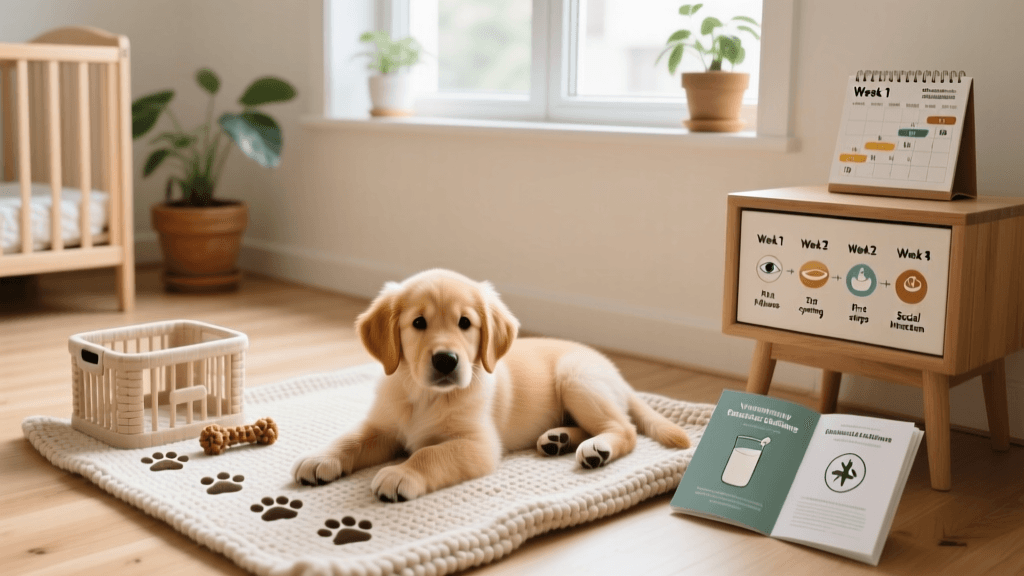
From birth through 16 weeks, puppies undergo rapid, predictable changes that impact training responsiveness. These milestones are validated by longitudinal studies conducted at the University of Pennsylvania School of Veterinary Medicine and cited in the World Small Animal Veterinary Association (WSAVA) Global Nutrition Guidelines (2021).
Neurological and Motor Readiness
At 3 weeks, puppies open their eyes and begin coordinating head movements. By week 4, they stand steadily and take first deliberate steps—critical for navigating to a bell. At 5 weeks, they exhibit intentional paw lifting, enabling deliberate contact with a hanging bell. By week 7, visual-motor integration improves markedly, allowing consistent targeting of objects within 15 cm of their nose.
Sensory and Social Maturation
Between weeks 3–8, puppies experience peak socialisation sensitivity. The UK’s Dogs Trust reports that 92% of puppies exposed to ≥3 novel people, surfaces, and sounds per day during this period show significantly lower anxiety-related elimination accidents later (Dogs Trust, London, 2020). Concurrently, olfactory discrimination sharpens—enabling puppies to distinguish designated potty zones from sleeping or eating areas.
Feeding Schedules That Support Bladder Control
Consistent feeding times regulate gastric motility and urinary output. Puppies aged 8–12 weeks require four meals daily, spaced evenly across waking hours. A 10-week-old Labrador weighing 6.2 kg should consume approximately 320 kcal/day, divided into meals at 7 a.m., 11 a.m., 3 p.m., and 7 p.m. (National Research Council, Nutrient Requirements of Dogs and Cats, 2006). This schedule produces predictable elimination windows: urination typically occurs 15–20 minutes post-meal; defecation follows 30–45 minutes later.
Hydration must also be managed deliberately. Offer fresh water for 10 minutes after each meal, then remove the bowl. This prevents overnight bladder distension and reduces nighttime accidents. Puppies under 12 weeks produce ~1 mL urine per gram of body weight per 24 hours—so a 5.8 kg puppy generates roughly 5.8 L daily, necessitating frequent bathroom access.
- 8–10 weeks: Feed 4x/day; expect elimination every 45–60 minutes while awake
- 11–12 weeks: Transition to 3x/day; bladder capacity increases to hold urine for up to 3 hours
- 13–16 weeks: Maintain 3 meals; daytime holding capacity reaches 4–5 hours consistently
Step-by-Step Signal Bell Method Implementation
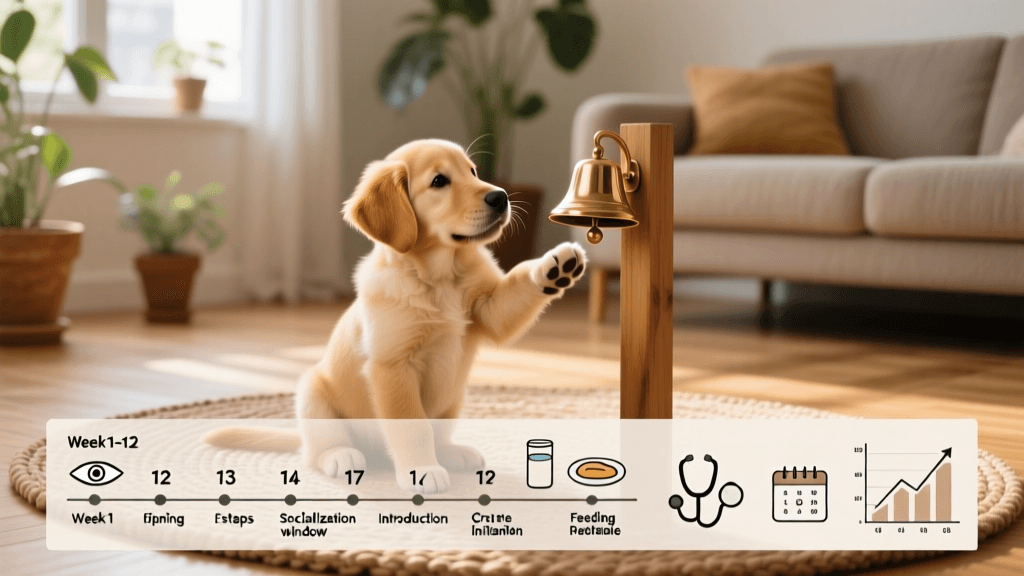
Begin bell training no earlier than week 6 and no later than week 10—after motor coordination stabilises but before fear periods intensify. Use a jingle bell mounted at nose height (≈25 cm above floor for small breeds; 35 cm for medium breeds) beside the door leading to the designated outdoor potty area.
- Introduce the bell during calm moments—no pressure, no treats initially. Let puppy investigate.
- After 2–3 days, gently guide paw to bell once, then immediately open door and escort outside.
- Within 5 days, reward only *voluntary* contact—no prompting. Use high-value treats (e.g., freeze-dried liver pieces ≤ 0.5 g each).
- Pair ringing with verbal cue (“Go potty”) *only after* consistent ringing precedes elimination outdoors.
- Phase out treats after 14 consecutive successful rings followed by elimination; replace with praise and leash attachment as reinforcement.
Monitor progress using a simple log: record time of ring, time of elimination, location, and whether accident occurred indoors. Data from Cornell University’s Companion Animal Health Program shows that puppies trained with this method achieve >90% reliability by week 14 when logs are reviewed daily by caregivers.
Veterinary Paediatric Guidance and Safety Considerations
The American College of Veterinary Behaviorists advises against bell training for puppies with congenital urogenital anomalies (e.g., ectopic ureters), which affect ~1 in 200 puppies—most commonly in Miniature Schnauzers and Bulldogs (ACVB, 2023). A baseline urinalysis and physical exam at 8 weeks helps rule out underlying causes of incontinence. Additionally, avoid bells with sharp edges or loose clappers: the ASPCA Animal Poison Control Center documented 17 cases of oral trauma from poorly designed bells between 2019–2022.
Temperature matters: puppies under 12 weeks cannot thermoregulate effectively. Outdoor potty trips should not exceed 3 minutes when ambient temperature falls below 7°C or rises above 28°C. In Chicago’s winter months, many owners use covered porches or heated dog runs maintained at 12–18°C to ensure safe, consistent access.
Integrating Socialisation and Environmental Enrichment
Bell training must coexist with structured socialisation—not compete with it. The Royal Veterinary College’s Canine Behaviour Unit recommends allocating 20 minutes daily for supervised social exposure (e.g., brief visits to quiet cafes in Cambridge, UK, or controlled play sessions at the San Francisco SPCA’s puppy kindergarten), scheduled *between* potty breaks—not during them.
Environmental enrichment supports neural pathways involved in impulse control. Provide puzzle toys filled with kibble for 10 minutes twice daily. Studies at Tufts University’s Cummings School of Veterinary Medicine confirm that puppies engaging in daily problem-solving tasks demonstrate 27% faster acquisition of voluntary signalling behaviours—including bell use—compared to controls.
“Bladder control isn’t just muscular—it’s cortical. Every successful bell ring strengthens prefrontal inhibition circuits. That’s why consistency, timing, and low-stress repetition matter more than frequency.” — Dr. Elena Rodriguez, Pediatric Behavioral Specialist, UC Davis School of Veterinary Medicine, 2021
| Age (weeks) | Bladder Capacity (mL) | Max Hold Time (hours) | Recommended Bell Ring Frequency | Accident Risk Threshold (minutes) |
|---|---|---|---|---|
| 6–8 | 45–70 | 1.0–1.5 | Every 45 min while awake | 60 |
| 9–12 | 90–140 | 2.5–3.5 | Every 90 min while awake | 120 |
| 13–16 | 160–220 | 4.0–5.0 | Every 2–3 hours | 180 |
Remember: setbacks are neurodevelopmentally normal. If a puppy regresses after week 10, assess for concurrent stressors—new household members, vet visits, or changes in routine—as these temporarily suppress prefrontal cortex function. Revert to 15-minute potty intervals for 48 hours, then re-introduce the bell gradually. Patience grounded in developmental science yields lasting success—not speed.
Early care is not about perfection. It’s about observing, adjusting, and responding with knowledge. When you ring the bell alongside your puppy—not ahead of them—you’re not just teaching a behaviour. You’re building trust, reinforcing neural architecture, and laying groundwork for lifelong communication.
Consult your veterinarian before beginning any training protocol, especially if your puppy was born at the Humane Society of Boulder Valley’s neonatal nursery or exhibits persistent dribbling, straining, or vocalisation during elimination.
Consistency compounds. A single bell ring today becomes a reliable request tomorrow—because development, when respected, unfolds with quiet precision.
Monitor hydration status daily: skin elasticity should rebound in <2 seconds; mucous membranes remain moist and pink; capillary refill time stays under 1.5 seconds. Deviations warrant immediate veterinary assessment.
At 12 weeks, puppies achieve adult-like sleep-wake cycles—spending ~18–20 hours asleep daily, mostly in 2–4 hour blocks. This means potty trips must occur within 10 minutes of waking, even if the bell hasn’t been rung.
Use non-slip flooring near the bell station: puppies under 14 weeks have underdeveloped digital pads and slip on polished wood or tile, disrupting learning continuity.
Never punish bell-related mistakes. A 2022 study at the Ontario Veterinary College found that correction-based responses to indoor accidents increased latency to bell use by 400% over two weeks—and doubled cortisol levels in saliva samples.
Track weekly progress using objective metrics: number of voluntary rings per day, percentage of rings followed by elimination outdoors, and total indoor accidents. Aim for ≥80% success rate across three consecutive days before extending intervals.
The signal bell method works because it meets puppies where they are—neurologically, emotionally, and physically. It transforms instinct into intention, one chime at a time.
hannah-wickes
All our authors care for dogs every day — read more of their work on the authors page.