Step-by-Step Puppy Potty Training: Bell and Crate Method
Master puppy potty training with our step-by-step bell and crate method. Learn schedules, costs, and actionable tips for a mess-free home.
Introduction to Puppy Potty Training
Bringing a new puppy home is one of the most exciting experiences for any dog owner, but it quickly becomes apparent that housebreaking is a monumental task. Potty training requires patience, consistency, and a structured approach. Among the myriad of methods available, combining crate training with the bell-ringing method is widely considered by professional dog trainers to be the most reliable and humane approach. This step-by-step guide will walk you through exactly how to teach your puppy to signal when they need to go outside, leveraging their natural instincts and positive reinforcement techniques.
The Science Behind Crate and Bell Training
Dogs are naturally den animals, meaning they possess an innate instinct to keep their sleeping areas clean. According to the Humane Society of the United States, crate training capitalizes on this instinct, teaching the puppy to hold their bladder and bowels until they are released from their den. When you pair this containment strategy with a visual and auditory cue—like a bell hung on the door—you create a clear line of communication. The puppy learns that interacting with the bell results in the door opening, granting them access to their designated outdoor bathroom spot.
Essential Supplies and Estimated Costs
Before beginning your training journey, you need to gather the right tools. Investing in high-quality supplies upfront will save you time, frustration, and money in the long run. Below is a breakdown of the essential items required for this specific training protocol.
| Item | Recommended Brand | Purpose | Estimated Cost |
|---|---|---|---|
| Adjustable Crate | MidWest Homes for Pets iCrate | Provides a secure den; divider grows with puppy | $45 - $65 |
| Door Bell | Poochie-Bells or Mighty Paw Smart Bell | Auditory signal for the puppy to request outside time | $10 - $15 |
| Enzymatic Cleaner | Nature's Miracle Advanced | Eliminates uric acid to prevent repeat accidents | $12 - $18 |
| Training Treats | Zuke's Mini Naturals | High-value, low-calorie rewards for immediate reinforcement | $8 - $12 |
| Collar and Leash | Adjustable Nylon Set | Safe transit from crate to outdoor potty spot | $15 - $20 |
Total Estimated Startup Cost: $90 - $130
Step 1: Setting Up the Crate Environment
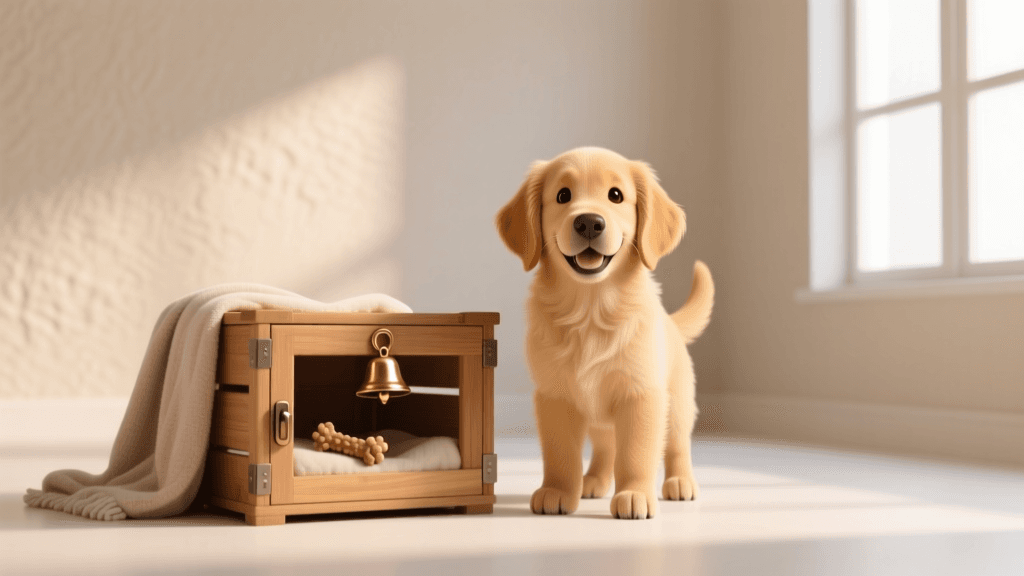
The foundation of this method is proper crate sizing. A crate that is too large will allow your puppy to designate one corner for sleeping and another for eliminating, entirely defeating the purpose of den training. If you have purchased a wire crate with a divider panel, adjust it so the puppy has just enough room to stand up, turn around, and lie down comfortably. As your puppy grows, move the divider back to accommodate their increasing size.
Make the crate an inviting space. Add a washable fleece blanket and a safe chew toy, but avoid leaving plush beds that a teething puppy might destroy and ingest. The crate should be placed in a common area of your home, such as the living room or kitchen, so the puppy does not feel isolated. According to the American Kennel Club (AKC), the crate must always be associated with positive experiences, never used as a place of punishment.
Step 2: Shaping the Bell-Ringing Behavior
Once the crate is set up, hang your chosen bell on the handle of the door you will consistently use for potty breaks. The goal is to teach the puppy to ring the bell on command, and eventually, on their own volition. We use a process called shaping to achieve this.
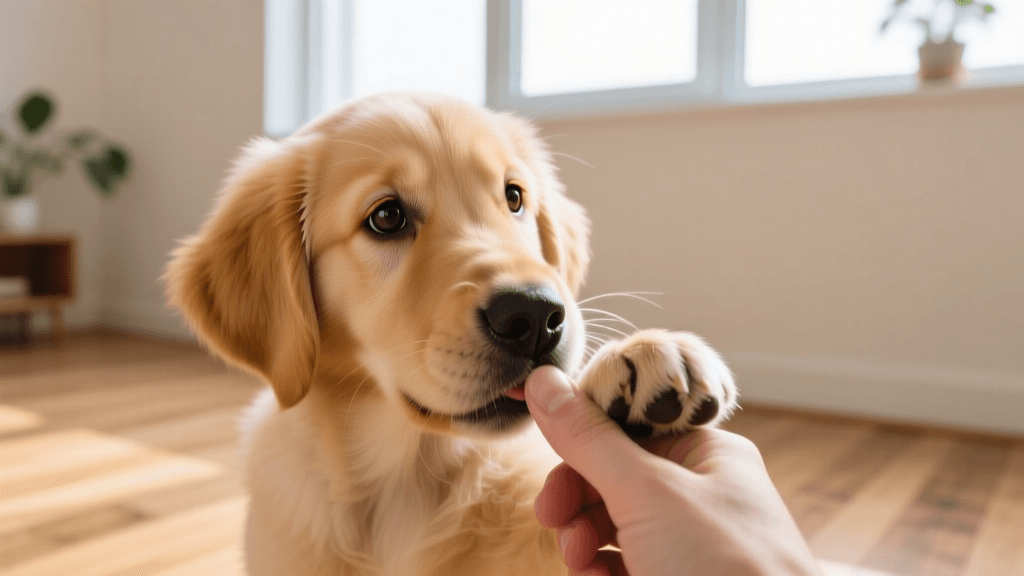
Phase 1: Target Training. Hold a small treat near the bell. When the puppy sniffs the bell to get the treat, use a clicker or a verbal marker like Yes! and give them the treat. Repeat this until the puppy deliberately bumps the bell with their nose.
Phase 2: Adding the Paw. Once the puppy is consistently touching the bell with their nose, wait for them to use their paw. Dogs naturally paw at things they want to interact with. The moment their paw makes the bell jingle, mark the behavior enthusiastically and reward them.
Phase 3: Connecting the Bell to the Door. Now, require the puppy to ring the bell before you open the door. Put the leash on your puppy, walk them to the door, and wait. If they look at the door, point to the bell. If they ring it, immediately say Go Potty!, open the door, and walk them straight outside to their designated spot. This builds a direct neurological pathway: Bell Rings equals Door Opening equals Potty Time.
Step 3: Implementing a Strict Potty Schedule
Puppies thrive on routine, and a predictable schedule prevents accidents before they happen. A general veterinary rule of thumb for bladder control is the Month Plus One rule: a puppy can hold their bladder for roughly their age in months plus one hour. Therefore, an eight-week-old (two-month-old) puppy can only hold it for about three hours maximum, but during active hours, they should be taken out much more frequently.
Here is a sample daily potty schedule for an eight-to-twelve-week-old puppy:
- 7:00 AM: Wake up, immediately carry or leash the puppy outside (no bell ringing required for the very first morning break as urgency is high).
- 8:00 AM: After breakfast and 15 minutes of play, prompt the bell ring and go outside.
- 10:00 AM: After morning nap and play session.
- 12:00 PM: After lunch.
- 2:00 PM: After afternoon nap.
- 4:00 PM: After play session.
- 6:00 PM: After dinner.
- 8:00 PM: After evening wind-down play.
- 10:30 PM: Final potty break before crating for the night.
The ASPCA emphasizes that taking the puppy to the exact same outdoor spot every time helps build a strong scent association, which naturally stimulates the urge to eliminate.
Step 4: Managing Accidents and Cleaning
Accidents are an inevitable part of the puppy rearing process. How you react to them will dictate how quickly your puppy learns. If you catch your puppy in the act indoors, do not yell, rub their nose in it, or punish them. Punishment only teaches the puppy to hide from you when they need to eliminate, leading to sneaky accidents behind furniture.
Instead, interrupt the behavior with a sharp, neutral noise like Oops! or a quick clap, immediately scoop them up or leash them, and rush them outside to finish. If they finish outside, praise them heavily and offer a high-value treat. If you find an accident after the fact, simply clean it up. The puppy will not connect your frustration to an action they took an hour ago.
When cleaning indoor accidents, you must use an enzymatic cleaner like Nature's Miracle. Standard household cleaners might mask the smell to human noses, but dogs have olfactory receptors that are millions of times more sensitive. If uric acid crystals remain in the carpet fibers, the puppy will be drawn back to that exact spot to re-mark it. Enzymatic cleaners literally digest the organic proteins and uric acid, removing the biological beacon entirely.
Troubleshooting Common Setbacks
The Puppy Rings the Bell Just to Play: If your puppy starts ringing the bell to go outside and play rather than potty, you must enforce strict boring potty breaks. When they ring the bell, put them on a leash, stand in one spot in the yard for five minutes, and say Go Potty. If they eliminate, reward them and then allow five minutes of off-leash play. If they do not eliminate within five minutes, bring them back inside and place them in the crate for ten minutes before trying again. This teaches them that the bell is strictly a bathroom pass, not a ticket to the amusement park.
Nighttime Whining: If your puppy whines in the crate at night, wait a moment to see if they settle. If the whining escalates, take them out on a leash in the dark, keep all interaction strictly business, and put them right back in the crate. This ensures they learn that nighttime wake-ups are purely for biological needs, not social interaction.
Conclusion
Potty training a puppy using the crate and bell method requires dedication, but the payoff is a well-mannered dog who can clearly communicate their needs. By managing their environment with a properly sized crate, establishing a clear auditory cue with the bell, and adhering to a strict schedule, you set your puppy up for lifelong success. Remember that every puppy learns at their own pace, so celebrate the small victories and remain consistent in your expectations. With time and positive reinforcement, your home will be clean, and your bond with your new best friend will be stronger than ever.
jonas-cole
All our authors care for dogs every day — read more of their work on the authors page.