Puppy Nutrition and Health Setup Before Bringing Them Home
Prepare your home with the right puppy nutrition and health essentials. Learn about diets, vet costs, and preventative care before adoption day.
The Critical First 30 Days: Setting the Foundation
Bringing a new dog or puppy into your home is a milestone filled with excitement, wagging tails, and inevitable chaos. However, the most successful pet parents know that the "Getting a Dog" phase actually begins weeks before your new companion crosses the threshold. At Paws-Tales, we emphasize that a seamless transition relies heavily on proactive health and nutrition planning. This deep dive will equip you with the exact dietary protocols, preventative health budgets, and essential supplies you need before adoption day.
Decoding Puppy Nutrition: The Science of Growth
Not all kibble is created equal, and selecting the right diet is the most critical health decision you will make in those first few weeks. According to the U.S. Food and Drug Administration (FDA), pet food labels must adhere to strict guidelines, but marketing terms like "all-natural" or "grain-free" do not necessarily equate to optimal nutrition. Instead, your first step is to locate the Association of American Feed Control Officials (AAFCO) nutritional adequacy statement on the packaging.
For growing dogs, this statement must explicitly say the food is formulated for "growth" or "all life stages." But here is where many new owners make a crucial error: ignoring breed size. If you are adopting a large breed puppy (a dog expected to weigh over 70 pounds as an adult, such as a Labrador Retriever, German Shepherd, or Great Dane), their skeletal development requires a highly specific calcium-to-phosphorus ratio. Excess calcium can lead to severe orthopedic diseases like osteochondritis dissecans (OCD) or hip dysplasia. Large breed puppy formulas strictly cap calcium levels between 1.2% and 1.5% on a dry matter basis, whereas standard puppy foods can exceed this, causing rapid, unhealthy bone growth.
Actionable Advice: If you are adopting a large breed, purchase a dedicated Large Breed Puppy formula, such as Purina Pro Plan Large Breed Puppy or Royal Canin Giant Puppy. Expect to spend between $65 and $95 for a 30-pound bag. For small breeds (under 20 pounds), their high metabolic rates require calorie-dense kibble with smaller piece sizes to prevent hypoglycemia; look for specific "Small Breed Puppy" designations.
The 7-Day Diet Transition Protocol
A sudden change in diet is a primary culprit for puppy diarrhea and gastrointestinal distress. When you bring your dog home, ask the breeder or shelter for a small bag of their current food. You will need to execute a strict 7-day transition schedule to allow the puppy's gut microbiome to adapt. Below is the exact measurement protocol based on a standard daily feeding volume of 2 cups.
| Timeline | Old Food Ratio | New Food Ratio | Daily Mix (Based on 2 Cups Total) |
|---|---|---|---|
| Days 1 & 2 | 75% | 25% | 1.5 cups old / 0.5 cups new |
| Days 3 & 4 | 50% | 50% | 1.0 cup old / 1.0 cup new |
| Days 5 & 6 | 25% | 75% | 0.5 cups old / 1.5 cups new |
| Day 7 Onward | 0% | 100% | 2.0 cups new food |
Pro Tip: Keep a canine-specific probiotic on hand, such as Purina FortiFlora ($30 for a 30-day supply), to sprinkle over the food during this transition. This introduces beneficial bacteria to stabilize the digestive tract during the stress of relocation.
Essential Health Supplies & Setup Costs
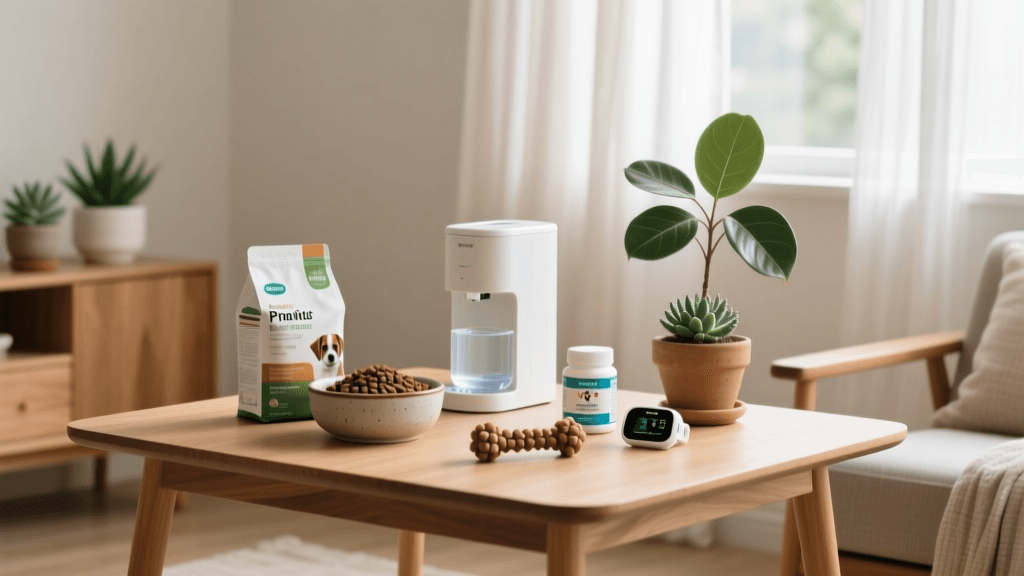
Beyond the food itself, your physical feeding and hygiene setup plays a massive role in long-term health. Plastic bowls are a common household item, but they harbor microscopic scratches that breed bacteria, leading to "puppy acne" (canine folliculitis) on the chin and lips.
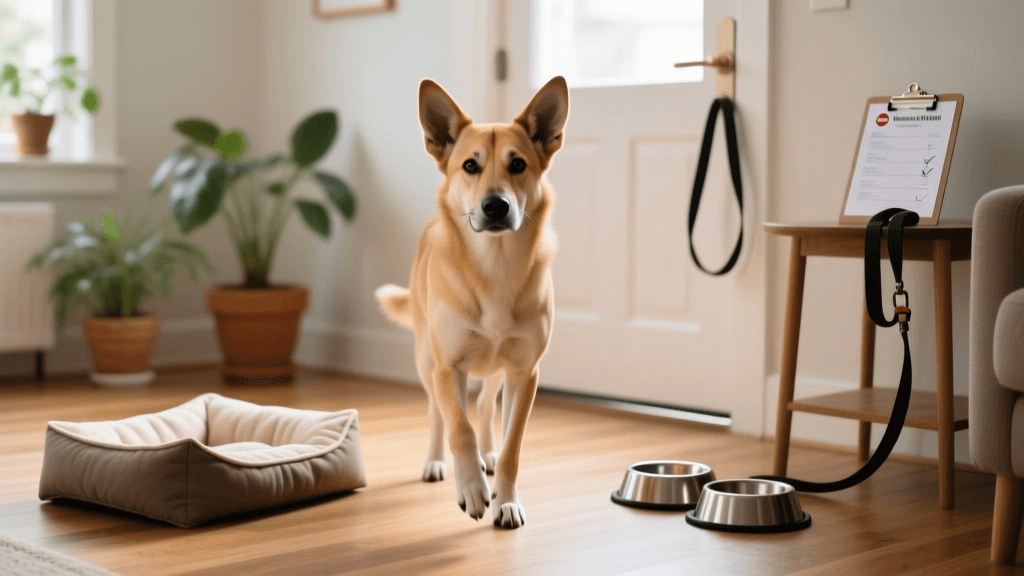
- Stainless Steel or Ceramic Bowls ($15 - $25): Purchase two heavy-bottomed stainless steel bowls. They are dishwasher safe and non-porous. Elevate the bowls only if recommended by your vet for specific orthopedic reasons; otherwise, floor-level feeding is natural and safe.
- Enzymatic Toothpaste & Finger Brush ($12 - $18): Dental disease affects over 80% of dogs by age three. Start brushing on day one using a poultry-flavored enzymatic paste like Virbac C.E.T. Never use human toothpaste, as fluoride and xylitol are highly toxic to dogs.
- Styptic Powder & Guillotine Clippers ($15): Puppies have sharp, needle-like nails that can scratch their own corneas. Trim just the tips weekly. If you clip the "quick" (the blood vessel), apply styptic powder immediately to halt the bleeding.
Budgeting for Preventative Veterinary Care
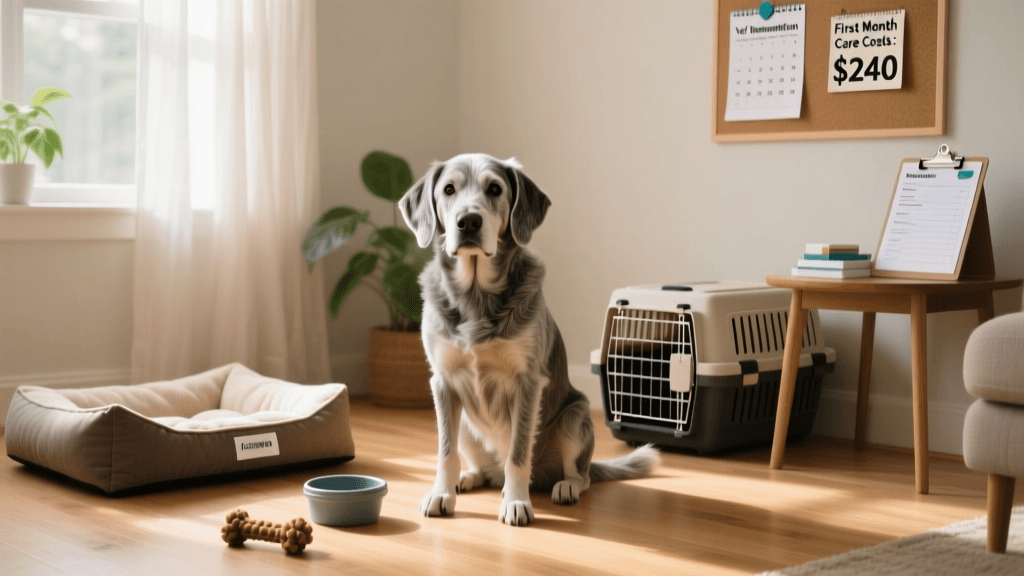
The financial reality of getting a dog extends far beyond the adoption fee. Your first year will be the most expensive regarding veterinary care due to the core vaccination series and preventative medications. According to the American Kennel Club (AKC), puppies require a series of combination vaccines (DHPP) every 3 to 4 weeks from 6 to 16 weeks of age to bridge the gap between maternal antibodies and their own developing immune systems.
Below is a realistic budget breakdown for your puppy's first-year preventative health setup. Prices are national averages and may vary by region and clinic.
| Health Service / Product | Frequency | Estimated Cost |
|---|---|---|
| Initial Vet Exam & Fecal Test | Within 48 hours of adoption | $80 - $150 |
| DHPP Vaccine Series (3-4 rounds) | Every 3-4 weeks until 16 weeks | $100 - $160 total |
| Rabies Vaccine | Once at 12-16 weeks | $25 - $40 |
| Heartworm Preventative (e.g., Heartgard) | Monthly (Year 1 supply) | $90 - $120 |
| Flea & Tick (e.g., NexGard or Bravecto) | Monthly/Quarterly (Year 1) | $150 - $250 |
| Spay/Neuter Surgery | Between 6 - 12 months | $300 - $800 |
Paws-Tales Budgeting Tip: Look into local low-cost spay/neuter clinics and municipal vaccine drives to reduce these costs by up to 50%. However, always establish a relationship with a primary care veterinarian for emergencies and baseline health records.
Puppy-Proofing: The Hidden Health Hazards
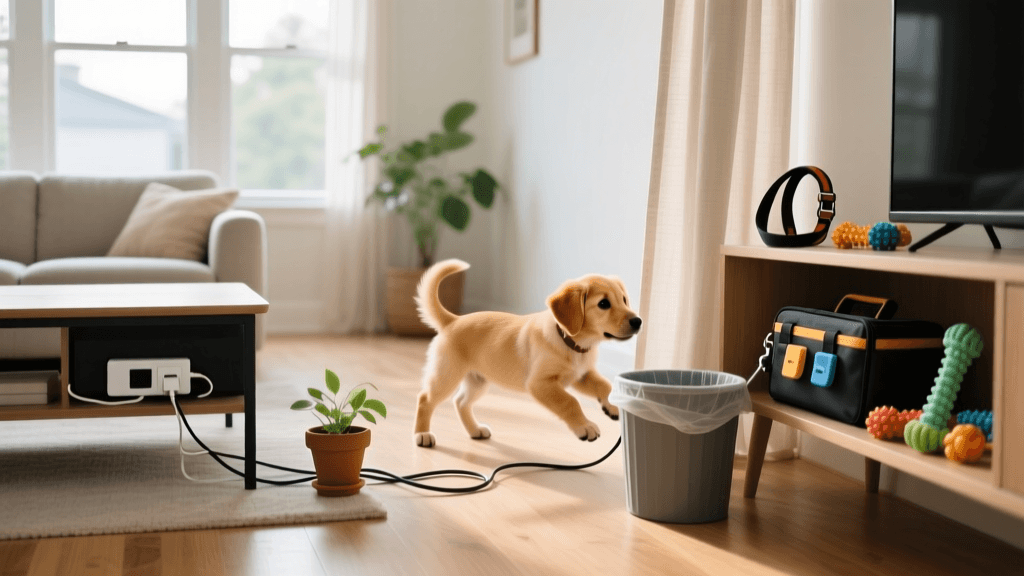
A crucial part of the "Getting a Dog" checklist is environmental health. Puppies explore the world with their mouths, making your home a potential minefield of toxins. The ASPCA Animal Poison Control Center warns that common household items and human foods are frequent culprits for emergency vet visits.
The "Must-Hide" Toxin List
- Xylitol (Birch Sugar): Found in sugar-free gum, peanut butter, and mints. Even a small amount causes a massive insulin release, leading to fatal hypoglycemia and liver failure within hours.
- Grapes and Raisins: Can cause acute kidney failure in dogs. The exact toxic mechanism is still being studied, but there is no safe threshold.
- Human NSAIDs: Ibuprofen (Advil) and Naproxen (Aleve) are highly toxic to canine kidneys and stomach linings. Never medicate your puppy without explicit veterinary instructions.
- Household Plants: Lilies, Sago Palms, and Azaleas are highly toxic. Move all floor-level plants to high shelves or hanging planters.
Actionable Step: Save the ASPCA Animal Poison Control hotline (888-426-4435) in your phone and post it on your refrigerator before your puppy arrives. A $95 consultation fee applies, but it can save your dog's life during a weekend emergency when local clinics are closed.
Final Thoughts: Preparation Equals Peace of Mind
The transition into dog ownership is a profound commitment to another living being's health and happiness. By securing the correct breed-specific nutrition, mapping out a 7-day diet transition, budgeting for essential veterinary protocols, and toxin-proofing your home, you are doing much more than just "getting a dog." You are engineering a foundation for a long, vibrant, and disease-free life. Take the time to order your stainless steel bowls, schedule your welcome-home vet exam, and stock your pantry with high-quality, AAFCO-approved kibble. When your new best friend finally walks through the door, you won't just be ready; you'll be prepared to thrive together.
jonas-cole
All our authors care for dogs every day — read more of their work on the authors page.