Moving With a Puppy in 2026: A Stress-Free Transition Guide
Learn how to manage your puppy's potty training, teething, and anxiety during a major move in 2026 using Adaptil, smart cameras, and structured routines.
The Reality of Relocating During the First Year
Relocating is universally ranked as one of life's most stressful events, but when you add a puppy in their critical first year of development, the complexity multiplies. As we navigate the housing market shifts of 2026, many young families and remote workers are transitioning to new suburban or rural environments. While a new home with a fenced yard might seem like a puppy paradise, the disruption to their routine can trigger severe anxiety, potty training regression, and destructive behaviors. The first year of a puppy's life is defined by rapid developmental milestones, including crucial socialization windows, intense teething phases, and the foundational stages of housebreaking. A major life transition like moving house interrupts these delicate processes. However, with strategic planning, modern pet technology, and evidence-based calming techniques, you can turn a chaotic moving day into a seamless adventure for your growing dog.
Pre-Move Preparation: Minimizing Disruption
The key to a successful move with a puppy lies in the weeks leading up to the transition. Puppies thrive on predictability. When packing boxes begin to multiply and furniture disappears, a puppy's sense of security is immediately compromised. To counteract this, establish a 'puppy-safe sanctuary' in your current home. This should be a single room or a large exercise pen area that remains completely unpacked and unchanged until the very last moment before you leave. Keep their familiar bedding, favorite teething toys, and water bowls in this zone. According to the ASPCA's guidelines on moving with pets, maintaining a consistent feeding and walking schedule amidst the packing chaos is vital for keeping your puppy's stress hormones in check. Do not alter their diet or introduce new treats during this period, as gastrointestinal upset combined with environmental stress can lead to severe dehydration and illness.
Moving Day Anxiety: Adaptil and Smart Monitoring
Moving day itself is a whirlwind of open doors, loud noises, and unfamiliar strangers carrying heavy objects. This is the exact scenario where a puppy is at the highest risk of bolting out the front door or developing long-term noise phobias. To manage this, utilize synthetic pheromones. The Adaptil Calm On-the-Go Collar or Adaptil Transport Spray are scientifically formulated to mimic the comforting pheromones a mother dog produces while nursing. Apply the spray to your puppy's travel crate bedding 15 minutes before loading them into the vehicle. This provides a biochemical signal of safety that helps regulate their heart rate and reduces panting and whining during transit.
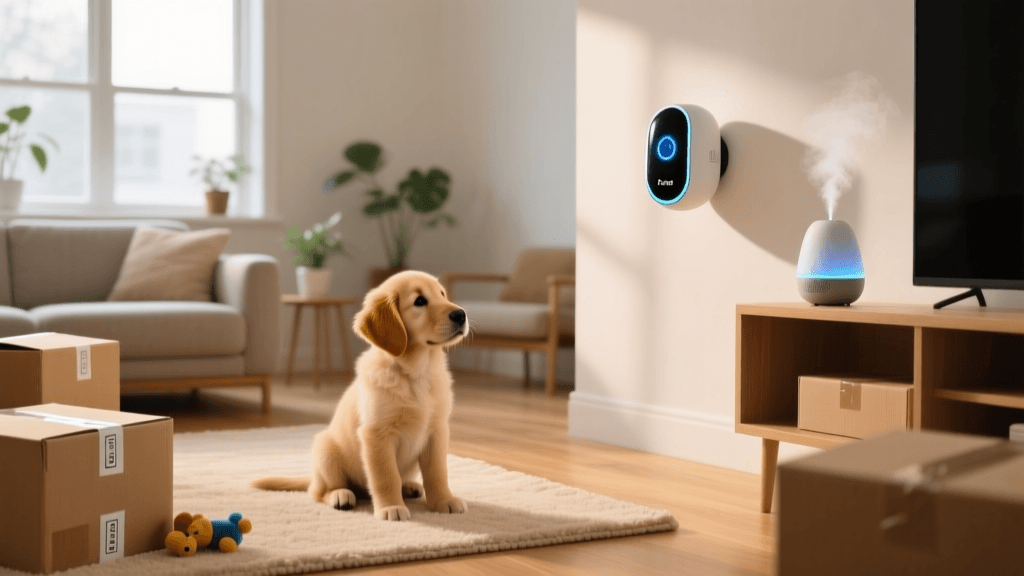
Once you arrive at the new home, set up a dedicated 'basecamp' room before letting the puppy explore the entire house. In 2026, smart home integration is essential for monitoring your puppy during the unpacking phase. The Furbo 3 Dog Camera is an invaluable tool for this transition. With its 360-degree viewing angle and treat-tossing capabilities, you can monitor your puppy's stress levels in their basecamp while you are in other rooms moving furniture. If the Furbo's AI bark alerts notify you that your puppy is becoming distressed, you can use the two-way audio to soothe them and toss a calming treat without reinforcing the anxious behavior by rushing back into the room in a panic.
Re-Establishing Potty Training Post-Move
One of the most frustrating aspects of moving with a puppy is potty training regression. A puppy that was perfectly housebroken in your old home may suddenly begin having accidents on the new rugs. This is not a sign of stubbornness; it is a natural response to an unfamiliar environment where their previously established scent markers are absent. The American Kennel Club (AKC) notes on potty training regression emphasize that owners must revert to the basics, treating the puppy as if they are in the very first week of housebreaking.
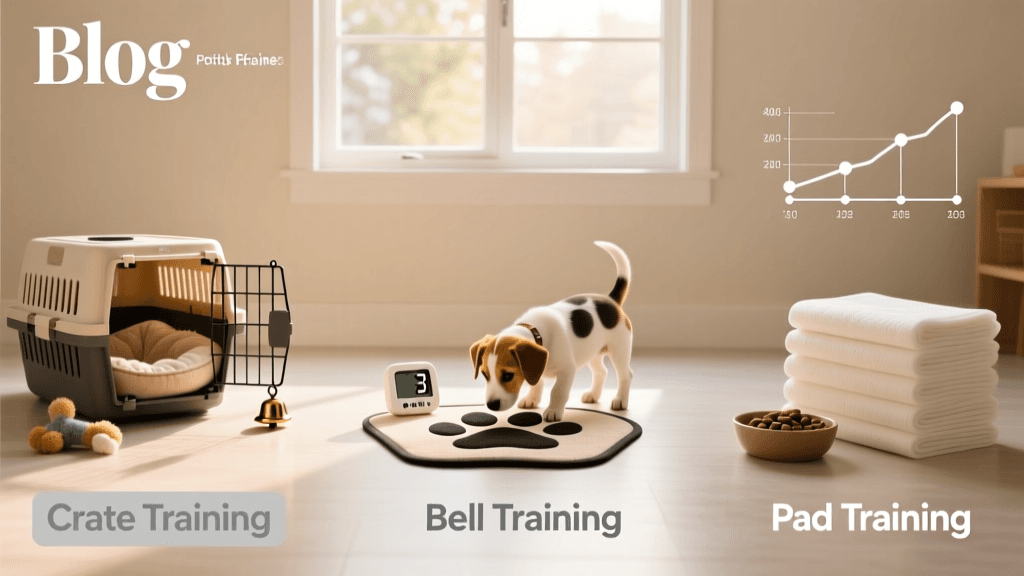
You must completely eliminate their unsupervised access to the new house. Use baby gates to restrict them to rooms with hard flooring, and utilize a crate when you cannot maintain direct visual contact. When accidents inevitably happen, avoid ammonia-based cleaners, which can actually attract the puppy back to the same spot. Instead, use a high-quality enzymatic cleaner like Nature's Miracle Advanced Stain and Odor Eliminator to break down the uric acid crystals at a molecular level.
Puppy Moving Day & Settling Potty Schedule
| Time | Activity | Location & Strategy |
|---|---|---|
| 7:00 AM | Wake up & immediate potty | Carry puppy directly to the new designated outdoor spot. Use a consistent verbal cue like 'Go potty'. |
| 7:30 AM | Breakfast & Hydration | Feed in the basecamp room. Remove water bowl 20 minutes before the next potty break. |
| 8:15 AM | Post-meal elimination | Leashed outdoor trip. High-value treat reward immediately upon successful elimination. |
| 10:00 AM | Supervised exploration | Allow 15 minutes of sniffing in ONE new room of the house on a leash to prevent indoor accidents. |
| 12:00 PM | Mid-day potty & nap | Outdoor potty trip followed by crate time with a calming chew to decompress from morning stimulation. |
Teething, Boxes, and Destructive Chewing
If your puppy is between the ages of three and six months, they are likely in the peak of the teething phase. Moving generates hundreds of cardboard boxes, packing tape, and bubble wrap—all of which are incredibly tempting and highly dangerous chewing hazards for a teething puppy. Ingesting cardboard or tape can lead to life-threatening intestinal blockages requiring emergency surgery. You must manage the environment proactively. Keep all packing materials out of reach, and provide appropriate, high-value alternatives to satisfy their chewing urges.
Fill a classic KONG rubber toy with a mixture of puppy-safe peanut butter (strictly xylitol-free), plain pumpkin puree, and their regular kibble, then freeze it overnight. The frozen texture provides soothing relief for inflamed teething gums, and the mental enrichment required to extract the food will exhaust your puppy, promoting deep, restorative sleep in their new environment. If your puppy shows interest in baseboards or door frames in the new house, apply a bitter-tasting deterrent like Grannick's Bitter Apple Spray to those specific areas to discourage exploratory chewing.
Neighborhood Socialization and Veterinary Transitions
A new home means a new neighborhood, new sounds, new surfaces, and new neighbors. While the physical move is taxing, it also presents a unique opportunity to expand your puppy's socialization portfolio. In their first year, positive exposure to novel stimuli is critical for preventing fear-based reactivity later in life. Take your puppy on 'decompression walks' in the new neighborhood. Allow them to sniff fire hydrants, observe distant traffic, and experience different pavement textures at their own pace. Do not force interactions with strangers or other dogs during the first two weeks; let the puppy observe and process the new environment from a safe distance.
Finally, secure your puppy's medical safety net immediately. Before the move, request a complete digital transfer of your puppy's veterinary records, including their 2026 vaccination status and deworming history. Research and select a new veterinary clinic within a five-mile radius of your new home, and schedule a 'happy visit' within the first week of arrival. A happy visit involves walking into the clinic, receiving high-value treats from the staff, and leaving without any medical procedures. This establishes a positive association with the new healthcare provider, ensuring that your puppy's medical care remains uninterrupted during this major life transition. By combining environmental management, modern monitoring technology, and empathetic routine-building, you can help your puppy confidently embrace their new home.
tom-renshaw
All our authors care for dogs every day — read more of their work on the authors page.