2026 Puppy Bonding: Hand-Feeding & Scent Games for Deep Trust
Build unbreakable trust with your 8-week puppy using our 2026 hand-feeding and snuffle mat scent routines to prevent resource guarding and boost bonding.
The Critical 8-to-16 Week Bonding Window
Bringing a new puppy home is an exhilarating experience, but the first few months are about much more than just potty training and teaching them to sit. The period between 8 and 16 weeks of age represents a profound developmental window where your puppy's brain is exceptionally plastic. During this time, the foundation of your lifelong relationship is forged. According to the American Kennel Club's guide on puppy socialization, the experiences, associations, and trust-building exercises you introduce during these early weeks will permanently shape your dog's temperament and their attachment to you.
In 2026, modern canine behavioral science has moved far beyond the outdated notion that simply petting your puppy is enough to build a deep bond. True relationship building requires active engagement, mutual communication, and trust-based exercises. One of the most effective, veterinarian-recommended methods for establishing yourself as a trusted partner—rather than just a food dispenser—is the strategic use of hand-feeding combined with interactive scent games.
Why Hand-Feeding is the Ultimate Trust Builder in 2026
Free-feeding (leaving a bowl of kibble out all day) or simply placing a bowl on the floor and walking away does nothing to build your relationship. In fact, it can inadvertently teach your puppy that their resources come from the environment, not from you. Hand-feeding flips this dynamic. By becoming the source of all good things, you naturally build a bond rooted in trust and cooperation.
Furthermore, hand-feeding is a proactive defense against resource guarding. The ASPCA's behavioral resources on resource guarding emphasize that dogs who are taught early on that human hands approaching their food means 'more good things are coming' are significantly less likely to develop aggressive guarding behaviors later in life. When you hand-feed, you are teaching your puppy that your hands are safe, generous, and deeply connected to their survival and happiness.
Essential Gear for Scent & Bonding Games
To maximize your bonding sessions, you need the right tools. Puppies explore the world primarily through their noses, and engaging their olfactory system releases dopamine, creating a positive emotional state that they will associate directly with you.
1. The Paw5 Wooly Snuffle Mat
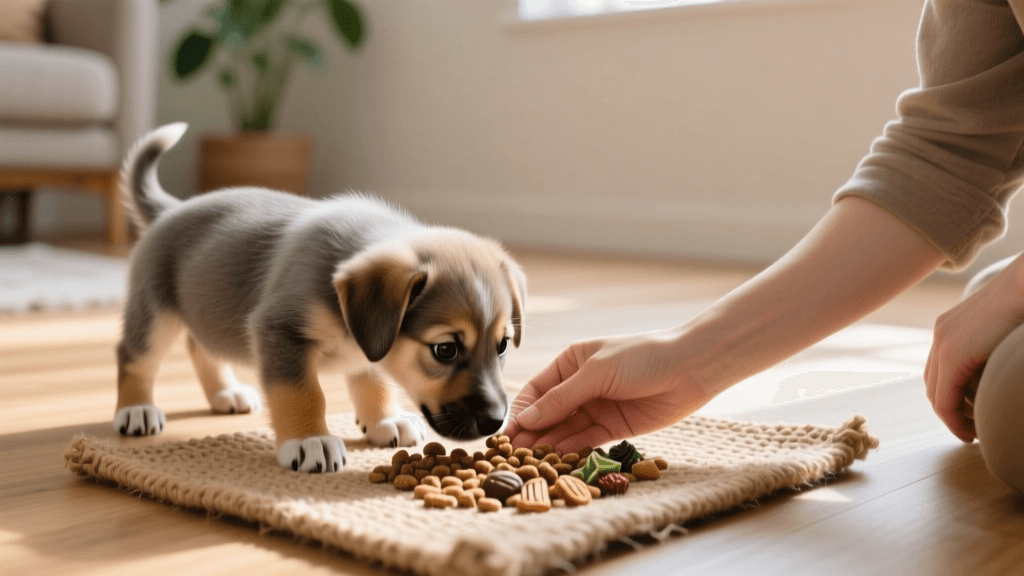
Snuffle mats mimic the act of foraging in the wild. The Paw5 Wooly Snuffle Mat remains a top-tier choice in 2026 due to its dense, machine-washable fleece strands that effectively trap kibble and high-value treats. Priced around $45, it is an investment in your puppy's mental health. Using a snuffle mat with your guidance teaches your puppy to look to you for environmental enrichment.
2. Outward Hound Dog Brick Puzzle Toy
For puppies who master the snuffle mat quickly, the Outward Hound Dog Brick introduces sliding compartments and flip lids. Priced at approximately $15 to $20, this intermediate puzzle toy requires your puppy to problem-solve. Your role is to act as the 'coach,' offering verbal encouragement and physical praise when they unlock a compartment, which deeply strengthens your communicative bond.
The 15-Minute Daily Scent & Bonding Routine
Consistency is the bedrock of puppy training. Incorporate this 15-minute routine into your evening schedule, ideally before your puppy's final potty break and bedtime. This routine replaces one of their standard meals.
Step 1: The Hand-Feeding Check-In (5 Minutes)
Take your puppy's measured portion of kibble (or freeze-dried raw minis) and sit on the floor with them. Wait for your puppy to make eye contact. The moment they look at your eyes, say 'Yes!' and offer a piece of food from your open palm. Repeat this, slowly increasing the duration of eye contact required before the reward. This builds a 'check-in' behavior that will be invaluable for off-leash recall later in life.
Step 2: Scent Mat Foraging with Praise (5 Minutes)
Hide a portion of their meal deep within the snuffle mat. Place the mat between your legs to maintain proximity. As your puppy sniffs and forages, use a calm, encouraging voice. If they get frustrated and paw at the mat, gently guide their nose with your finger to the hidden food. This teaches them that you are a helpful partner in problem-solving, not a passive observer.
Step 3: The 'Trade-Up' Game (5 Minutes)
Give your puppy a low-value chew toy. Once they are engaged, approach calmly with a high-value treat (like a small piece of boiled chicken or a commercial puppy training treat). Offer the treat right at their nose. When they drop the toy to take the treat, praise them warmly, then give the toy back. This exercise, heavily supported by the Humane Society's puppy development framework, teaches your puppy that giving things up to you always results in a positive outcome, entirely neutralizing the roots of resource guarding.
Bonding Method Comparison Chart
Not all interactions are created equal. Below is a comparison of common puppy bonding methods based on mental stimulation, relationship building, and time investment.
| Bonding Method | Mental Stimulation | Trust & Bond Strength | Daily Time Required |
|---|---|---|---|
| Passive Petting / Cuddling | Low | Moderate | Unstructured |
| Standard Bowl Feeding | None | Low | 2 Minutes |
| Hand-Feeding Check-Ins | Moderate | Very High | 5-10 Minutes |
| Snuffle Mat Scent Work | Very High | High | 10 Minutes |
| Interactive Puzzle Toys | High | Moderate to High | 15 Minutes |
Tracking Your Puppy's Relationship Milestones
As you implement these hand-feeding and scent-based routines, you should look for specific behavioral milestones that indicate your bond is deepening.
Weeks 8 to 10: The Orientation Phase
During these first few weeks home, your puppy is learning who you are. A major milestone is the 'spontaneous check-in.' If you are walking around the house or the yard and your puppy voluntarily stops what they are doing to look up at you, your hand-feeding routine is working. They are beginning to view you as their center of gravity.
Weeks 11 to 13: The Partnership Phase
At this stage, your puppy should readily accept the 'Trade-Up' game without hesitation. You will notice their body language relaxing when you approach them while they are eating or chewing. Ears will stay relaxed, and you might see a 'soft' wagging tail rather than stiffening. This is the critical period where the prevention of resource guarding takes permanent root.
Weeks 14 to 16: The Confidence Phase
As the primary socialization window begins to close, a well-bonded puppy will look to you for guidance in novel or slightly scary situations. If a loud truck drives by or a strange object appears on the sidewalk, a puppy with a secure attachment will look back at you to gauge your reaction. This 'social referencing' is the ultimate proof of a deep, trust-based relationship.
Reading Canine Calming Signals During Bonding
Building a relationship is a two-way street; you must also learn to listen to your puppy. During your 15-minute bonding sessions, pay close attention to canine calming signals. If your puppy yawns, licks their lips, or turns their head away when you are doing the hand-feeding check-in, they may be feeling overwhelmed or pressured.
If you observe these signals, immediately lower your criteria. Make the game easier, offer a piece of food without requiring eye contact, and give them space. Respecting your puppy's boundaries and emotional state is one of the most powerful ways to build trust. When a puppy learns that you respect their 'no,' they become infinitely more willing to say 'yes' to your training cues.
Transitioning to Bowl Feeding Safely
While hand-feeding is incredible for the 8-to-16 week window, you will eventually want to transition back to a bowl for convenience. In 2026, behaviorists recommend a gradual phase-out rather than an abrupt stop. Begin by hand-feeding 50% of the meal and placing the other 50% in a bowl or snuffle mat. Slowly decrease the hand-fed portion over the course of a month, while continuing to drop high-value treats into their bowl while they eat to maintain the positive association with human hands approaching their food.
Conclusion
The effort you invest in hand-feeding and interactive scent games during your puppy's first year pays dividends for the next decade. By utilizing tools like the Paw5 Snuffle Mat and dedicating just 15 minutes a day to structured trust-building, you are not just raising an obedient dog; you are cultivating a profoundly connected companion. Embrace the process, respect your puppy's developmental timeline, and enjoy the incredible bond that blossoms from mutual trust and understanding.
anouk-beaumont
All our authors care for dogs every day — read more of their work on the authors page.