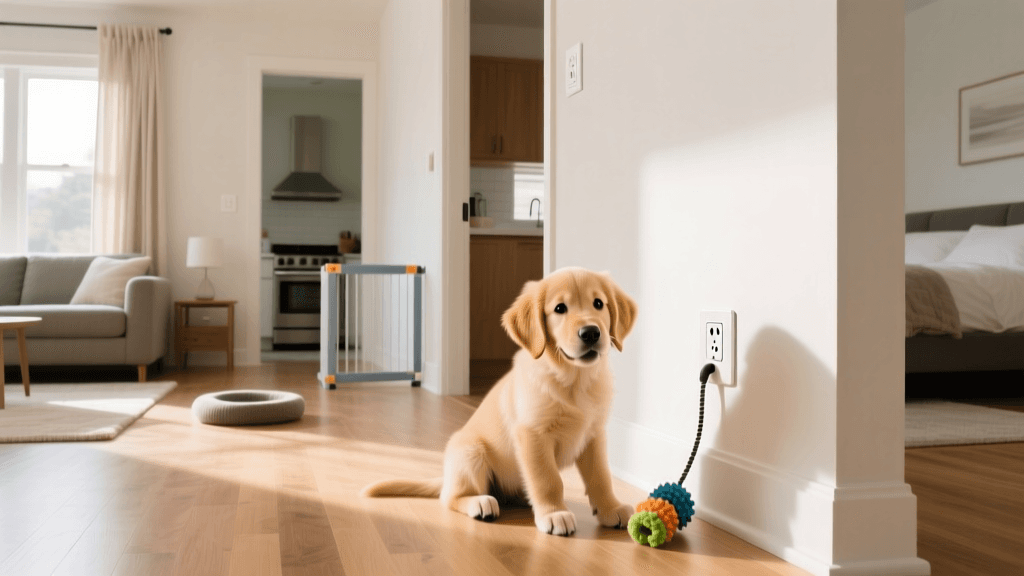
Puppy First Vet Visit What To Expect
Learn about puppy first vet visit what to expect with expert tips and data-backed advice.
Getting Ready for the First Appointment
Bringing a new puppy home is one of the most exciting milestones a pet owner can experience, but the first veterinary visit can feel overwhelming if you don't know what to expect. Most veterinarians recommend scheduling this appointment within 48 to 72 hours of bringing your puppy home, regardless of whether the breeder or shelter has already provided initial vaccinations. This early check-up establishes a health baseline, catches any congenital issues, and gives you a chance to ask the questions that have been piling up since day one.
Before the appointment, gather every document you received when you picked up your puppy: vaccination records, deworming history, microchip registration papers, and any health certificates from the breeder. The American Veterinary Medical Association (AVMA, 2023) advises owners to bring a fresh stool sample — collected within 12 hours of the visit — so the clinic can screen for intestinal parasites such as roundworms, hookworms, and giardia, which are common even in puppies from reputable breeders.
Keep your puppy in a secure carrier or on a leash in the waiting room. Veterinary clinics are busy environments with unfamiliar smells, sounds, and animals, and a loose puppy can quickly become stressed or pick up pathogens before completing its vaccination series. Bring a few high-value treats to help create positive associations with the clinic from the very first visit.
What the Veterinarian Will Examine
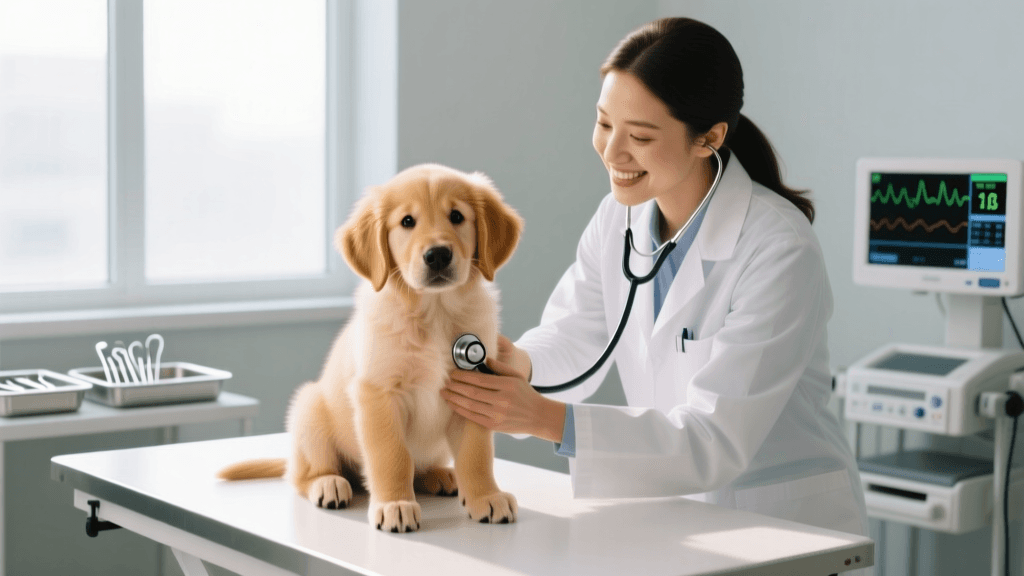
A standard puppy wellness exam is a head-to-tail physical assessment that typically takes 20 to 30 minutes. Your vet will check the eyes for discharge or cloudiness, inspect the ears for signs of infection or mites, and evaluate the teeth and gums. Puppy teeth — all 28 of them — should be present and properly aligned. The vet will also palpate the abdomen to assess organ size and check for umbilical hernias, which occur in roughly 1 in 500 puppies according to data compiled by the Veterinary Teaching Hospital at Colorado State University.
Heart and lung auscultation is a critical part of the exam. Congenital heart murmurs are detected in approximately 0.5 to 1 percent of puppies during first examinations, and catching them early allows for monitoring or referral to a veterinary cardiologist before symptoms develop. The vet will also assess muscle tone, joint flexibility, and gait to rule out hip dysplasia or luxating patellas, conditions that are breed-dependent but worth screening for early.
Skin and coat condition tells a great deal about a puppy's nutritional status and parasite load. The vet will part the fur to look for fleas, flea dirt, or mange mites. They will also weigh your puppy — a number you should record and track at every visit, since healthy weight gain is one of the clearest indicators of overall development.
Vaccinations Given at the First Visit
The core vaccine given at most first puppy visits is the combination DHPP shot, which protects against distemper, hepatitis, parvovirus, and parainfluenza. Puppies typically receive this vaccine at 8 weeks, again at 12 weeks, and a final booster at 16 weeks. The reason for the series is immunological: maternal antibodies passed through the mother's milk can neutralise a single vaccine dose, so multiple rounds are needed to ensure the puppy's own immune system mounts a lasting response.
Depending on your location and lifestyle, the vet may also recommend non-core vaccines such as Bordetella (kennel cough), leptospirosis, or Lyme disease. Puppies in tick-heavy regions of the northeastern United States, for example, are often started on Lyme vaccination as early as 9 weeks. The rabies vaccine is legally required in most US states and is typically administered at 12 to 16 weeks of age.
Parasite Prevention and Deworming
The Centers for Disease Control and Prevention (CDC, 2022) notes that roundworms are present in an estimated 34 percent of puppies in the United States, making routine deworming a standard part of early puppy care rather than a reactive measure. Most puppies receive their first deworming treatment at 2 weeks of age from the breeder, with follow-up doses at 4, 6, and 8 weeks. Your vet will review this history and may administer an additional dose at the first visit.
Flea, tick, and heartworm prevention should be discussed at this appointment. Heartworm disease, transmitted by mosquitoes, is present in all 50 US states, and the American Heartworm Society recommends starting preventive medication as early as 8 weeks of age. Your vet will recommend a product appropriate for your puppy's weight and age, since many over-the-counter options are not safe for very young or very small dogs.
Puppy Development Milestones in the First Months
Understanding where your puppy sits developmentally helps you interpret the vet's findings and set realistic expectations for behaviour and training. Puppies go through several distinct developmental windows, and what happens — or doesn't happen — during each one has lasting effects on temperament and health.
- 0–2 weeks (Neonatal period): Puppies are deaf and blind, relying entirely on touch and smell. They sleep approximately 90 percent of the day and should gain 5 to 10 percent of their body weight daily.
- 2–4 weeks (Transitional period): Eyes and ears open. Puppies begin to stand, walk unsteadily, and interact with littermates. First teeth emerge around 3 weeks.
- 3–12 weeks (Socialisation period): The most critical window for behavioural development. Positive exposure to people, sounds, surfaces, and other animals during this period significantly reduces the likelihood of fear-based behaviour in adulthood.
- 8–11 weeks (Fear imprint period): Puppies are particularly sensitive to frightening experiences. Traumatic events during this window can have disproportionate and lasting effects on behaviour.
- 3–6 months: Rapid physical growth, teething begins around 12 weeks as adult teeth start replacing puppy teeth, and sexual maturity approaches in smaller breeds.
The Royal Veterinary College in London has published longitudinal research showing that puppies who attend socialisation classes before 12 weeks of age are significantly less likely to develop aggression and anxiety-related behaviours as adults, provided the classes are run in a safe, low-stress environment.
Feeding Guidelines by Age and Weight
Nutrition questions are among the most common topics at first puppy visits, and the answers depend heavily on breed size. A 2-kilogram Chihuahua puppy has very different caloric needs than a 6-kilogram Labrador puppy of the same age. The following table provides general daily feeding guidelines for dry kibble formulated for puppies, based on body weight at 8 weeks of age.
| Puppy Weight at 8 Weeks | Daily Kibble Amount | Meals Per Day |
|---|---|---|
| 1–3 kg (toy breeds) | 40–80 g | 4 |
| 3–6 kg (small breeds) | 80–150 g | 3–4 |
| 6–12 kg (medium breeds) | 150–250 g | 3 |
| 12–20 kg (large breeds) | 250–380 g | 3 |
| 20+ kg (giant breeds) | 380–600 g | 2–3 |
These figures are starting points. Your vet will adjust recommendations based on your puppy's body condition score — a hands-on assessment of fat coverage over the ribs and spine — rather than weight alone. Overfeeding large and giant breed puppies is a particular concern, as rapid growth has been linked to developmental orthopaedic diseases including osteochondrosis and hypertrophic osteodystrophy.
Sleep, Exercise, and Daily Routine
Young puppies sleep between 16 and 20 hours per day, and this is not laziness — it is a biological necessity. Growth hormone is released primarily during sleep, and the brain consolidates learning and sensory experiences during rest periods. Disrupting a puppy's sleep schedule in the name of socialisation or training can be counterproductive and stressful for the animal.
Exercise should be kept gentle and brief in the early months. A commonly cited guideline from the UK Kennel Club suggests no more than 5 minutes of structured exercise per month of age, twice daily. So an 8-week-old puppy should have no more than two 10-minute walks per day. This protects developing growth plates, which do not fully close until 12 to 18 months in most breeds and even later in giant breeds such as Great Danes and Saint Bernards.
"The socialisation window closes around 12 to 14 weeks of age. Every positive experience a puppy has before that point is an investment in a lifetime of confident, well-adjusted behaviour. Every negative experience is a debt that may take years of training to repay." — Dr. Ian Dunbar, veterinary behaviourist and founder of the Association of Pet Dog Trainers
Establishing a predictable daily routine helps puppies feel secure and makes house training significantly easier. A consistent schedule for feeding, play, outdoor time, and sleep reduces anxiety and gives the puppy clear expectations. Most puppies can begin to hold their bladder for approximately one hour per month of age, so a 2-month-old puppy needs an outdoor opportunity at least every two hours during waking hours.
Questions to Ask Your Veterinarian
The first vet visit is as much an information-gathering session for you as it is a health check for your puppy. Come prepared with a written list of questions so you don't forget anything in the moment. The following are worth raising regardless of your puppy's breed or background.
- What is my puppy's current body condition score, and is the weight gain on track?
- Which vaccines are due today, and what is the complete schedule for the next six months?
- What parasite prevention products do you recommend for this puppy's age, weight, and local environment?
- At what age do you recommend spaying or neutering, and does breed size affect that timing?
- Are there any breed-specific health screenings I should plan for in the first year?
- What signs of illness should prompt an emergency visit versus a scheduled appointment?
- Can you recommend a puppy socialisation class in this area that uses positive reinforcement methods?
Don't hesitate to ask follow-up questions if an answer isn't clear. A good veterinarian will welcome an engaged owner. If you feel rushed or dismissed, it is entirely reasonable to seek a second opinion or find a clinic that better suits your communication style. The relationship you build with your vet over the coming years is one of the most important partnerships in your dog's life.
After the appointment, monitor your puppy for 24 to 48 hours for any vaccine reactions. Mild lethargy and slight soreness at the injection site are normal. Contact your vet immediately if you observe facial swelling, vomiting, difficulty breathing, or collapse, as these can indicate a rare but serious anaphylactic reaction. Keep a written record of every vaccine, deworming treatment, and health finding from this visit — it will be invaluable at every appointment that follows.
Robin Maitland
All our authors care for dogs every day — read more of their work on the authors page.