Puppy Feeding Schedule and Portion Guide for First-Time Owners
Master your puppy's nutrition with our first-time owner feeding schedule. Learn portion sizes, meal timings, and how to transition foods safely.
Welcoming Your Puppy: The Foundation of Lifelong Health
Bringing home a new puppy is one of the most exhilarating experiences a first-time dog owner can have. However, amidst the flurry of purchasing chew toys, setting up crates, and scheduling initial veterinary visits, nutrition often becomes a source of immense anxiety. How much should you feed a growing puppy? What is the best feeding schedule to support potty training? How do you navigate the overwhelming aisles of pet food? This comprehensive guide is designed specifically for first-time owners to demystify puppy feeding schedules, portion control, and nutritional milestones during that critical first year of life.
Understanding Puppy Nutritional Requirements
Puppies are not simply small adult dogs; they are rapidly growing organisms that require a highly specific balance of macronutrients and micronutrients. According to the World Small Animal Veterinary Association (WSAVA), growing puppies require higher levels of protein, fat, and specific minerals like calcium and phosphorus compared to adult dogs to support tissue synthesis and bone development. You can review their core recommendations via the WSAVA Global Nutrition Guidelines. It is crucial to select a commercial diet that explicitly states it is formulated for 'growth' or 'all life stages' and meets the nutritional profiles established by the Association of American Feed Control Officials (AAFCO). First-time owners should look for diets that include DHA (docosahexaenoic acid), an omega-3 fatty acid vital for cognitive and retinal development.
The First-Time Owner’s Puppy Feeding Schedule
Establishing a consistent feeding schedule is not just about nutrition; it is a foundational pillar of successful potty training. Puppies have small stomachs and high metabolic rates, meaning they cannot consume a full day's caloric intake in a single sitting. Furthermore, predicting when your puppy will need to eliminate is heavily dependent on knowing exactly when they ate. Below is a structured feeding timeline for a puppy's first year.
| Puppy Age | Meals Per Day | Sample Daily Schedule | Developmental Notes |
|---|---|---|---|
| 6 to 12 Weeks | 4 Meals | 7:00 AM, 12:00 PM, 5:00 PM, 9:00 PM | High energy demands. Small stomach capacity requires frequent, smaller meals to prevent hypoglycemia, especially in toy breeds. |
| 3 to 6 Months | 3 Meals | 7:00 AM, 12:30 PM, 6:00 PM | Teething begins. Kibble can be slightly softened with warm water if gums are sore. Potty training routines should solidify around these meal times. |
| 6 to 12 Months | 2 Meals | 7:00 AM, 6:00 PM | Growth rate begins to slow. Small breeds may transition to adult food at 9-12 months, while large breeds remain on puppy formulas longer. |
Portion Control: Measuring for Optimal Growth
One of the most common mistakes first-time owners make is 'eyeballing' their puppy's food or relying solely on the generic feeding charts printed on the back of a dog food bag. Those charts are broad estimates. To ensure your puppy is growing at a safe, steady rate—avoiding both malnutrition and obesity-induced joint stress—you must measure accurately.
Invest in a digital kitchen scale (typically costing between $15 and $25). Measuring food by weight (grams) rather than volume (cups) is vastly more accurate, as the kibble size and density vary wildly between brands like Purina Pro Plan, Royal Canin, and Hill's Science Diet. For example, a 10-pound growing puppy might require roughly 400 to 500 calories per day. If your chosen food contains 400 calories per cup, you know precisely how many grams equate to that caloric need. Weigh your puppy weekly for the first two months, then bi-weekly, and plot their growth on a breed-specific puppy growth chart to ensure they are tracking along the 50th percentile.
Learning to perform a Body Condition Score (BCS) evaluation at home is an invaluable skill. You should be able to feel your puppy's ribs without pressing hard, but they should not be visibly protruding. A visible waistline when viewed from above indicates a healthy weight.
Small Breed vs. Large Breed Feeding Nuances
Not all puppy foods are created equal, and the divergence is most apparent when comparing small breeds (like Chihuahuas or Pomeranians) to giant breeds (like Great Danes or Saint Bernards). Large breed puppies are highly susceptible to developmental orthopedic diseases (DOD), such as hip dysplasia and osteochondrosis, if they grow too quickly. The AKC emphasizes that large breed puppy foods must have strictly controlled calcium and phosphorus levels, and a lower caloric density to prevent rapid bone elongation. You can read more about breed-specific feeding nuances on the American Kennel Club's puppy nutrition guide. Never supplement a large breed puppy's diet with additional calcium or vitamins without explicit veterinary instruction, as this can severely disrupt their skeletal development.
The 7-Day Food Transition Protocol
Whether you are switching from the breeder's food to your preferred brand, or transitioning from a puppy formula to an adult diet, abrupt changes will almost certainly result in gastrointestinal upset, including diarrhea and vomiting. First-time owners must adhere to a strict 7-day transition protocol:
- Days 1 & 2: 75% old food, 25% new food.
- Days 3 & 4: 50% old food, 50% new food.
- Days 5 & 6: 25% old food, 75% new food.
- Day 7: 100% new food.
If your puppy experiences soft stools during this process, pause the transition, hold the current ratio for an extra day, and consider adding a teaspoon of plain, unsweetened canned pumpkin puree to their meal for added soluble fiber.
Hydration, Treats, and Toxicity Warnings
Fresh, clean water must be available at all times during the day. However, to aid in nighttime potty training, it is highly recommended to pick up your puppy's water bowl exactly two to two and a half hours before their bedtime. For a puppy sleeping at 10:00 PM, remove water at 7:30 PM and take them out for a final elimination right before lights out. Stainless steel or ceramic bowls are highly recommended over plastic, which can harbor bacteria in microscopic scratches and cause puppy acne on the chin. Wash these bowls daily with hot, soapy water.
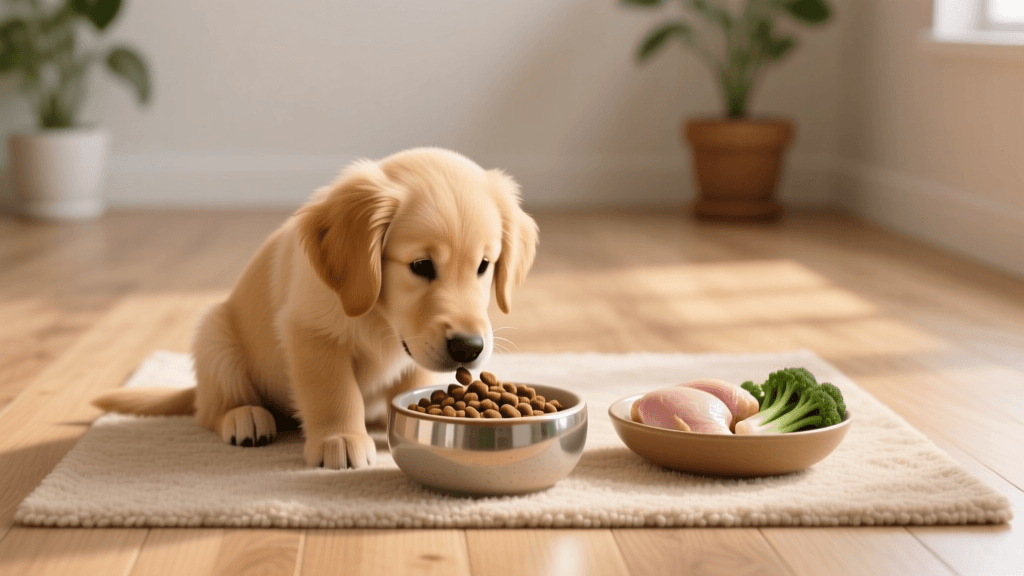
When it comes to treats and training rewards, adhere to the '10% Rule': treats should never constitute more than 10% of your puppy's daily caloric intake. Use high-value, low-calorie training treats like boiled chicken breast or commercial freeze-dried liver. More importantly, first-time owners must be hyper-vigilant regarding household foods. The ASPCA's comprehensive list of toxic and non-toxic foods is a mandatory bookmark for any new dog owner. Grapes, raisins, onions, garlic, macadamia nuts, and anything containing xylitol (a common artificial sweetener in peanut butter and sugar-free gums) are highly toxic and can be fatal even in small quantities.
Common Beginner Mistakes to Avoid
To wrap up this guide, avoid these three frequent pitfalls that well-meaning first-time owners often fall into:
- Free-Feeding: Leaving a bowl of kibble out all day destroys your ability to monitor appetite (a key indicator of illness) and completely sabotages your potty training schedule.
- Feeding Table Scraps: Human food is often too rich, too salty, and too fatty for a puppy's developing digestive system. It also encourages begging and counter-surfing behaviors that are incredibly difficult to extinguish later in life.
- Over-Exercising After Meals: While rare in small breeds, large and giant breed puppies are at risk for Gastric Dilatation-Volvulus (GDV), or bloat. Enforce a strict 45-minute rest period in their crate or on a mat after every meal before engaging in vigorous play or walks. Allow them to digest peacefully.
By adhering to a structured schedule, measuring portions meticulously, and understanding the unique physiological needs of your growing dog, you are setting the stage for a vibrant, healthy, and well-adjusted adult dog. Puppyhood is fleeting, but the nutritional foundations you build today will last a lifetime.
robin-maitland
All our authors care for dogs every day — read more of their work on the authors page.