Puppy Fear Periods Guide: Vet And Trainer Expert Q&A
Discover how to navigate puppy fear periods with expert advice from a vet and dog trainer. Learn timelines, triggers, and actionable socialization tips.

Expert Q&A: Navigating Puppy Fear Periods Safely
Bringing a new puppy home is an exciting milestone, but many new owners are caught off guard when their once-confident pup suddenly becomes terrified of everyday objects like trash cans, plastic bags, or strangers. This phenomenon is known as a 'fear period,' a completely normal but critical developmental stage in a puppy's first year. To help you navigate these sensitive windows, we sat down with Dr. Aris Thorne, a board-certified veterinary behaviorist, and Maya Lin, a Certified Professional Dog Trainer (CPDT-KA), for an in-depth Q&A on managing puppy fear periods.
Q1: What exactly is a puppy fear period, and why does it happen?
Dr. Thorne (Veterinarian): A fear period is a specific window of neurological development where a puppy's brain is highly receptive to forming negative associations. From an evolutionary standpoint, this is a survival mechanism. In the wild, a young canine needs to quickly learn what is dangerous so they can avoid predators. During these periods, the amygdala—the brain's fear center—is highly active, while the prefrontal cortex, which handles logical reasoning and emotional regulation, is still immature. As a result, a puppy isn't just 'being dramatic'; they are experiencing genuine, heightened neurological fear. It is crucial that owners understand this is a biological process, not a behavioral flaw or a sign of poor breeding.
Q2: When do these fear periods occur during the first year?
Maya Lin (Dog Trainer): Most puppies will experience two primary fear periods during their first year, though the exact timing can vary slightly depending on the breed and individual development rate. Larger breeds may hit these milestones slightly later than smaller breeds. Here is a general timeline you can expect:
| Fear Period | Approximate Age | Key Characteristics & Milestones |
|---|---|---|
| First Fear Period | 8 to 11 weeks | Often coincides with the transition to a new home. Puppies may suddenly fear loud noises, new environments, or unfamiliar people. |
| Second Fear Period | 6 to 14 months | Coincides with adolescence and sexual maturity. Puppies may show sudden reactivity to things they previously ignored, like other dogs or men in hats. |
According to the ASPCA guidelines on puppy socialization, recognizing these windows is the first step in preventing long-term behavioral issues like generalized anxiety or fear-based aggression.
Q3: What are the subtle signs that my puppy is entering a fear period?
Maya Lin: Many owners miss the early signs because they are looking for obvious reactions like cowering or running away. Before a puppy reacts overtly, they display 'calming signals' or stress indicators. Watch for:
- Whale Eye: Showing the whites of their eyes while keeping their head turned away.
- Lip Licking & Yawning: Doing these out of context (e.g., not after eating or waking up).
- Freezing: Stopping completely still when approached by a person or object.
- Shedding: Sudden, excessive shedding when in a new environment.
- Refusal of Treats: A puppy that normally loves food will often refuse even high-value treats when their stress threshold is crossed.
Q4: How should I react when my puppy is spooked by something?
Maya Lin: The worst thing you can do is force the puppy to interact with the scary object—a practice known as 'flooding.' This will only confirm to their brain that the object is indeed dangerous. Instead, I teach my clients the Engage-Disengage Protocol. Here is how you execute it:
- Identify the Threshold: Find the distance where your puppy notices the trigger (e.g., a garbage truck) but is still willing to eat a treat. This might be 50 feet away.
- Mark the 'Engage': The moment your puppy looks at the truck, say 'Yes!' in a cheerful voice.
- Reward the 'Disengage': When your puppy turns their head back to you to get the treat, reward them heavily.
- Repeat and Retreat: Do this 5-10 times, then calmly walk away from the trigger to decompress.
Dr. Thorne: I completely agree with Maya. From a veterinary perspective, allowing the puppy to retreat builds trust. If you drag a terrified puppy toward a 'friendly' stranger, you are breaking their trust and reinforcing the fear. Let the puppy dictate the pace of the interaction.
Q5: Should I pause socialization during a fear period to keep them safe?
Dr. Thorne: Absolutely not. Pausing socialization is a common mistake that can lead to severe behavioral deficits. The Humane Society emphasizes that ongoing, positive socialization is vital, even during fear periods. The key is to change how you socialize. Instead of taking your puppy to a chaotic dog park or a crowded farmer's market, opt for 'low-intensity' socialization. Sit on a park bench at a distance, let them watch the world go by, and feed them high-value treats. You are teaching them that the world is a safe place to observe, without overwhelming their nervous system.
'A single traumatic event during a fear period can create a lifelong phobia, but a series of positive, low-pressure exposures can build a resilient, confident adult dog.' — Dr. Aris Thorne, DVM
Q6: Are there specific products or tools that help manage fear periods?
Maya Lin: Yes, having the right toolkit can make a massive difference. Here are the specific products I recommend to all my puppy clients, along with their approximate costs:
- Adaptil Junior Collar (~$25 - $30): This collar releases a synthetic dog-appeasing pheromone that mimics the comforting scent of a nursing mother. It is highly effective for the 8-11 week fear period, especially during the transition to a new home.
- Zuke's Mini Naturals (~$6 for 6oz): During a fear period, dry kibble won't cut it. You need high-value, aromatic, easily chewable treats to keep the puppy's brain engaged in the reward rather than the trigger.
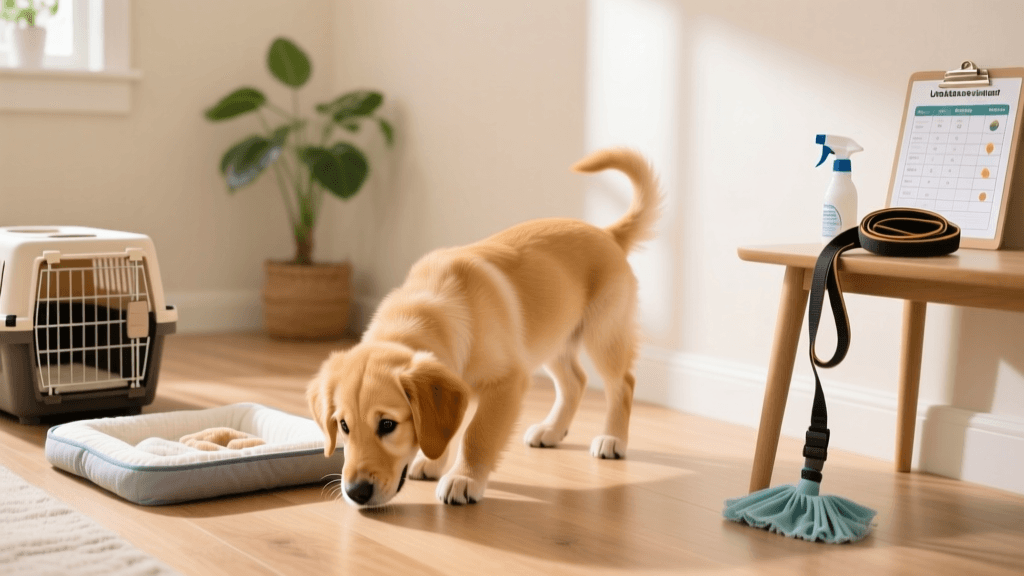
- 6-Foot Biothane Leash ($30 - $45): Avoid retractable leashes entirely. A standard 6-foot leash gives you precise control and prevents the puppy from bolting into traffic if they spook. Biothane is easy to clean and doesn't absorb fear-sweat or mud.
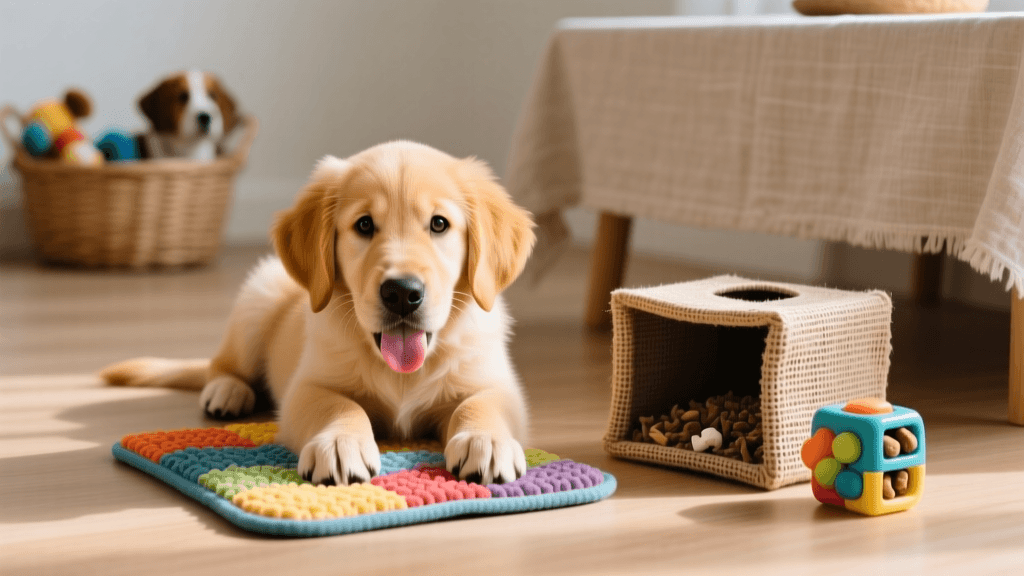
- Snuffle Mat ($20 - $35): Sniffing lowers a dog's heart rate and engages their parasympathetic nervous system. Scattering treats on a snuffle mat after a stressful walk helps them decompress and process the event.
Final Thoughts from the Experts
Navigating puppy fear periods requires patience, empathy, and a solid understanding of canine development. By recognizing the signs, respecting your puppy's boundaries, and utilizing positive reinforcement techniques, you can guide your pup through these sensitive windows. Remember, the goal of the first year isn't to create a perfectly obedient robot, but to build a confident, trusting companion who views you as their safe haven in a sometimes-scary world. For further reading on developmental milestones, the American Kennel Club's puppy care resources offer excellent breed-specific timelines to help you anticipate your dog's unique growth phases.
robin-maitland
All our authors care for dogs every day — read more of their work on the authors page.