2026 Guide: Managing Puppy Fear Periods & Reactivity
Learn how to manage puppy fear periods and noise sensitivity in 2026 with proven desensitization protocols, calming aids, and reactive dog training tips.
Understanding Puppy Fear Periods in the First Year
Bringing a new puppy home is an exhilarating experience, but for owners of anxious or reactive breeds, the first year can present significant behavioral hurdles. In 2026, veterinary behaviorists emphasize that understanding canine developmental milestones is critical for preventing long-term reactivity. Puppies go through two primary fear periods during their first year. The first occurs between 8 and 11 weeks of age, coinciding with the transition to their new home. The second, often more intense fear period, emerges between 6 and 14 months as the puppy transitions into adolescence.
During these windows, a single traumatic or highly stressful event—such as a loud thunderstorm, an aggressive encounter with another dog, or forced interaction with a stranger—can create lasting negative associations. For puppies genetically predisposed to anxiety, these periods are the breeding ground for future reactivity. The American Veterinary Society of Animal Behavior (AVSAB) notes that early, positive, and controlled exposure during these sensitive periods is the most effective way to mitigate lifelong fear-based behaviors.
Recognizing Early Signs of Reactivity and Anxiety
Reactivity is often misunderstood as mere aggression, but in puppies, it is almost always rooted in fear, frustration, or overstimulation. Identifying the subtle signs of anxiety before they escalate into lunging or barking is the cornerstone of modern reactive dog management. Watch for the following early stress signals:
- Whale Eye: Showing the whites of their eyes while turning their head away from a stimulus.
- Lip Licking and Yawning: Excessive licking or yawning when not tired, signaling nervous displacement.
- Freezing or Shutting Down: A puppy that stops moving and refuses treats is over threshold and experiencing cognitive overload.
- Hyper-Vigilance: Inability to settle, constant scanning of the environment, and an exaggerated startle response to sudden noises.
If your puppy exhibits these signs, it is crucial to increase the distance from the trigger immediately. Pushing a fearful puppy into a stressful situation under the guise of 'toughening them up' will only deepen the neural pathways associated with fear.
The 2026 Noise Desensitization and Counter-Conditioning (DSCC) Protocol
Noise sensitivity is a leading cause of anxiety in urban and suburban puppies. Whether it is sirens, fireworks, or household appliances, managing noise phobias requires a structured Desensitization and Counter-Conditioning (DSCC) protocol. In 2026, trainers utilize smart home technology combined with high-value reinforcement to keep puppies sub-threshold.
Phase 1: Environmental Baseline and Masking
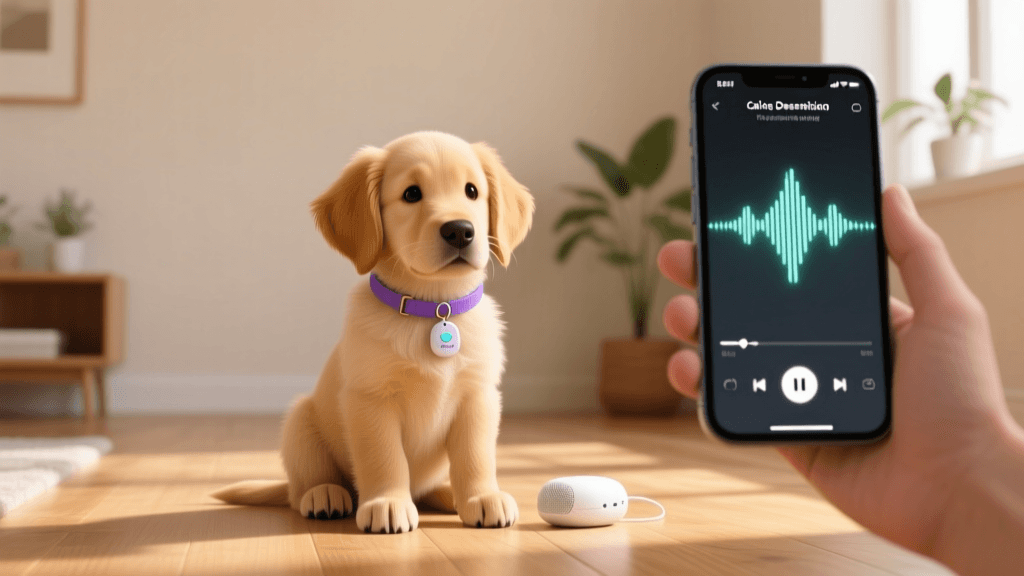
Before introducing triggering sounds, establish a safe 'decompression zone' in your home. Use a smart sound machine, like the Hatch Rest Plus, to play continuous brown noise or pink noise. Brown noise has deeper frequencies than white noise, which is highly effective at masking the low rumbles of thunder or traffic that typically trigger anxious dogs. Keep the volume at a steady 60 decibels to create a predictable auditory baseline.
Phase 2: Sub-Threshold Exposure
Using a smartphone or smart speaker, play a recording of the trigger sound (e.g., city traffic or a vacuum cleaner) at a volume so low that your puppy notices it but does not react. If your puppy's ears perk up but they continue to eat or play, you are sub-threshold. If they freeze, pant, or hide, the volume is too high. Start at 20 decibels and gradually increase by 2-3 decibels per session, spaced over several weeks.
Phase 3: High-Value Pairing
As the sound plays at a sub-threshold volume, introduce a high-value reward that your puppy only receives during these sessions. In 2026, freeze-dried raw treats or lick mats smeared with canine-safe bone broth and frozen are the gold standard for anxious dogs, as the act of licking naturally releases endorphins and lowers cortisol levels. The goal is to change the puppy's emotional response from 'This sound predicts danger' to 'This sound predicts amazing food.'
Top Calming Tools for Anxious Puppies (2026 Comparison)
The pet care market in 2026 offers a variety of scientifically backed tools to support reactive puppies. Below is a comparison of the most effective calming aids recommended by Fear Free Certified Professionals.
| Product Name | Type | Best Used For | 2026 Est. Cost |
|---|---|---|---|
| Adaptil Junior Collar | Synthetic Pheromone | General anxiety, first fear period (8-16 weeks) | $28.99 |
| ThunderShirt Classic | Compression Wearable | Acute stress, travel, vet visits | $45.00 |
| Zesty Paws Calming Bites | Nutraceutical Chew | Daily maintenance, mild separation anxiety | $26.99 |
| Hatch Rest Plus (2nd Gen) | Smart Sound Machine | Noise masking, sleep cycle regulation | $69.99 |
Note: Always consult your veterinarian before introducing nutraceuticals or supplements, especially for growing puppies under 6 months of age.
Structured Observation Over Forced Interaction
A common mistake new owners make is forcing an anxious puppy to interact with every dog and person they meet. According to the American Kennel Club, socialization is about exposure, not necessarily interaction. For a reactive or fearful puppy, forced greetings can be overwhelming and trigger defensive lunging.
Instead, practice 'structured observation.' Take your puppy to a park bench at a comfortable distance from the action. Sit quietly and reward your puppy with high-value treats every time they look at a passing dog, a skateboarder, or a loud child, and then look back at you. This teaches the puppy that they can observe the world without being forced to engage with it, building confidence and reinforcing you as their safe anchor in chaotic environments.
Building a Decompression Routine
Anxious puppies carry a heavy allostatic load (the wear and tear on the body from chronic stress). To counteract this, incorporate daily decompression routines into your schedule. 'Sniffaris'—long walks where the puppy is allowed to lead the way and sniff freely on a long line (15 to 20 feet) in a quiet, natural area—are incredibly effective. Sniffing lowers a dog's heart rate and provides deep mental enrichment that physical exercise alone cannot achieve.
Additionally, teach 'mat training' or 'place' using positive reinforcement. A designated mat becomes a portable safe zone that your puppy can retreat to when the household becomes too chaotic. By respecting your puppy's need for space and proactively managing their environment during critical fear periods, you lay the foundation for a resilient, confident, and well-adjusted adult dog.
priya-sutaria
All our authors care for dogs every day — read more of their work on the authors page.