Puppy Agility Foundations: Safe Training Guide 2026
Discover safe puppy agility foundation exercises for 2026. Learn box work, targeting, and joint-safe drills to prep your pup for future dog sports.
Why Foundation Work is the 2026 Standard in Puppy Care
Dog sports like agility, obedience, and rally are incredibly rewarding activities that strengthen the bond between you and your puppy. However, the first year of a dog's life requires a highly specialized approach to physical activity. In 2026, the canine sports medicine community heavily emphasizes flatwork, proprioception, and mental foundation over early obstacle introduction. Rushing a puppy onto full-height jumps or weave poles can lead to catastrophic joint injuries and lifelong arthritis. According to the United States Dog Agility Association (USDAA), proper foundation training focuses on body awareness, confidence building, and handler engagement without placing undue stress on a developing skeletal system. This guide will walk you through the safest, most effective foundation exercises to prepare your puppy for a long, successful career in dog sports.
Understanding Puppy Growth Plates and Joint Health
Before diving into specific exercises, it is crucial to understand why high-impact activities are forbidden for puppies. Puppies are born with growth plates—areas of active, new bone growth—located at the ends of their long bones. These plates are made of soft cartilage and are highly vulnerable to injury. If a puppy jumps off high equipment or repeatedly jars their legs on hard surfaces, these plates can fracture or close prematurely, leading to deformed limbs and chronic pain. As noted by the American Kennel Club (AKC), growth plates typically do not close completely until a dog is between 12 and 18 months of age, depending on the breed and size. Therefore, all agility training during the puppy's first year must remain strictly on the ground or utilize low, stable equipment designed specifically for proprioception.
Top 5 Safe Puppy Agility Foundation Exercises
Building a solid foundation is all about teaching your puppy how to control their body in space. Here are five essential exercises you can start at home in 2026.
1. Perch Work (Front Paw Targeting)
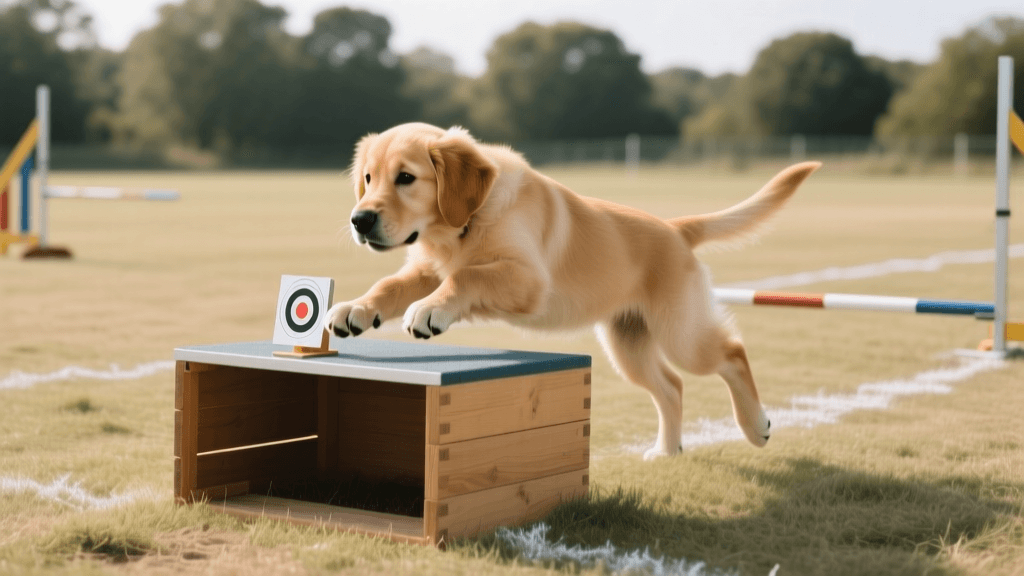
Perch work involves teaching your puppy to place their two front paws on a raised, stable disc or small box while keeping their hind feet on the ground. This exercise is the cornerstone of rear-end awareness. By pivoting around the perch using only their hind legs, your puppy develops the core strength and coordination necessary for future contact equipment like the dog walk and A-frame. Start with a low, non-slip disc (about 2 to 3 inches high) and use high-value treats to lure their front paws onto the target. Reward heavily for maintaining the position. As they gain confidence, you can slowly increase the height of the perch, never exceeding 6 inches for young puppies.
2. Backing Up (Rear End Awareness)
Most dogs naturally move forward, meaning their hind legs simply follow wherever their front legs lead. Teaching a puppy to back up in a straight line forces them to think about and consciously control their rear feet. This skill is invaluable for navigating tight course turns and lining up for weave pole entries later in life. To teach this, stand in a narrow hallway or use a physical barrier like a wall to prevent the puppy from swinging their hips sideways. Take one step toward your puppy, prompting them to take a step back. Mark and reward every single backward step. Gradually increase the criteria until the puppy can back up three to four steps in a straight line on command.
3. Flat Tunnels and Chutes
Tunnels are generally considered safe for puppies because they do not require jumping or jarring impacts. However, you must ensure the tunnel is fully extended, well-lit, and has secure footing. In 2026, many trainers use specialized, lightweight puppy tunnels that are shorter and wider than competition tunnels to prevent claustrophobia. Run through the tunnel with your puppy, using a cheerful voice and a toy to motivate them. Never force a hesitant puppy into a tunnel; instead, shorten the tunnel or use a fabric chute that opens easily. This builds immense confidence and teaches the puppy to drive forward away from the handler, a critical skill for distance work in agility.
4. Plank Walking (Ground Level)
Contact obstacles like the dog walk require dogs to touch a specific painted zone at the bottom of the ramp. To prepare for this, lay a narrow wooden plank completely flat on the grass or carpet. Teach your puppy to walk across the plank without stepping off the sides. This mimics the balance required for the dog walk without the dangerous height. Use a target mat at the end of the plank to teach the puppy to stop and place their front paws on the ground while their rear paws remain on the plank (the '2-on, 2-off' contact position). Keep training sessions under five minutes to maintain focus and prevent fatigue.
5. Wrap and Spin (Flatwork)
Wrapping involves teaching your puppy to tightly circle around a single jump stanchon or a cone, while spinning is a tight turn on the flat. These exercises teach the puppy how to collect their stride, shift their weight to their hindquarters, and change direction efficiently. Set up a single jump stanchon with no bar. Lure your puppy around the stanchon using a treat in your hand, keeping the treat close to their nose to encourage a tight turn. Reward immediately as they complete the circle. This flatwork translates directly to the tight, fast turns required on modern agility courses, saving seconds off your run time while keeping your dog safe.
2026 Recommended Gear for Puppy Foundation
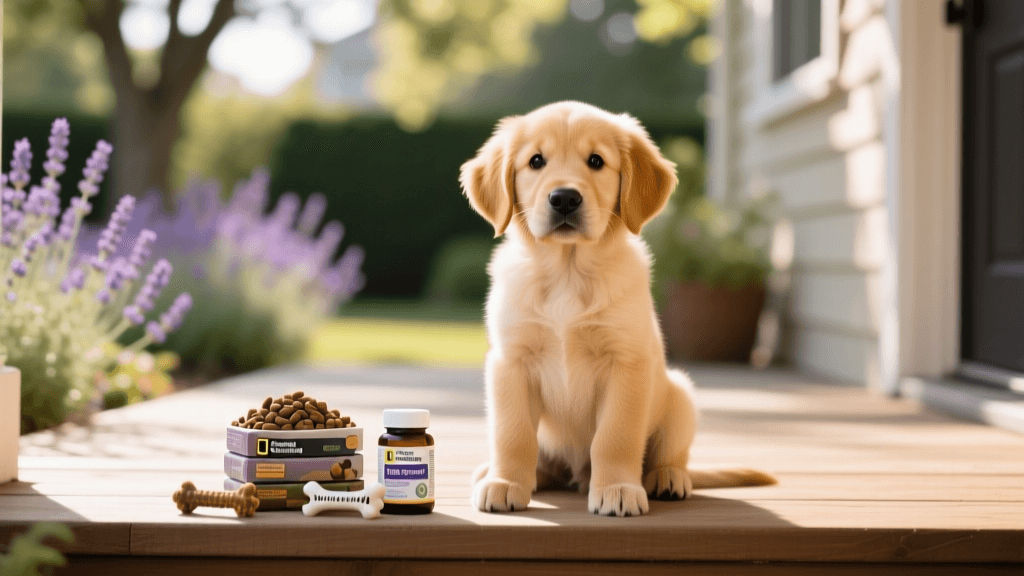
Investing in the right equipment ensures your puppy's safety and accelerates their learning curve. Below is a comparison of top-rated foundation gear available in 2026.
| Brand / Product | Primary Use | Estimated 2026 Price | Key Feature |
|---|---|---|---|
| Clean Run Paw Target | Perch work, front paw targeting | $48.00 | Non-slip rubberized surface prevents paw slipping |
| Agility Planet Puppy Tunnel | Confidence building, forward drive | $115.00 | Shorter 6-foot length with wide 24-inch diameter |
| Max200 Ground Plank | Contact zone prep, balance | $85.00 | Textured aluminum surface mimics competition grips |
| SmartPaw Targeting Mat | 2-on, 2-off contact position | $32.00 | High-visibility silicone with tactile feedback bumps |
Creating a Weekly Training Schedule
Puppies have incredibly short attention spans and tire easily, both mentally and physically. A successful 2026 puppy training schedule prioritizes frequency over duration. Aim for three to four short sessions per day, lasting no more than 3 to 5 minutes each. For example, you might do 3 minutes of perch work in the morning before breakfast, 3 minutes of backing up in the hallway during a commercial break, and 5 minutes of flat tunnel runs in the backyard before dinner. Always end the session on a positive note, while the puppy is still eager to play. Incorporate plenty of free play, socialization, and naps into their daily routine. Remember, mental fatigue from learning new targeting behaviors is just as exhausting for a puppy as a long physical run.
Conclusion
Raising a future sports dog is a marathon, not a sprint. By focusing on safe, ground-level foundation exercises during your puppy's first year, you are building a confident, body-aware athlete capable of tackling complex courses in the future. For more comprehensive guidelines on transitioning from foundation to full equipment, refer to the AKC's guide to agility training. Protect those growth plates, keep the training sessions joyful, and watch your puppy blossom into an incredible sports partner.
anouk-beaumont
All our authors care for dogs every day — read more of their work on the authors page.