Puppy Exercise Mistakes: What NOT to Do for Joint Health
Avoid these common puppy exercise mistakes that can cause permanent joint damage. Learn what NOT to do to protect your growing dog's growth plates.

The Hidden Danger: Understanding Puppy Growth Plates
Bringing a new puppy home is an exhilarating experience filled with boundless energy, playful zoomies, and a desperate desire to explore the world. However, in the enthusiasm of raising a healthy, active dog, many well-meaning owners accidentally commit critical errors that can lead to lifelong orthopedic issues. When it comes to puppy exercise and joint health, knowing what NOT to do is just as important as knowing what to do.
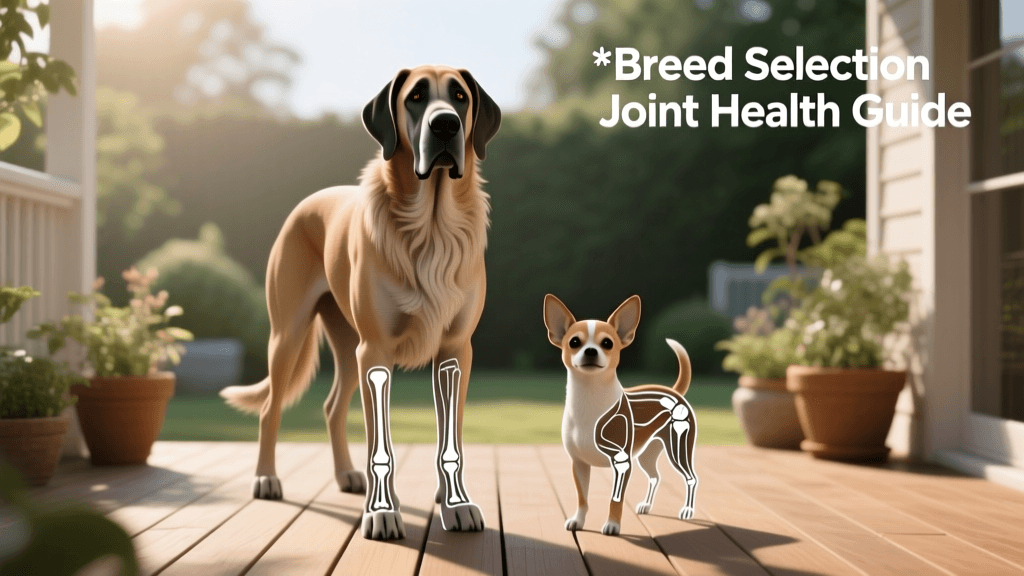
To understand why certain activities are dangerous, you must first understand the anatomy of a growing dog. Puppies possess specialized areas of developing cartilage at the ends of their long bones known as growth plates, or the physis. These plates are responsible for the lengthening of the bones as the puppy matures. Unlike mature bone, growth plates are soft, highly vascular, and incredibly vulnerable to shearing forces, impact, and excessive repetitive stress. Because they are the weakest part of the growing skeleton, they are highly susceptible to a specific type of injury known as a Salter-Harris fracture. If a growth plate is damaged prematurely, it can close unevenly or too early, resulting in permanently stunted, deformed, or misaligned limbs that will inevitably lead to early-onset osteoarthritis and chronic pain.
5 Critical Puppy Exercise Mistakes You Must Avoid
1. NEVER Force Your Puppy to Run or Jog
One of the most dangerous mistakes an owner can make is treating a puppy like a miniature adult dog. Many owners assume that leash walking, jogging, or biking alongside their puppy is a great way to burn off excess energy. This is entirely false. Forced exercise—where the dog must keep up with a human's pace or a mechanical device—prevents the puppy from self-regulating. Puppies will often run past the point of physical exhaustion simply to stay with their owner, placing immense, repetitive concussive forces on their developing joints. According to the American Kennel Club (AKC), structured, forced running should be strictly avoided until a dog's growth plates have fully closed, which typically occurs between 12 and 18 months of age, depending on the breed's size.
2. DO NOT Allow High-Impact Jumping or Frisbee
Vertical leaping is incredibly stressful on the canine skeletal system. When a dog jumps to catch a frisbee or leaps over agility hurdles, the force exerted on their joints upon landing can be several times their body weight. For a puppy with soft cartilage growth plates, this sudden, extreme compression and shearing force can easily cause micro-fractures or severe growth plate trauma. You must strictly prohibit activities that involve vertical jumping, catching objects in mid-air, or participating in high-impact dog sports like Flyball or agility until your veterinarian has confirmed via X-ray that all growth plates have completely fused.
3. STOP Letting Them Navigate Slippery Floors and Stairs
Environmental hazards inside the home are a silent killer of puppy joint health. Hardwood, tile, and laminate floors offer zero traction for a puppy's paws. When a puppy tries to turn quickly, stop, or play on a slippery surface, their legs can splay outward. This unnatural stretching places severe torque on the hip joints and can contribute to the development of hip dysplasia, particularly in genetically predisposed large breeds. Similarly, repeatedly climbing up and down steep staircases forces the puppy's hindquarters to bear unnatural loads. You should carry small puppies up and down stairs and use area rugs or interlocking foam mats to create traction pathways in your home.
4. NEVER Over-Supplement with Calcium or Joint Vitamins
It is a common misconception that feeding a growing puppy extra calcium or joint supplements will build stronger bones. In reality, this is a dangerous mistake that can cause severe orthopedic deformities. Large and giant breed puppies are particularly sensitive to excess dietary calcium, which disrupts the normal process of bone remodeling and cartilage turnover. Over-supplementation can lead to rapid, abnormal bone growth and conditions like osteochondrosis dissecans (OCD), where cartilage fails to properly convert to bone, leaving painful flaps inside the joint. The ASPCA's dog care and nutrition guidelines strongly emphasize that puppies fed a high-quality, AAFCO-approved commercial diet formulated specifically for large-breed growth already receive the exact, carefully balanced ratio of calcium and phosphorus they need. Never add calcium supplements without explicit veterinary instruction.
5. AVOID Early Spaying and Neutering in Large Breeds
While not strictly an 'exercise' mistake, the timing of your puppy's alteration plays a massive role in their orthopedic development. Sex hormones are the chemical signals that tell a dog's growth plates to close once they reach physical maturity. If you spay or neuter a large or giant breed dog before they reach puberty, those hormonal signals are removed. The growth plates remain open longer, causing the long bones to grow excessively. This results in a dog with disproportionately long limbs, altered joint angles, and a significantly higher risk of cranial cruciate ligament (CCL) tears and hip dysplasia. The American Veterinary Medical Association (AVMA) and recent veterinary orthopedic studies suggest delaying spay/neuter procedures for large breeds until they are physically mature, often between 12 to 18 months of age, to allow for proper skeletal development.
The 5-Minute Rule: A Safe Exercise Chart
Instead of forced running, veterinarians widely recommend the '5-Minute Rule' for structured puppy exercise. This rule dictates that a puppy should have no more than 5 minutes of structured, leashed exercise per month of age, up to twice a day. This provides a safe framework to explore the world without overtaxing developing joints.
| Puppy Age | Maximum Structured Walk (Twice Daily) | Recommended Activity Type |
|---|---|---|
| 2 Months (8 Weeks) | 10 Minutes | Leash introduction, garden sniffing, short potty breaks |
| 3 Months (12 Weeks) | 15 Minutes | Slow neighborhood walks, basic recall training on grass |
| 4 Months (16 Weeks) | 20 Minutes | Exploring new, flat terrains, socialization walks |
| 6 Months (24 Weeks) | 30 Minutes | Steady-paced walks, introduction to hiking on soft dirt |
| 9 Months (36 Weeks) | 45 Minutes | Moderate hikes, off-leash free play in safe, flat fields |
| 12+ Months | 60+ Minutes | Transition to adult exercise routines (vet clearance required) |
Note: Free play (like gentle wrestling with another puppy or sniffing in the yard) is generally self-regulated and does not strictly count toward this structured exercise limit, provided the puppy can rest whenever they choose.
Warning Signs of Joint Stress
Even with the best intentions, puppies can overexert themselves during play. You must be vigilant for the subtle signs of joint fatigue or growth plate stress. If you observe any of the following symptoms, cease all exercise immediately and consult your veterinarian:
- Limping or Favoring a Leg: Even a slight, intermittent limp is a major red flag.
- Bunny Hopping: Using both hind legs simultaneously while running often indicates hip discomfort.
- Reluctance to Rise: Hesitation or stiffness when standing up from a resting position, especially in the morning.
- Lagging Behind: If your puppy sits down or refuses to continue during a walk, they are exhausted. Do not pull them; carry them home.
- Swelling or Heat: Any joint that feels warm to the touch or appears visibly swollen requires immediate emergency veterinary care.
What TO Do Instead: Safe Mental Enrichment
Because you must limit physical exercise to protect their joints, you will likely find yourself with a puppy that has plenty of pent-up mental energy. The solution is not more physical exertion, but rather mental enrichment. Mental stimulation tires a puppy out just as effectively as a long run, without the orthopedic risks. Invest in snuffle mats, frozen Kong toys stuffed with puppy-safe peanut butter, and lick mats. Practice short, 5-minute positive reinforcement training sessions focusing on basic obedience, scent work, or puzzle toys. A 15-minute 'sniffari'—where you let the puppy dictate the pace of the walk and spend all their time investigating smells in the grass—is far more exhausting for a puppy's brain than a 30-minute brisk march down the sidewalk.
Conclusion
Protecting your puppy's joint health requires patience, discipline, and a willingness to ignore the pressure to 'hurry up' and do adult dog activities. By avoiding forced running, high-impact jumping, slippery floors, and dietary over-supplementation, you are actively safeguarding your dog's mobility for the next decade and beyond. Always consult with your primary care veterinarian to establish a customized growth and exercise plan tailored to your specific breed, ensuring your puppy transitions into a strong, pain-free, and active adult dog.
jonas-cole
All our authors care for dogs every day — read more of their work on the authors page.