The Ultimate Step-by-Step Guide to Puppy Crate Training
Master puppy crate training with our step-by-step guide. Learn crate sizing, scheduling, and positive reinforcement tips for a stress-free experience.
Why Crate Training is a Cornerstone of Puppy Care
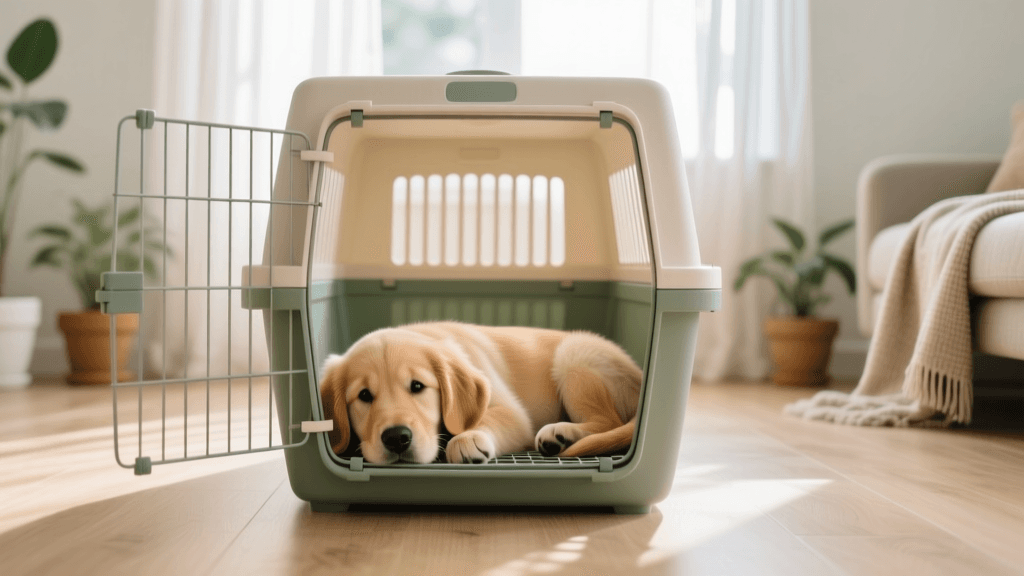
Crate training is often misunderstood by new pet owners who mistakenly equate a dog crate with a cage or a punishment zone. In reality, when introduced properly, a crate becomes a sanctuary for your dog. According to the American Kennel Club (AKC), dogs are natural den animals. A crate taps into this primal instinct, offering a secure, enclosed space where your puppy can retreat from the overwhelming sensory input of a busy household. Beyond psychological comfort, crate training is the most effective tool for housebreaking, preventing destructive chewing, and ensuring your puppy's safety when you cannot supervise them.
This comprehensive, step-by-step guide will walk you through the exact methodology for crate training your new puppy, complete with product recommendations, timing schedules, and troubleshooting tips backed by canine behavioral science.
Step 1: Selecting and Sizing the Perfect Crate
Before you begin training, you must invest in the right equipment. A crate that is too large will allow your puppy to eliminate in one corner and sleep in the other, entirely defeating the purpose of den instinct-based potty training. Conversely, a crate that is too small will cause physical discomfort and anxiety.
How to Measure for a Crate
To find the ideal dimensions, use a soft tape measure to measure your puppy from the tip of their nose to the base of their tail, and from the floor to the top of their head (or ears, if they are erect). Add 2 to 4 inches to both measurements. Because puppies grow rapidly, the most cost-effective solution is to purchase an adult-sized wire crate with an adjustable divider panel. For example, a 36-inch MidWest Homes for Pets iCrate (typically costing between $55 and $75) is perfect for medium-sized breeds like Beagles or Cocker Spaniels, while a 42-inch crate is required for Golden Retrievers or German Shepherds.
Comparing Crate Types
Not all crates serve the same purpose. Below is a comparison chart to help you choose the best option for your specific lifestyle and budget.
| Crate Type | Average Cost | Pros | Cons | Best For |
|---|---|---|---|---|
| Wire Crate (e.g., MidWest iCrate) | $45 - $85 | Excellent ventilation, foldable, divider panels included | Heavy, drafty, visually intrusive | At-home training, warm climates, growing puppies |
| Plastic Airline Crate (e.g., Petmate Sky Kennel) | $50 - $130 | Cozy den feel, airline-approved, blocks visual stimuli | Less airflow, harder to clean, no dividers | Travel, anxious dogs, drafty homes |
| Soft-Sided (e.g., EliteField) | $35 - $75 | Lightweight, highly portable, easy to store | Easily destroyed by chewing, hard to sanitize | Car travel, fully trained adult dogs |
Step 2: Creating a Positive Association
The ASPCA strongly recommends that you never force your puppy into the crate. Forcing them creates immediate negative associations, leading to long-term confinement anxiety. Instead, you must make the crate the most rewarding place in your home.
The KONG Method
Purchase a KONG Classic rubber toy ($15 to $20 depending on size) and fill it with a high-value, dog-safe treat mixture. A great recipe is plain, xylitol-free peanut butter mixed with kibble and frozen overnight. Place the stuffed KONG at the very back of the crate. Leave the door completely open or even detached for the first three days. Allow your puppy to enter, eat the treat, and exit freely. This builds a neurological link between the crate and high-value rewards.
Feeding Meals in the Crate
Once your puppy is comfortably entering the crate for treats, begin feeding their regular meals inside. Start with the bowl near the entrance, and gradually push it further back with each subsequent meal. Once they are eating at the back of the crate without hesitation, gently close the door while they eat, and open it the moment they finish. Over the next few days, begin leaving the door closed for 5 to 10 minutes post-meal while you sit quietly nearby.
Step 3: Building Duration and Distance
Once your puppy is happily eating and relaxing in the crate with the door closed, it is time to build duration and introduce distance. This step requires immense patience. If your puppy whines, you have likely increased the time or distance too quickly. Take a step back in your training.
- Day 1-2: Command your puppy to 'Kennel' or 'Crate'. Give a high-value treat (like Zuke's Mini Naturals, approx. $6 a bag) once they are inside. Close the door and sit directly next to the crate for 10 minutes. Release and praise.
- Day 3-4: Repeat the process, but stand up and move to the other side of the room for 15 minutes. Do not make eye contact or speak to the puppy while they are crated.
- Day 5-6: Step out of the room entirely for 5 minutes. Return calmly, wait for a moment of silence, then open the door. Keep greetings incredibly low-key to avoid creating excitement spikes.
- Day 7: Leave the house for 30 minutes. Ensure the puppy has been exercised and has eliminated before crating. Leave a white noise machine playing near the crate to mask outside sounds.
Step 4: Mastering Overnight Confinement
Nighttime crate training is often the most stressful phase for new owners. Puppies have tiny bladders and lack the physical capacity to hold their urine for a full eight hours. The general rule of thumb for puppy bladder control is their age in months plus one. Therefore, an 8-week-old (2-month-old) puppy can only hold their bladder for approximately 3 hours.
The Nighttime Schedule
Place the crate in your bedroom for the first few weeks. Hearing your breathing and smelling your scent will reduce separation anxiety. Set an alarm for 2:00 AM to take the puppy out for a strictly business potty break. Keep the lights dim, do not play, and return them to the crate immediately after they eliminate. By 12 weeks of age, you can usually drop the 2:00 AM alarm, and by 16 weeks, most puppies can sleep from 11:00 PM to 6:00 AM without an accident.
Troubleshooting Common Crate Training Issues
Even with meticulous step-by-step execution, you will likely encounter behavioral hurdles. Here is how to handle the most common issues.
The Extinction Burst (Whining and Barking)
When a puppy realizes that crying no longer results in you opening the crate door, they will often try louder, more frantic barking before giving up. In behavioral psychology, this is known as an 'extinction burst'. The Humane Society of the United States advises owners to completely ignore attention-seeking whining. If you open the crate while the puppy is barking, you have just taught them that barking is the key to unlocking the door. Only release the puppy during a brief pause in the noise.
'A crate is not a punishment; it is a sanctuary. When introduced correctly, it taps into a dog's natural denning instinct, providing a secure retreat from household chaos. Consistency and positive reinforcement are your greatest allies.'
Distinguishing Potty Needs from Attention Seeking
How do you know if a whining puppy needs to potty or just wants out? Establish a specific verbal cue for potty time, such as 'Go Potty'. If the puppy whines at 3:00 AM, take them outside on a leash immediately. If they do not eliminate within 3 minutes, bring them back inside and place them back in the crate. They will quickly learn that nighttime whining only results in a boring, brief outdoor trip, not playtime.
Final Thoughts on Crate Training Success
Crate training is a marathon, not a sprint. By investing in the right equipment, utilizing high-value rewards, and adhering to a strict, progressive schedule, you will foster a lifelong love for the crate. Remember that the crate should never be used as a time-out for bad behavior; its reputation as a safe haven must remain impeccably intact. With patience and consistency, your puppy will soon view their crate as their favorite bedroom in the house, granting you peace of mind and granting them a secure, happy den of their own.
hannah-wickes
All our authors care for dogs every day — read more of their work on the authors page.