Step-by-Step Puppy Crate Training Guide for Success
Master puppy crate training with our step-by-step guide. Learn crate sizing, daily schedules, and positive reinforcement tips for a stress-free experience.

Why Crate Training is Essential for Your Puppy
Bringing home a new puppy is an exciting milestone, but it also comes with a unique set of challenges, from potty training to preventing destructive chewing. Crate training is one of the most effective, foundational tools you can introduce during your puppy's first year. When done correctly, a crate taps into a dog's natural den instinct, providing them with a safe, secure sanctuary where they can relax and sleep. Furthermore, it is an invaluable aid in establishing a reliable potty training schedule and keeping your curious pup safe when unsupervised.
In this comprehensive, step-by-step training guide, we will walk you through the exact process of crate training your puppy, including product recommendations, precise measurements, and daily scheduling tips to ensure a tear-free, stress-free experience.
Step 1: Selecting the Perfect Crate
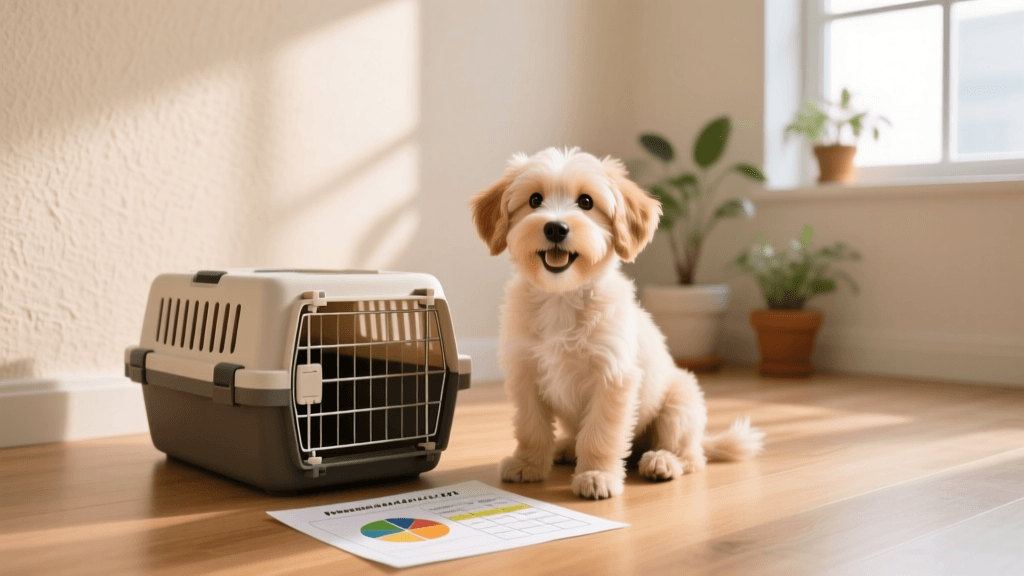
Before you begin training, you need the right equipment. The crate should be large enough for your puppy to stand up, turn around, and lie down comfortably, but not so large that they can eliminate in one corner and sleep in the other. To find the ideal dimensions, measure your puppy from the floor to the top of their head, and from the tip of their nose to the base of their tail. Add 2 to 4 inches to both measurements to determine the minimum interior crate size.
Types of Crates and Cost Breakdown
- Wire Crates (e.g., MidWest Homes for Pets iCrate): Costing between $45 and $75, wire crates offer excellent ventilation and visibility. They typically come with a divider panel, which is crucial for resizing the space as your puppy grows. They also fold flat for easy storage.
- Plastic Crates (e.g., Petmate Ultra Vari Kennel): Priced around $40 to $60, plastic crates provide a more enclosed, den-like feel. They are highly recommended for travel and car rides but offer less visibility and airflow than wire models.
- Soft-Sided Crates: While lightweight and portable (approx. $30 to $50), these are strictly for fully trained adult dogs. Puppies will easily chew through the mesh and escape, making them unsuitable for early training.
Step 2: Creating a Positive Environment
Location and setup are critical. Place the crate in a high-traffic family area, such as a corner of the living room or near your bed at night, so your puppy doesn't feel isolated. Outfit the crate with a washable, chew-resistant fleece pad. Avoid thick, plush beds initially, as puppies going through the teething phase may shred and ingest the stuffing, leading to dangerous intestinal blockages.
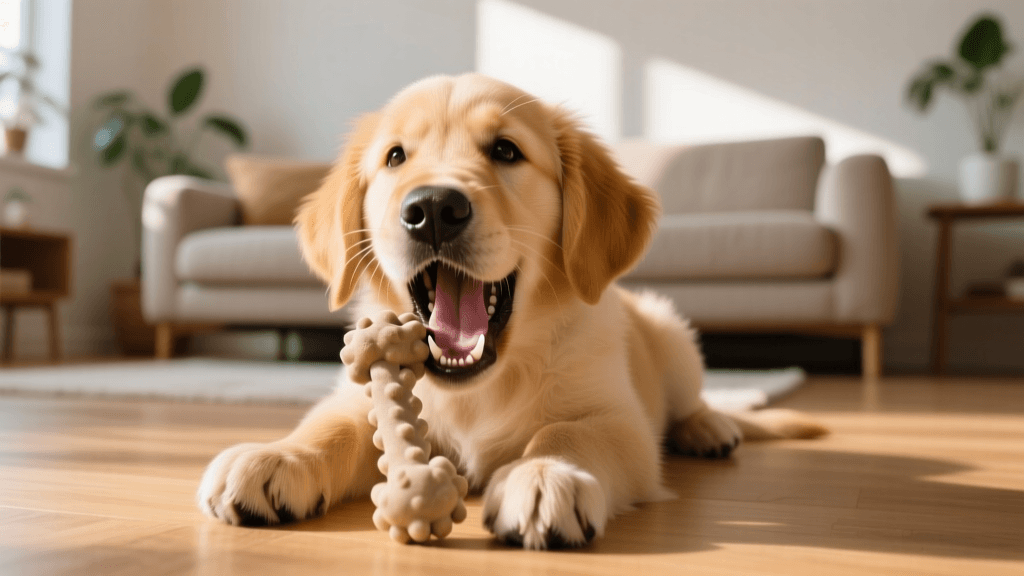
To build a positive association, introduce a dedicated crate toy. The KONG Classic Puppy Toy (approx. $15) is an industry staple. Stuff it with puppy-safe peanut butter or plain yogurt and freeze it overnight. This provides a long-lasting, soothing distraction that keeps your puppy engaged and happy while inside the crate.
Step 3: The Introduction Phase
Never force your puppy into the crate or use it as a punishment. According to the American Kennel Club, a crate must always remain a positive sanctuary. Start with the door completely open or removed.
- Treat Tossing: Use high-value, low-calorie training treats like Zuke's Mini Naturals (approx. $6 per bag). Toss a treat near the crate opening, then further inside, encouraging your puppy to step in voluntarily to retrieve it.
- Meal Feeding: Begin feeding your puppy their regular meals inside the crate. Place the bowl at the very back. This builds a strong psychological link between the crate and positive, necessary experiences.
- Verbal Cues: Introduce a consistent command like 'Crate' or 'Kennel' every time they enter, followed immediately by praise and a treat.
Step 4: Building Duration and Closing the Door
Once your puppy is comfortably entering the crate to eat and explore, it is time to close the door. Start with micro-sessions. Close the door while they are eating their meal, and open it the moment they finish. Next, use the frozen KONG toy to keep them occupied. Close the door and sit quietly nearby for 5 minutes. If they remain calm, offer quiet praise.
Gradually increase the duration by 5 to 10 minutes per session. Once your puppy can comfortably stay in the closed crate for 30 minutes with you in the room, begin leaving the room for short intervals (1 to 5 minutes). Return calmly without making a big fuss, and let them out only when they are quiet. This prevents them from learning that whining or barking summons your attention.
Step 5: Overnight Crate Training and Potty Schedules
Nighttime crate training requires dedication and a strict schedule. An 8-week-old puppy typically lacks the bladder control to sleep through the night. You will need to set alarms for potty breaks—usually around 2:00 AM and 5:00 AM.
When the alarm goes off, take your puppy out of the crate on a leash. Keep the lights dim, avoid eye contact, and do not play. Walk them directly to their designated outdoor potty spot. Once they eliminate, offer a treat and immediately return them to the crate. The Humane Society of the United States emphasizes that keeping nighttime potty trips boring and business-like teaches the puppy that nighttime is for sleeping, not playing.
Puppy Age and Crate Time Guidelines
It is vital not to exceed a puppy's physical bladder capacity. The ASPCA recommends adhering to strict time limits to prevent accidents and distress. Use the chart below to guide your daily schedule:
| Puppy Age | Max Daytime Crate Time | Overnight Potty Breaks Needed |
|---|---|---|
| 8-10 Weeks | 1-2 Hours | 2-3 Breaks |
| 11-14 Weeks | 2-3 Hours | 1-2 Breaks |
| 15-16 Weeks | 3-4 Hours | 0-1 Breaks |
| 6+ Months | 4-6 Hours | 0 Breaks |
Troubleshooting Common Whining and Barking
Whining is the most common hurdle in crate training. Before reacting, ask yourself: Does my puppy need to eliminate? If it has been more than two hours, or if they just woke up from a deep sleep, take them outside immediately on a leash. If they eliminate, reward them. If they do not eliminate within 5 minutes, bring them back inside and place them directly back into the crate.
If you know your puppy has recently relieved themselves and is simply whining for attention, you must practice 'extinction.' This means completely ignoring the whining. Do not speak to them, do not look at them, and do not let them out. The moment they are quiet for even three seconds, calmly praise them and let them out. Consistency is the bedrock of successful puppy training.
Conclusion
Crate training is a marathon, not a sprint. By selecting the right equipment, utilizing high-value rewards, and maintaining a strict, predictable schedule, you will help your puppy view their crate as a beloved personal den. Stick to these steps, remain patient, and you will set the foundation for a well-adjusted, house-trained adult dog.
aaron-whyte
All our authors care for dogs every day — read more of their work on the authors page.