The First-Time Owner's Guide to Puppy Crate Training
Master puppy crate training with our first-time owner guide. Learn crate sizing, step-by-step schedules, and top product picks for a stress-free start.
Welcome to Dog Ownership: Why Crate Training Matters
Bringing a new puppy home is one of life’s greatest joys, but it can also be overwhelming for first-time owners. Between the chewed shoes, midnight potty breaks, and general chaos, establishing a safe haven for your dog is paramount. This is where crate training comes in. Far from being a "jail" for your dog, a properly introduced crate taps into a dog’s natural denning instinct, providing them with a secure sanctuary while accelerating housebreaking and preventing destructive behavior.
According to the American Kennel Club (AKC), crate training is one of the most effective methods for housebreaking a puppy, as dogs naturally avoid soiling their sleeping quarters. However, the process requires patience, consistency, and the right equipment. This comprehensive guide will walk you through everything you need to know to successfully crate train your new puppy.
Choosing the Right Crate: Types and Comparison
Walking into a pet store or browsing online can be daunting when faced with dozens of crate options. For a first-time owner, selecting the right material is crucial for both durability and your puppy’s comfort. Below is a comparison of the three most common crate types.
| Crate Type | Average Cost | Pros | Cons | Best For |
|---|---|---|---|---|
| Wire/Metal | $50 - $90 | Excellent ventilation, foldable, includes divider panels, easy to clean. | Heavy, can be noisy, visually obtrusive in living spaces. | First-time owners, housebreaking, warm climates. |
| Plastic (Airline) | $40 - $75 | Cozy/den-like, blocks visual stimuli, airline-approved. | Poor ventilation, harder to clean, cannot be folded flat. | Anxious dogs, travel, cooler climates. |
| Soft-Sided | $35 - $60 | Lightweight, portable, aesthetically pleasing. | Easily destroyed by chewing, difficult to clean accidents, not secure. | Fully trained adult dogs, car travel, shows. |
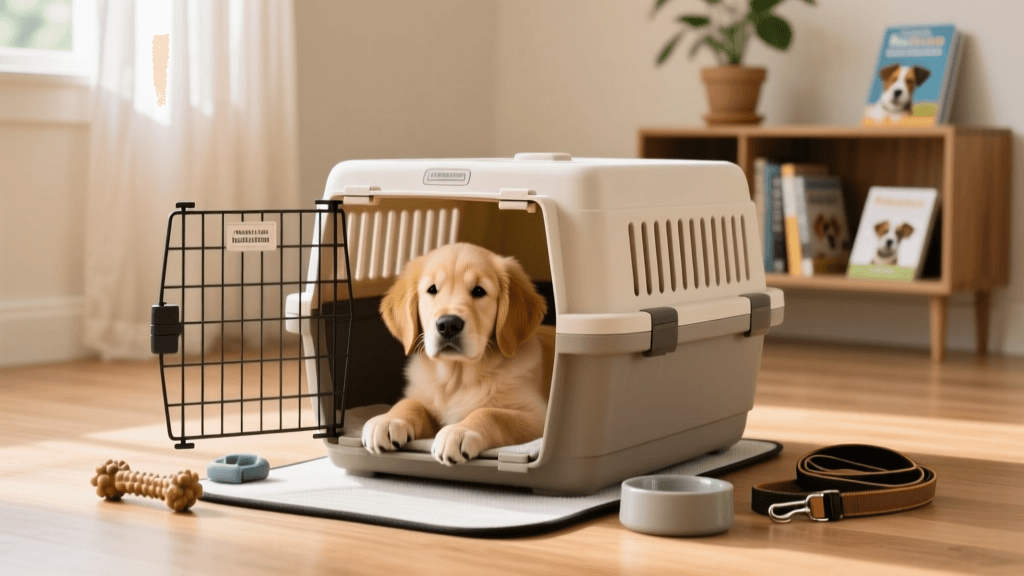
First-Timer Recommendation: Start with a heavy-duty wire crate, such as the MidWest Homes for Pets iCrate. Wire crates offer maximum visibility so your puppy doesn't feel isolated from the family, and they almost always come with a metal divider panel, which is essential for growing puppies.
Sizing Your Crate for Success
A common mistake first-time owners make is buying a crate that is far too large, thinking they are giving their puppy extra room to play. The ASPCA emphasizes that a crate should only be large enough for the dog to stand up without crouching, turn around comfortably, and lie down stretched out.
If the crate is too large, your puppy will designate one corner for sleeping and the opposite corner for a bathroom, completely defeating the purpose of housebreaking. If you purchase a wire crate meant for an adult dog, use the included divider panel to block off the back half of the crate. As your puppy grows, move the divider back a few inches every 3 to 4 weeks.
- Small Breeds (e.g., Chihuahua, Pomeranian): 24" L x 18" W x 21" H
- Medium Breeds (e.g., Beagle, Cocker Spaniel): 30" L x 21" W x 24" H
- Large Breeds (e.g., Labrador, Golden Retriever): 42" L x 28" W x 31" H
Essential First-Timer Shopping List
To set your puppy up for success, you will need a few specific supplies beyond the crate itself. Budget approximately $80 to $120 for these starter essentials:
- KONG Classic Puppy Toy ($12 - $15): Made from softer, puppy-specific rubber. Stuff it with a mixture of kibble and plain pumpkin puree, then freeze it. This provides a long-lasting distraction that builds positive associations with the crate.
- SmartPetLove Snuggle Puppy ($40 - $45): A plush toy featuring a battery-operated heartbeat and heat pack. This mimics the feeling of sleeping next to littermates and drastically reduces first-night whining.
- Nature’s Miracle Enzymatic Cleaner ($10 - $15): Accidents will happen. Standard household cleaners do not break down uric acid. An enzymatic cleaner ensures the scent is completely eradicated so your puppy isn't drawn back to the same spot.
- Washable Crate Mat ($15 - $25): Avoid thick, plush beds initially, as teething puppies will shred and ingest them. Opt for a thin, durable, machine-washable fleece pad.
The 3-Week Step-by-Step Crate Training Schedule
Crate training is a marathon, not a sprint. Forcing a terrified puppy into a crate and locking the door will create lifelong phobias. Follow this gradual conditioning schedule.
Week 1: Building Positive Associations
Leave the crate door open and secured so it doesn't swing shut. Place high-value treats (like small pieces of boiled chicken or freeze-dried liver) near the entrance, then gradually further inside. Feed your puppy all of their daily meals inside the crate with the door wide open. The goal this week is for the puppy to willingly enter the crate without any physical prompting.
Week 2: Introducing the Door and Duration
Once your puppy is happily eating meals inside, gently close the door while they eat. Open it the moment they finish. Gradually increase the time the door remains closed after meals by 1-minute increments. Introduce a verbal cue like "Crate" or "Kennel" right before they walk in. Give them a frozen KONG to chew on while the door is closed for 5 to 10 minutes while you sit quietly in the same room.
Week 3: Distance and Departures
Now that your puppy is comfortable with the closed door, begin stepping out of the room for very short intervals (30 seconds to 2 minutes). Return before they begin to whine. Gradually extend your absences. The Humane Society of the United States advises keeping departures and returns low-key to prevent separation anxiety. Do not make a grand entrance when you return; simply let them out calmly.
Nighttime Survival Guide for New Owners
Nighttime is usually the hardest hurdle for first-time owners. An 8-week-old puppy has a bladder capacity of roughly 2 hours. You must set an alarm to take them out, or they will soil the crate, ruining your training progress.
"A general rule of thumb for puppy bladder control is their age in months plus one. Therefore, a 2-month-old puppy can hold it for approximately 3 hours maximum, but setting a 2-hour alarm is much safer for preventing accidents."
Nighttime Routine:
- 8:00 PM: Remove water bowl to prevent overnight over-hydration.
- 9:30 PM: Final outdoor potty break. Keep it boring and business-like.
- 10:00 PM: Puppy goes into the crate with the Snuggle Puppy. Cover the top and sides of a wire crate with a light blanket to create a dark, den-like environment.
- 2:00 AM: Alarm goes off. Carry the puppy outside (do not let them walk, or they will get distracted). Potty, praise, and immediately back into the crate.
- 6:00 AM: Wake up, immediate outdoor potty break, followed by breakfast.
Troubleshooting Common Mistakes
Even with a perfect plan, first-time owners often encounter roadblocks. Here is how to handle the most common issues:
The Puppy Won't Stop Whining
If you have ensured the puppy has been pottied, exercised, and is not in physical distress, do not let them out while they are whining. Releasing a whining puppy teaches them that making noise is the key to freedom. Wait for a solid 5 to 10 seconds of absolute silence, then open the door. If the whining is severe, you may need to move the crate closer to your bed initially, gradually inching it to its permanent location over a few weeks.
Potty Accidents Inside the Crate
If your puppy soils the crate, your crate is likely too large, or you are leaving them in it for too long. Puppies under 4 months should not be crated for more than 3 to 4 hours during the day. Immediately wash the bedding in hot water and clean the plastic tray with an enzymatic cleaner. Never punish a puppy for an accident after the fact; they will not connect your anger with the act of going to the bathroom, and it will only make them fear you.
Chewing the Crate Bars
Bar chewing can lead to broken teeth and damaged gums. This usually stems from boredom or a lack of appropriate chew outlets. Ensure your puppy is getting adequate physical exercise and mental enrichment before being crated. Provide a safe, long-lasting chew, such as a Yak cheese chew or a frozen KONG, to redirect their biting instincts.
Conclusion
Crate training requires an investment of time, patience, and consistency, but the payoff is immense. By providing your puppy with a structured environment and a safe space to call their own, you are laying the foundation for a well-adjusted, confident, and house-trained adult dog. Stick to the schedule, utilize the right tools, and remember that every experienced dog owner was once a confused first-timer. You and your puppy will get through this together.
anouk-beaumont
All our authors care for dogs every day — read more of their work on the authors page.