Puppy Care Myths Debunked: Essential First-Year Facts
Discover the truth behind common puppy care myths. We debunk false advice on socialization, potty training, and teething with expert-backed facts.

The Danger of Well-Meaning Puppy Myths
Bringing a new puppy home is one of life’s most exciting milestones, but it is also a period riddled with conflicting advice. From well-meaning neighbors to outdated internet forums, new dog owners are bombarded with 'rules' that are not only scientifically inaccurate but can actively harm a puppy’s behavioral and physical development. The first year of a dog's life is a critical window for neurological development, trust-building, and habit formation. Relying on outdated folklore rather than veterinary science can lead to severe behavioral issues, anxiety, and even the tragic statistic of behavioral euthanasia.
At Paws-Tales, we believe in empowering owners with evidence-based, actionable puppy care strategies. Below, we debunk three of the most pervasive and damaging myths surrounding early puppy socialization, potty training, and teething, replacing them with expert-backed facts and precise, actionable steps you can implement today.
Behavioral issues, rather than infectious diseases, are the leading cause of death for puppies under one year of age. Early, safe intervention is critical.
Myth #1: Wait Until All Vaccines Are Complete to Socialize
The Myth
You should keep your puppy isolated indoors and away from other dogs or public spaces until they have received their final round of vaccinations, usually around 16 weeks of age, to protect them from Parvovirus and Distemper.
The Fact
While disease prevention is vital, isolating a puppy during their primary socialization window is a massive mistake. The American Veterinary Society of Animal Behavior (AVSAB) and the American Kennel Club (AKC) emphasize that the most critical period for puppy socialization occurs between 3 and 14 weeks of age. If a puppy is not exposed to a wide variety of people, environments, sounds, and other vaccinated dogs during this window, they are at a significantly higher risk of developing lifelong fear, reactivity, and aggression.
Actionable Advice: Safe Early Socialization
You do not need to risk your puppy's health to socialize them. You simply need to manage their environment intelligently.
- Enroll in Puppy Kindergarten: Sign up for a class that requires proof of at least the first set of vaccines and maintains strict sanitization protocols. Expect to pay between $120 and $200 for a 6-week course.
- Use a Puppy Sling: Carry your puppy in a structured canvas sling (costing around $25-$40) through busy outdoor shopping centers or parks. This exposes them to the sights and sounds of the world without their paws touching high-risk public soil.
- Host Controlled Playdates: Invite friends with fully vaccinated, temperament-tested adult dogs to your private, fenced backyard.
- Sound Desensitization: Play recordings of thunderstorms, fireworks, and city traffic at a low volume (40-50 decibels) while feeding your puppy high-value treats, gradually increasing the volume over several weeks.
Myth #2: Rubbing Their Nose in Accidents Teaches Potty Training
The Myth
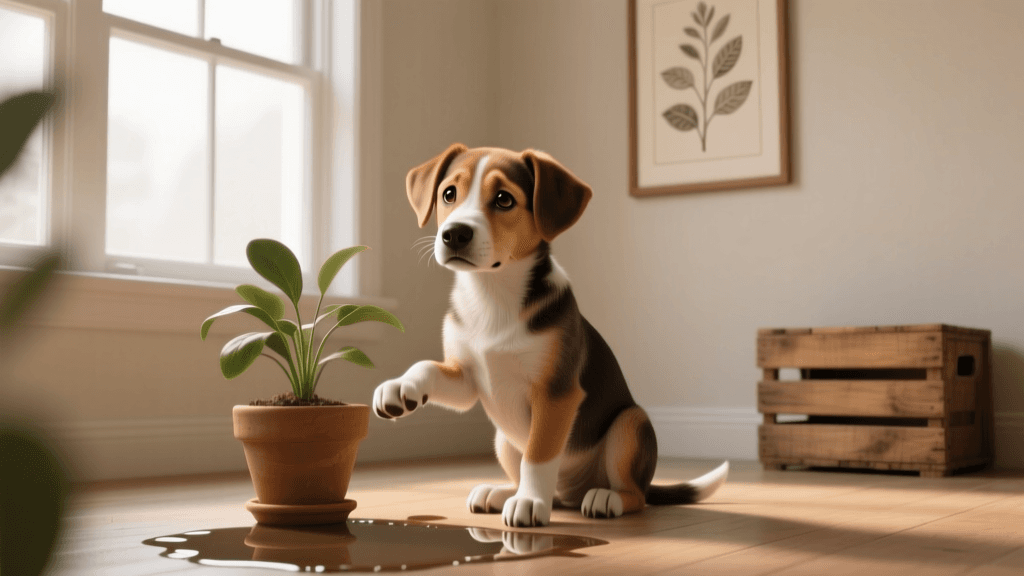
If a puppy has an accident on the rug, rubbing their nose in the urine or feces and scolding them will teach them that going to the bathroom inside is wrong.
The Fact
Dogs do not possess the cognitive ability to connect a delayed punishment with an action that occurred minutes or even seconds ago. According to the ASPCA, rubbing a puppy's nose in their waste does not teach them where to eliminate; it only teaches them to fear you. The puppy learns that eliminating in front of humans is dangerous, which leads to them hiding behind furniture or eating their own feces to destroy the evidence.
Actionable Advice: Positive Reinforcement and Enzymatic Cleaning
Successful housebreaking relies on management, routine, and positive reinforcement.
- Invest in an Enzymatic Cleaner: Standard household cleaners do not break down uric acid crystals. Dogs can smell the residual urine and will re-mark the spot. Purchase a dedicated enzymatic cleaner like Nature's Miracle Advanced Stain and Odor Eliminator (approximately $15 for a 32oz bottle). Saturate the area and let it air dry completely.
- The 2-Second Reward Rule: You must reward your puppy within 2 seconds of them finishing their elimination outdoors. Keep a pouch of high-value, low-calorie treats (like Zuke's Mini Naturals) by the door. Verbal praise alone is often insufficient for early training.
- Strict Crate Sizing: A crate should only be large enough for the puppy to stand up, turn around, and lie down. If it is too large, they will designate one corner for sleeping and another for eliminating. Use a wire crate with an adjustable divider panel (costing $40-$70) to grow with your puppy.
- Establish a Schedule: Take an 8-to-12-week-old puppy outside every 1 to 2 hours, immediately after waking up, after every meal, and after vigorous play sessions.
Myth #3: Puppies Will Naturally Outgrow Nipping and Chewing
The Myth
Mouthing, nipping, and destructive chewing are just 'puppy phases' that they will naturally outgrow as they mature into adult dogs.
The Fact
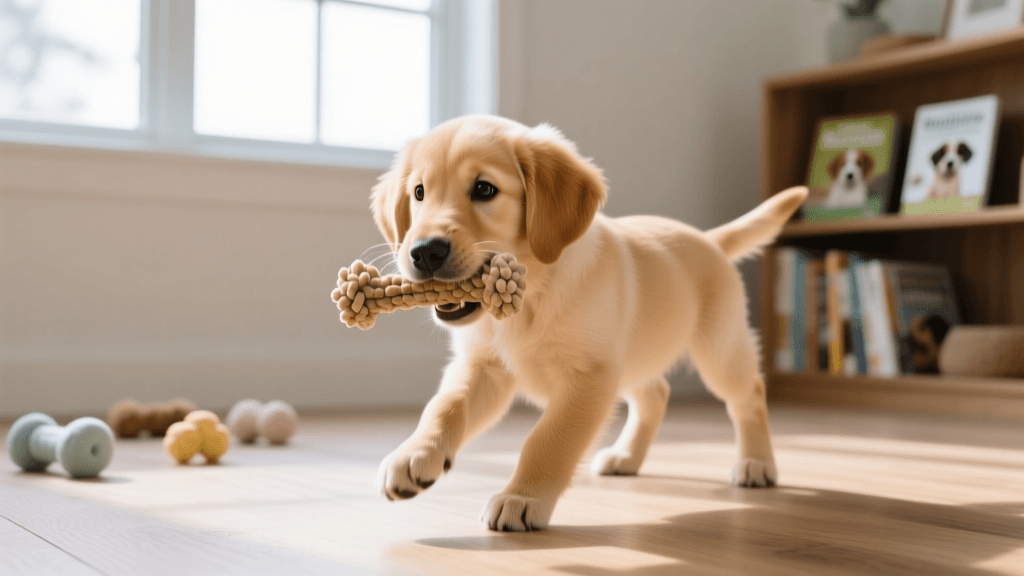
Puppies explore the world using their mouths, and between 12 and 16 weeks, their sharp deciduous (baby) teeth begin to fall out, causing immense gum discomfort. However, if nipping is not actively managed and redirected, it does not disappear; it evolves. A puppy that learns that biting human hands results in play or attention will become an adult dog that bites when overstimulated. The Humane Society of the United States stresses that teaching 'bite inhibition' and providing appropriate chewing outlets is a mandatory part of early puppy care.
Actionable Advice: Redirection and Soothing Techniques
Never use physical punishment to stop biting, as this increases anxiety and defensive aggression. Instead, manage the behavior through redirection and environmental enrichment.
- The 'Ouch' and Redirect Method: When puppy teeth touch human skin, let out a high-pitched 'Ouch!' to mimic a littermate's yelp, immediately stand up, and withdraw attention for 10 seconds. Then, return and offer an appropriate chew toy.
- Cold Therapy for Teething: Freeze a KONG Classic Puppy (the blue or pink rubber versions, priced around $12) stuffed with plain, xylitol-free Greek yogurt and mashed bananas. The cold rubber soothes inflamed gums, while the mental effort of extracting the food tires them out.
- Bitter Apple Spray: For baseboards and furniture legs, apply a deterrent spray like Grannick's Bitter Apple ($10). Reapply daily for two weeks to break the chewing habit.
- Rotate Toys: Puppies get bored easily. Keep only 3 or 4 toys available at a time and rotate them weekly to maintain novelty and interest.
Quick Reference: Puppy Care Myths vs. Facts
| Care Category | The Dangerous Myth | The Scientific Fact | Essential Tool / Action |
|---|---|---|---|
| Socialization | Isolate until 16 weeks (post-vaccines). | The critical socialization window closes at 14 weeks; isolation causes fear. | Puppy sling for safe public exposure. |
| Potty Training | Rub nose in accidents to punish. | Creates fear of the owner; dogs cannot connect delayed punishment to the act. | Enzymatic cleaner & 2-second treat reward. |
| Teething | Nipping is a phase they outgrow. | Unmanaged nipping becomes adult biting; puppies need gum relief and boundaries. | Frozen KONG toy & redirection protocol. |
The True Cost of Bad Advice
Falling for puppy care myths does not just result in temporary frustration; it carries significant long-term costs. A puppy that is isolated during the critical socialization window may develop severe leash reactivity, requiring private behavioral modification sessions that can cost upwards of $150 per hour. Similarly, relying on punishment-based potty training can lead to chronic submissive urination or indoor marking, potentially ruining carpets and requiring professional cleaning services.
By discarding outdated myths and embracing positive, science-backed methodologies, you are investing in a confident, well-adjusted, and deeply bonded companion. The first year requires patience, consistency, and a willingness to learn, but the reward of a well-mannered adult dog is worth every ounce of effort.
priya-sutaria
All our authors care for dogs every day — read more of their work on the authors page.