From Landshark to Gentle Companion: Puppy Biting Transformation
Discover how to transform your biting, teething puppy landshark into a gentle companion. Expert tips, timelines, and product recommendations for puppy care.

The 'Before' Snapshot: Surviving the Puppy Landshark Phase
Bringing home a new puppy is often romanticized as a period of endless cuddles, playful romps, and heartwarming companionship. However, the stark reality for many new dog owners between the ages of eight and sixteen weeks is the emergence of the dreaded 'puppy landshark.' During this developmental window, your adorable furball may seem determined to chew through your ankles, ruin your favorite clothes, and leave your hands covered in tiny puncture wounds. This intense nipping and biting phase is incredibly common, yet it remains one of the primary reasons frustrated owners seek professional behavioral help or, tragically, consider rehoming their pets.
The 'before' stage of this transformation is characterized by chaos. You might find yourself walking on eggshells, wearing thick denim jeans just to sit on the couch with your puppy, and feeling a deep sense of guilt for becoming frustrated with an animal that simply does not understand the rules of human interaction. The sharp, needle-like deciduous teeth of a young puppy are designed for tearing meat in the wild, and when applied to human skin, they cause genuine pain. Understanding that this behavior is not rooted in aggression, but rather in natural exploration and developmental discomfort, is the first critical step toward a peaceful household.
Understanding the 'Why': The Science of Puppy Mouthing
To successfully navigate the transformation from a nipping menace to a gentle companion, we must first understand the biological and psychological drivers behind the behavior. Puppies explore their environment much like human toddlers do with their hands—they use their mouths. Every texture, taste, and reaction is cataloged through mouthing.
Furthermore, teething plays a massive role in this behavior. According to the ASPCA, puppy teething is a rigorous process that begins when their baby teeth start to erupt at around three to four weeks of age and continues until their adult teeth are fully set by six months. The gums become inflamed, itchy, and highly sensitive. Chewing provides counter-pressure that temporarily relieves this oral discomfort.
In a natural litter setting, puppies learn 'bite inhibition' from their siblings. If one puppy bites too hard during play, the other will yelp and stop playing. This immediate feedback teaches the biter to soften their jaw pressure. When a puppy is separated from its litter and enters a human home, the human family must take over the role of teaching this vital life skill.
The Transformation Blueprint: Your Step-by-Step Action Plan
Transforming your puppy's behavior requires consistency, patience, and the right tools. Here is a highly actionable, four-step blueprint to guide your puppy through the landshark phase.
Step 1: Teaching Bite Inhibition via the 'Ouch' Method
When your puppy's teeth make contact with your skin, immediately emit a high-pitched, genuine-sounding yelp or say 'Ouch!' in a sharp, surprised tone. This mimics the feedback of a littermate. Immediately after the yelp, withdraw your attention completely. Stand up, fold your arms, and look away for exactly 15 to 30 seconds. If the puppy stops nipping and offers a calm behavior, such as sitting or licking, reward them with verbal praise and resume gentle play. This teaches the puppy that human skin is entirely off-limits and that biting results in the immediate end of fun.
Step 2: Strategic Redirection to Appropriate Chew Toys
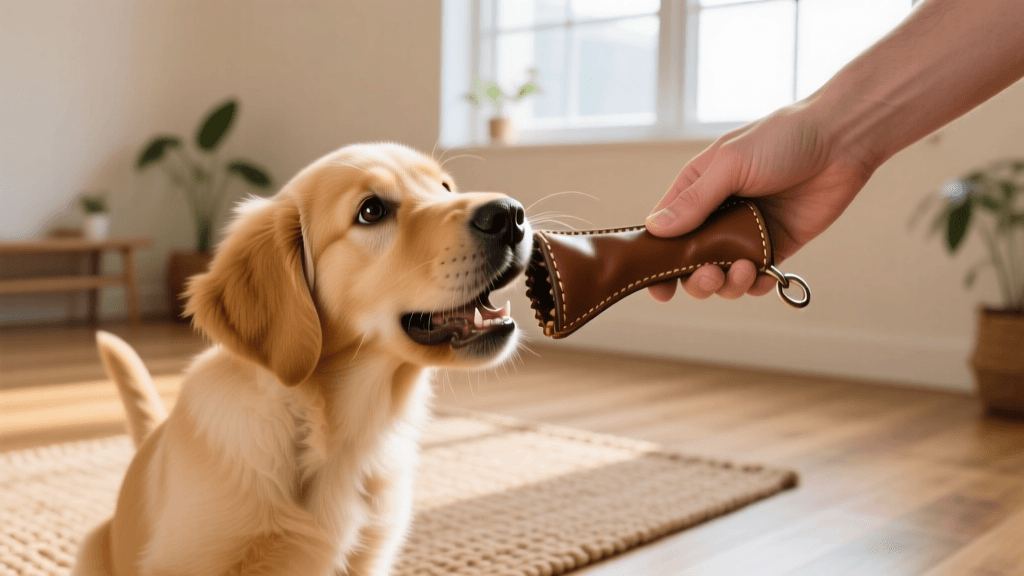
You cannot simply tell a teething puppy what 'not' to do; you must provide them with an acceptable alternative. Keep a stash of high-value chew toys in every room. When the puppy approaches with the intent to nip, redirect their mouth to a toy before they make contact with your skin.
- The KONG Classic Puppy Toy (Approx. $15): Made from softer, red rubber specifically designed for developing teeth. Stuff it with a mixture of plain Greek yogurt and mashed bananas, then freeze it for 4 to 6 hours. The cold temperature numbs sore gums while the mental effort of extracting the food tires them out.
- Nylabone Puppy Power Chew (Approx. $8): Textured nubs help clean teeth and massage gums. Choose the 'Puppy' specific line, as adult Nylabones are too hard for baby teeth and can cause dental fractures.
- Braided Cotton Rope Toys (Approx. $10): Soak the rope in low-sodium chicken broth and freeze it. The fibrous texture acts like dental floss for puppy teeth.
Step 3: The 30-Second Time-Out
If redirection fails and the puppy becomes overstimulated, biting harder and ignoring your yelps, it is time for a time-out. This is not a punishment, but a neurological reset. Overstimulated puppies are often overtired puppies. Calmly pick up the puppy (or leash them) and place them in a boring, safe space like a playpen or a small bathroom for 30 to 60 seconds. Once they are calm, release them and offer a chew toy. Often, a 15-minute nap in a crate following a time-out is exactly what the 'landshark' needs to revert to an 'angel.'
Step 4: Managing the Environment for Success
Prevention is a powerful training tool. Use baby gates to restrict access to high-traffic areas where the puppy might practice ankle-biting. If you have children, enforce strict 'four paws on the floor' rules and never allow running games inside the house, as rapid movement triggers a puppy's prey drive and guarantees a biting episode.
Common Mistakes That Prolong the Landshark Phase
Many well-meaning owners accidentally reinforce biting behaviors. Avoid these common pitfalls:
- Pushing Away or Wrestling: If you push a puppy away with your hands, they interpret this as a wrestling game and will bite harder. Always withdraw attention by pulling away and standing up.
- Physical Punishment: Holding the puppy's mouth shut, tapping their nose, or alpha-rolling them will only destroy their trust and can lead to fear-based aggression later in life. The Humane Society of the United States strongly advocates for positive reinforcement and redirecting unwanted behaviors rather than using punitive measures.
- Inconsistent Rules: If you allow the puppy to mouth your hands when you are wearing old clothes, but scold them when you are wearing work clothes, the puppy will become confused. Skin is skin; the rule must be absolute.
The Puppy Teething and Biting Timeline
Understanding the physiological timeline of your puppy's dental development will help you adjust your expectations and management strategies.
| Age Range | Dental Milestone | Behavioral Impact & Action Required |
|---|---|---|
| 3 - 6 Weeks | Deciduous (baby) teeth erupt. | Puppies learn initial bite inhibition from littermates. Keep hands away from the whelping box. |
| 8 - 12 Weeks | Full set of 28 baby teeth. | Peak 'landshark' phase. Teeth are needle-sharp. Implement strict 'Ouch' and redirection protocols. |
| 12 - 16 Weeks | Baby teeth begin to fall out. | Gums are highly inflamed. Increase frozen chew toys and soothe gums with cold carrots. |
| 4 - 6 Months | 42 adult teeth erupt. | Intense chewing urge to dislodge stubborn baby teeth. Puppy-proof the home to save furniture. |
| 6 - 8 Months | Adult teeth fully set. | Bite inhibition should be established. Transition to durable adult chew toys. |
The 'After' Snapshot: Enjoying Your Gentle Companion
Fast forward to the six-to-twelve-month mark. The transformation is nothing short of miraculous. The frantic, nipping landshark has matured into a dog that understands the boundaries of human interaction. When your dog greets you at the door, they might grab a designated 'greeting toy' instead of your wrist. When playing fetch, they release the ball gently into your hand without their teeth grazing your skin. This 'soft mouth' is the direct result of the hundreds of micro-interactions, redirections, and time-outs you diligently enforced during their first few months.
Life after the transformation is characterized by mutual trust and relaxed companionship. You can comfortably sit on the floor with your dog, allow children to pet them without fear of a nipping incident, and enjoy play sessions that are energetic but safe. While adult dogs will always need to chew to maintain dental health and relieve mild stress, the frantic, painful urgency of the puppy teething phase is permanently behind you.
Before and After: A Behavioral Comparison
To visualize the profound impact of consistent early training, review this behavioral comparison chart detailing how your responses shape the final outcome.
| Scenario | Before: The Landshark (8-12 Weeks) | After: The Gentle Companion (6+ Months) |
|---|---|---|
| Owner sits on the couch | Puppy leaps up, bites ankles, and tears at clothing. | Puppy rests on their designated mat or calmly asks for space with a nudge. |
| Hands-on petting | Puppy attacks the hand, viewing it as a wrestling toy. | Puppy leans into the touch, eyes soft, mouth completely relaxed. |
| High excitement (Guests arrive) | Frantic zoomies followed by nipping at guests' hands and legs. | Grabs a designated plush toy to carry in their mouth, keeping teeth occupied. |
| Encountering a forbidden object | Chews baseboards or shoes to soothe aching gums. | Chooses a frozen KONG or Nylabone from their toy bin without prompting. |
Conclusion: Trust the Process
The journey from a biting, teething puppy to a well-mannered adult dog is a test of endurance, consistency, and empathy. There will be days when your hands are covered in bandaids and your patience is stretched to its absolute limit. Remember that the 'landshark' phase is a fleeting, biological necessity, not a permanent character flaw. By utilizing strategic redirection, providing appropriate teething relief, and enforcing gentle boundaries, you are laying the neurological groundwork for a lifetime of safe, loving companionship. Stay consistent, stock up on frozen KONGs, and look forward to the incredibly rewarding 'after' phase that awaits you.
anouk-beaumont
All our authors care for dogs every day — read more of their work on the authors page.