Puppy Biting and Mouthing: Expert Behavior Analysis Guide
Discover why puppies bite and how to teach bite inhibition using expert behavior analysis. Practical timelines, redirection techniques, and training tips.

The Ethology of Puppy Mouthing
To effectively address puppy biting, we must first understand the ethological roots of the behavior. In the wild, canids use their mouths as primary tools for exploration, grooming, and social interaction. When a litter of puppies plays, they constantly mouth one another. If one puppy bites too hard, the victim yelps and withdraws from play. This natural feedback loop is the foundation of bite inhibition—the ability of a dog to control the force of its mouthing. According to the ASPCA, puppies that are separated from their littermates too early (before 8 weeks) often miss out on these critical lessons, resulting in a 'hard mouth' that can cause significant pain and tissue damage to human skin.
As an expert behavior analyst, I approach puppy mouthing not as a 'bad habit' to be punished, but as a natural developmental stage that requires careful shaping and redirection. Human skin is infinitely more sensitive than a puppy's fur, meaning we must teach a zero-tolerance policy for human skin while providing abundant, appropriate outlets for their oral fixation.
Differentiating Mouthing from Aggression
A common mistake among new owners is misinterpreting normal puppy mouthing as aggression. True aggression in puppies under 16 weeks of age is exceedingly rare. To accurately analyze the behavior, we must look at the accompanying body language and contextual triggers.
- Normal Mouthing: Accompanied by a loose, wiggly body posture, 'play bows' (front elbows down, rear end up), relaxed facial muscles, and self-handicapping (where a larger or older dog purposely rolls over to let the puppy win).
- Aggressive Biting: Characterized by a stiff, frozen body posture, hard staring, raised hackles, deep guttural growling, and snapping without the playful 'bounce' typical of puppy interactions.
If your puppy is exhibiting the latter, especially when guarding resources like food bowls or toys, immediate consultation with a certified veterinary behaviorist is required. However, if the puppy is simply lunging at your ankles or chewing on your hands during play, you are dealing with normal, albeit frustrating, developmental mouthing.
The Behavioral Science of Bite Inhibition Training
Modifying oral fixation requires a multi-faceted approach rooted in Operant Conditioning. We will utilize Differential Reinforcement of Incompatible Behavior (DRI) and Negative Punishment to shape the puppy's choices.
Step 1: Environmental Management and Enrichment
Puppies often bite out of boredom or understimulation. Before implementing training protocols, ensure the puppy's environment is enriched with appropriate chew items. The goal is to make the correct choice (chewing a toy) more rewarding than the incorrect choice (chewing a hand).
Recommended Products and Costs:
- KONG Classic (Red, Medium): Approximately $15. The unpredictable bounce mimics prey movement, and stuffing it with frozen plain Greek yogurt and pumpkin puree provides 20-30 minutes of soothing, lick-based enrichment.
- West Paw Toppl (Large): Approximately $22. This interlocking puzzle toy is excellent for puppies who destroy standard rubber toys. It can be frozen with soaked kibble to soothe inflamed teething gums.
- Benebone Wishbone (Puppy Bacon): Approximately $14. The ergonomic shape allows the puppy to pin it down with their paws, satisfying their natural chewing mechanics without risking fractured teeth.
Step 2: Differential Reinforcement of Incompatible Behavior (DRI)
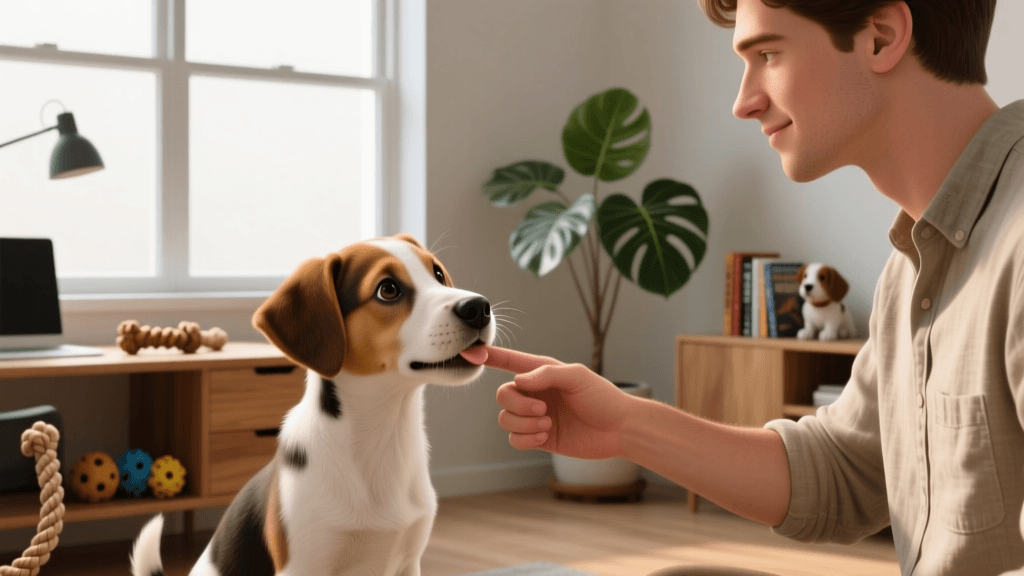
DRI involves reinforcing a behavior that cannot occur simultaneously with the problem behavior. A puppy cannot bite your hand if its mouth is full of a toy. Keep a high-value chew toy in your pocket or nearby at all times. The moment the puppy approaches with the intent to mouth, redirect their attention to the toy and heavily reward engagement with verbal praise and play. This builds a strong reinforcement history for choosing toys over skin.
Step 3: Negative Punishment (The Time-Out Procedure)
In operant conditioning, negative punishment involves removing a desirable stimulus to decrease a behavior. For puppies, the most desirable stimulus is your attention and play. If redirection fails and the puppy's teeth make contact with your skin, implement a structured time-out.
- The Marker: The instant teeth touch skin, emit a calm, neutral marker word like 'Too bad' or 'Oops.' Avoid high-pitched yelping, which can trigger predatory drift and increase arousal in some breeds.
- The Withdrawal: Immediately stand up, fold your arms, and break all eye contact. Become entirely uninteresting.
- The Time-Out: If the puppy persists, calmly pick them up (or use a leash) and place them in a designated, boring time-out area (like a playpen or a gated bathroom) for exactly 30 to 60 seconds.
- The Reset: Release the puppy and immediately offer an appropriate chew toy. If they chew the toy, reward with enthusiastic play.
Canine Oral Development and Teething Timeline
Understanding the physiological timeline of teething helps owners anticipate spikes in mouthing behavior. According to the American Kennel Club, puppies go through distinct dental milestones that directly impact their need to chew.
| Age Range | Dental Milestone | Behavioral Impact | Recommended Action |
|---|---|---|---|
| 2 - 4 Weeks | Deciduous (baby) teeth erupt | Nursing begins; littermates start mouthing | Allow natural littermate play; do not separate early |
| 5 - 8 Weeks | Full set of 28 baby teeth | Peak littermate bite-inhibition learning | Begin gentle human handling and hand-feeding |
| 12 - 16 Weeks | Baby teeth begin to fall out | Increased chewing to relieve gum pressure | Provide chilled chew toys; monitor for retained teeth |
| 4 - 6 Months | Permanent adult teeth erupt (42 total) | Intense oral fixation; risk of destructive chewing | Rotate durable toys; puppy-proof the home |
| 7 - 12 Months | Adult dentition fully set and settling | Mouthing decreases if properly managed | Transition to adult chew hardness; maintain DRI training |
Counterproductive Methods to Avoid
Outdated dominance-based training theories have led to several harmful practices that exacerbate puppy biting and damage the human-animal bond. The Humane Society strongly advises against the following:
- Holding the Mouth Shut: This triggers a fear response and can lead to defensive aggression. It teaches the puppy that human hands near their face are a threat, complicating future veterinary and grooming care.
- Alpha Rolls: Forcing a puppy onto its back is highly aversive and completely unrelated to how wolves or feral dogs establish social structures. It destroys trust and increases anxiety.
- Physical Punishment (Tapping the Nose): Striking a puppy, even lightly, creates a negative association with human hands, leading to hand-shyness or fear-biting.
- Inconsistent Rules: Allowing the puppy to mouth your hands when you are wearing old clothes, but punishing them when you are in work attire, creates cognitive dissonance. Dogs do not understand the value of clothing; they only understand the binary rule of 'skin is off-limits.'
Managing Overstimulation and Predatory Drift
Many puppy owners report that biting intensifies during specific times of the day, often referred to as the 'puppy witching hour' (typically early evening). From a behavioral standpoint, this is usually a symptom of overstimulation and fatigue. Just like human toddlers, puppies lack the emotional regulation to self-soothe when overtired. When a puppy becomes overtired, their bite inhibition degrades rapidly, and they may exhibit 'predatory drift'—where normal play suddenly shifts into intense, hard biting.
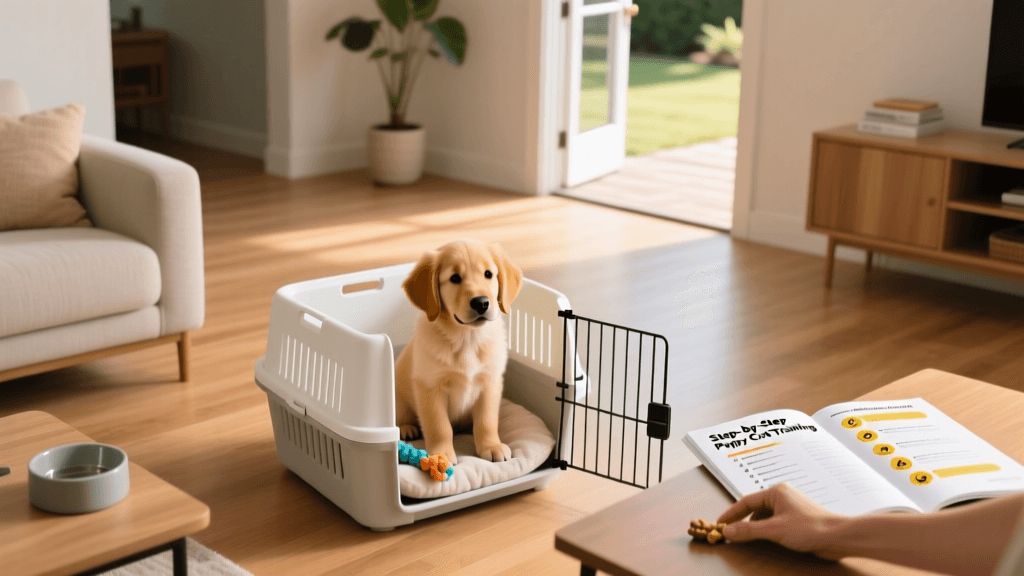
The Solution: Implement a strict crate-training or nap-time schedule. Puppies require 18 to 20 hours of sleep per day. If your puppy begins biting frantically and ignores redirection, they do not need more training; they need a nap. Place them in their crate or a quiet pen with a soothing chew toy and allow them to decompress. You will often find that the 'aggressive' biting was simply a manifestation of exhaustion.
When to Consult a Professional
While the vast majority of puppy biting is a normal developmental phase that resolves with consistent management and maturation, certain red flags warrant immediate intervention by a Certified Applied Animal Behaviorist (CAAB) or a Veterinary Behaviorist (DACVB). Seek professional help if:
- The puppy breaks the skin and draws blood with a single, intentional bite (not during chaotic play).
- The puppy exhibits resource guarding over food, toys, or sleeping spaces, accompanied by stiffening and growling.
- The puppy shows fear-based aggression when approached while resting or eating.
- The biting is accompanied by extreme anxiety, pacing, or inability to settle for more than a few minutes at a time.
Conclusion
Teaching bite inhibition is one of the most critical tasks in a puppy's first year. By viewing mouthing through the lens of expert behavior analysis, we can replace frustration with empathy and strategic action. Through environmental enrichment, differential reinforcement, and appropriate negative punishment, you can guide your puppy through this challenging developmental window. Remember that consistency, patience, and a deep understanding of canine ethology are your most powerful tools in raising a well-adjusted, gentle adult dog.
marcus-aldridge
All our authors care for dogs every day — read more of their work on the authors page.